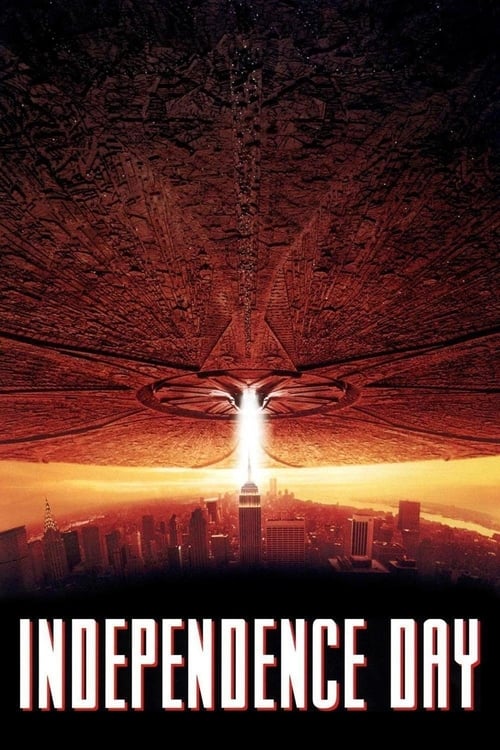
Independence Day
The aliens are coming and their goal is to invade and destroy Earth. Fighting superior technology, mankind's best weapon is the will to survive.
Despite a considerable budget of $75.0M, Independence Day became a box office phenomenon, earning $817.4M worldwide—a remarkable 990% return.
1 Oscar. 35 wins & 35 nominations


Plot Structure
Story beats plotted across runtime


Narrative Arc
Emotional journey through the story's key moments
Story Circle
Blueprint 15-beat structure
Characters
Cast & narrative archetypes

President Thomas J. Whitmore
Captain Steven Hiller
David Levinson
Russell Casse
Julius Levinson
First Lady Marilyn Whitmore
Jasmine Dubrow
Constance Spano
Secretary of Defense Albert Nimziki
Main Cast & Characters
President Thomas J. Whitmore
Played by Bill Pullman
Former fighter pilot turned U.S. President who leads humanity's resistance against alien invasion.
Captain Steven Hiller
Played by Will Smith
Marine fighter pilot who becomes a key hero in the counterattack against the aliens.
David Levinson
Played by Jeff Goldblum
Satellite technician and MIT graduate who discovers the alien attack plan and devises the virus solution.
Russell Casse
Played by Randy Quaid
Alcoholic crop duster and Vietnam veteran who sacrifices himself to save humanity.
Julius Levinson
Played by Judd Hirsch
David's father, a retired Jewish businessman who provides comic relief and emotional support.
First Lady Marilyn Whitmore
Played by Mary McDonnell
The President's wife who dies from injuries sustained during the alien attack on Los Angeles.
Jasmine Dubrow
Played by Vivica A. Fox
Exotic dancer and Steven Hiller's girlfriend who rescues survivors in Los Angeles.
Constance Spano
Played by Margaret Colin
White House Communications Director and David's ex-wife who helps coordinate the resistance.
Secretary of Defense Albert Nimziki
Played by James Rebhorn
Pragmatic cabinet member who clashes with the President over military strategy and Area 51 secrets.
Structural Analysis
The Status Quo at 1 minutes (1% through the runtime) establishes The American flag planted on the moon is disturbed by shadows as a massive alien mothership passes overhead, establishing Earth's vulnerability and ordinary existence about to be shattered.. Of particular interest, this early placement immediately immerses viewers in the story world.
The inciting incident occurs at 17 minutes when The massive alien spacecraft position themselves over the world's major cities, including Los Angeles, New York, and Washington D.C., creating global panic and disrupting all normal life on Earth.. At 12% through the film, this Disruption aligns precisely with traditional story structure. This beat shifts the emotional landscape, launching the protagonist into the central conflict.
The First Threshold at 36 minutes marks the transition into Act II, occurring at 25% of the runtime. This demonstrates the protagonist's commitment to The aliens launch their devastating attack, destroying Los Angeles, New York, and Washington D.C. With massive energy weapons. President Whitmore evacuates on Air Force One moments before the White House is obliterated. There is no going back to normal life., moving from reaction to action.
At 73 minutes, the Midpoint arrives at 50% of the runtime—precisely centered, creating perfect narrative symmetry. Notably, this crucial beat The captured alien awakens, telepathically attacks President Whitmore, and reveals their true nature: they are locusts who travel from planet to planet consuming all resources. There will be no peace, no negotiation. It's extinction or survival. The President orders a nuclear strike., fundamentally raising what's at risk. The emotional intensity shifts, dividing the narrative into clear before-and-after phases.
The Collapse moment at 109 minutes (75% through) represents the emotional nadir. Here, The First Lady dies in the President's arms at Area 51, representing the death of hope and normalcy. The President must tell his daughter her mother is gone. With no viable defense and the aliens advancing, humanity faces total annihilation., illustrates the protagonist at their lowest point. This beat's placement in the final quarter sets up the climactic reversal.
The Second Threshold at 116 minutes initiates the final act resolution at 80% of the runtime. David's father's comment about catching a cold gives David the breakthrough: they can upload a virus to the alien mothership to disable all the shields. Combined with Hiller flying the captured alien craft, they have a plan. Hope is reborn through human ingenuity., demonstrating the transformation achieved throughout the journey.
Emotional Journey
Independence Day's emotional architecture traces a deliberate progression across 15 carefully calibrated beats.
Narrative Framework
This structural analysis employs structural analysis methodology used to understand storytelling architecture. By mapping Independence Day against these established plot points, we can identify how Roland Emmerich utilizes or subverts traditional narrative conventions. The plot point approach reveals not only adherence to structural principles but also creative choices that distinguish Independence Day within the action genre.
Roland Emmerich's Structural Approach
Among the 12 Roland Emmerich films analyzed on Arcplot, the average structural score is 7.0, demonstrating varied approaches to story architecture. Independence Day exemplifies the director's characteristic narrative technique. For comparative analysis, explore the complete Roland Emmerich filmography.
Comparative Analysis
Additional action films include The Bad Guys, Puss in Boots and Venom: The Last Dance. For more Roland Emmerich analyses, see The Day After Tomorrow, White House Down and 10,000 BC.
Plot Points by Act
Act I
SetupStatus Quo
The American flag planted on the moon is disturbed by shadows as a massive alien mothership passes overhead, establishing Earth's vulnerability and ordinary existence about to be shattered.
Theme
David's father Julius tells him "All you do is complain about the world but you never do anything about it," foreshadowing David's eventual role in saving humanity through action rather than cynicism.
Worldbuilding
Introduction of the ensemble cast: Captain Hiller waking with Jasmine in LA, David working at the cable company in NYC, President Whitmore struggling with approval ratings in DC, and Russell Casse crop-dusting in Imperial Valley. The alien ships begin positioning over major cities worldwide.
Disruption
The massive alien spacecraft position themselves over the world's major cities, including Los Angeles, New York, and Washington D.C., creating global panic and disrupting all normal life on Earth.
Resistance
David decodes the alien signal and realizes it's a countdown to attack. He races to Washington to warn his ex-wife Constance and the President. Meanwhile, people either flee or foolishly gather to welcome the aliens. The military debates whether to attack or communicate.
Act II
ConfrontationFirst Threshold
The aliens launch their devastating attack, destroying Los Angeles, New York, and Washington D.C. with massive energy weapons. President Whitmore evacuates on Air Force One moments before the White House is obliterated. There is no going back to normal life.
Mirror World
Jasmine rescues survivors in the ruins of Los Angeles, including the First Lady, demonstrating the human capacity for compassion and community that will ultimately defeat the aliens. Her subplot embodies the theme of ordinary people becoming heroes.
Premise
The survivors regroup at Area 51, where they discover the government has been hiding alien technology for decades. Captain Hiller captures a live alien after a dogfight and drags it across the desert. The military launches a counterattack that fails completely against the aliens' shields.
Midpoint
The captured alien awakens, telepathically attacks President Whitmore, and reveals their true nature: they are locusts who travel from planet to planet consuming all resources. There will be no peace, no negotiation. It's extinction or survival. The President orders a nuclear strike.
Opposition
The nuclear attack fails to penetrate the alien shields. Cities continue to fall worldwide. The First Lady dies from her injuries. Russell Casse's PTSD-induced claims of alien abduction are vindicated but offer no comfort. Humanity's conventional weapons are useless, and extinction seems inevitable.
Collapse
The First Lady dies in the President's arms at Area 51, representing the death of hope and normalcy. The President must tell his daughter her mother is gone. With no viable defense and the aliens advancing, humanity faces total annihilation.
Crisis
President Whitmore grieves while the remaining military leaders contemplate surrender. David gets drunk and nearly gives up, lamenting that his recycling efforts were meaningless. The survivors at Area 51 face the dark reality that tomorrow may not come.
Act III
ResolutionSecond Threshold
David's father's comment about catching a cold gives David the breakthrough: they can upload a virus to the alien mothership to disable all the shields. Combined with Hiller flying the captured alien craft, they have a plan. Hope is reborn through human ingenuity.
Synthesis
President Whitmore delivers his iconic speech uniting humanity for a final stand on July 4th. David and Hiller fly to the mothership and upload the virus. Worldwide, fighter pilots attack the now-vulnerable alien ships. Russell Casse sacrifices himself to destroy the ship over Area 51, saving his children and redeeming his life.
Transformation
As alien wreckage burns across the globe, survivors celebrate. David and Hiller return as heroes, reuniting with their families. The world, once divided, is united in victory. July 4th has become Independence Day for all of humanity, not just America.