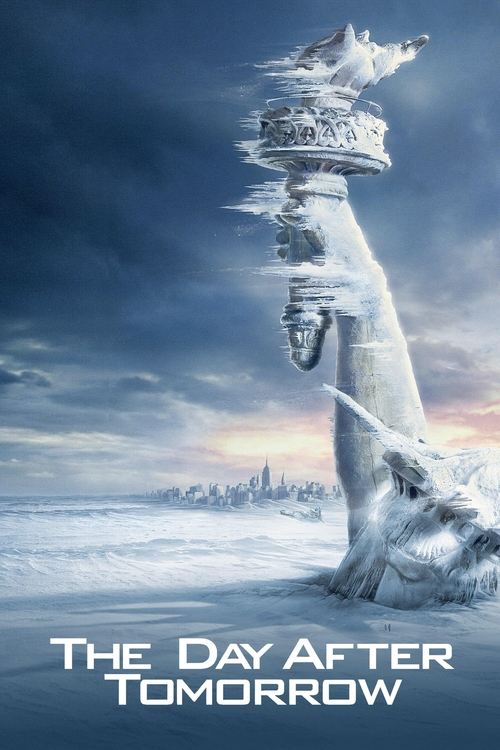
The Day After Tomorrow
Jack Hall, paleoclimatologist, must make a daring trek from Washington, D.C. to New York City to reach his son, trapped in the cross-hairs of a sudden international storm which plunges the planet into a new Ice Age.
Despite a significant budget of $125.0M, The Day After Tomorrow became a box office success, earning $552.6M worldwide—a 342% return.
1 BAFTA Award6 wins & 12 nominations


Plot Structure
Story beats plotted across runtime


Narrative Arc
Emotional journey through the story's key moments
Story Circle
Blueprint 15-beat structure
Characters
Cast & narrative archetypes

Jack Hall
Sam Hall
Laura Chapman
Jason Evans
Frank Harris
Lucy Hall
Terry Rapson
Brian Parks
Vice President Becker
Main Cast & Characters
Jack Hall
Played by Dennis Quaid
Paleoclimatologist who predicts catastrophic climate shift and must rescue his son from frozen New York City.
Sam Hall
Played by Jake Gyllenhaal
Jack's teenage son trapped in New York City who must survive extreme conditions while waiting for rescue.
Laura Chapman
Played by Emmy Rossum
Sam's love interest and academic decathlon teammate who survives with him in the New York Public Library.
Jason Evans
Played by Dash Mihok
NOAA scientist and Jack's colleague who helps analyze the climate crisis and supports the rescue mission.
Frank Harris
Played by Jay O. Sanders
NASA meteorologist and Jack's colleague who sacrifices himself during the rescue mission to New York.
Lucy Hall
Played by Sela Ward
Jack's wife and Sam's mother, a doctor who stays to care for young cancer patient during evacuation.
Terry Rapson
Played by Ian Holm
British oceanographer who discovers critical data about ocean current shutdown and contacts Jack.
Brian Parks
Played by Arjay Smith
Sam's best friend and academic decathlon teammate who survives with him in the library.
Vice President Becker
Played by Kenneth Welsh
U.S. Vice President who becomes acting president and must make decisions about mass evacuation.
Structural Analysis
The Status Quo at 1 minutes (1% through the runtime) establishes Jack Hall and his team drill ice cores in Antarctica, establishing him as a dedicated paleoclimatologist whose work keeps him away from family. The ice shelf dramatically cracks beneath them, foreshadowing the catastrophe to come.. Structural examination shows that this early placement immediately immerses viewers in the story world.
The inciting incident occurs at 15 minutes when Multiple tornadoes devastate Los Angeles, destroying the Hollywood sign and iconic landmarks. This catastrophic event proves Jack's warnings are coming true far faster than predicted, disrupting the status quo of a world in denial about climate change.. At 12% through the film, this Disruption aligns precisely with traditional story structure. This beat shifts the emotional landscape, launching the protagonist into the central conflict.
The First Threshold at 31 minutes marks the transition into Act II, occurring at 25% of the runtime. This demonstrates the protagonist's commitment to A massive storm system forms over the Northern Hemisphere. Jack realizes the superstorm will freeze everything north of a certain latitude within days. He calls Sam and makes a promise: stay inside, burn whatever you can, I'm coming for you. Jack commits to the rescue mission., moving from reaction to action.
At 62 minutes, the Midpoint arrives at 50% of the runtime—precisely centered, creating perfect narrative symmetry. The analysis reveals that this crucial beat The eye of the superstorm descends, flash-freezing everything instantly—helicopters fall from the sky mid-rescue in Scotland, their pilots frozen solid. This false defeat reveals the true horror: there's no outrunning this storm. The stakes become absolute survival rather than evacuation., fundamentally raising what's at risk. The emotional intensity shifts, dividing the narrative into clear before-and-after phases.
The Collapse moment at 92 minutes (75% through) represents the emotional nadir. Here, Frank falls through a skylight on a frozen mall roof. Rather than drag his friends down with him, he cuts himself loose and falls to his death. Jack and Jason can only watch helplessly. The whiff of death is literal—Jack loses his colleague and friend, nearly losing his will to continue., demonstrates the protagonist at their lowest point. This beat's placement in the final quarter sets up the climactic reversal.
The Second Threshold at 98 minutes initiates the final act resolution at 80% of the runtime. The storm passes. Jack and Jason emerge from their shelter to a frozen but clear landscape. With the worst over, they can finally push forward. Jack renews his commitment to reach Sam, combining his scientific knowledge of the storm's behavior with his determination as a father., demonstrating the transformation achieved throughout the journey.
Emotional Journey
The Day After Tomorrow's emotional architecture traces a deliberate progression across 15 carefully calibrated beats.
Narrative Framework
This structural analysis employs a 15-point narrative structure framework that maps key story moments. By mapping The Day After Tomorrow against these established plot points, we can identify how Roland Emmerich utilizes or subverts traditional narrative conventions. The plot point approach reveals not only adherence to structural principles but also creative choices that distinguish The Day After Tomorrow within the action genre.
Roland Emmerich's Structural Approach
Among the 12 Roland Emmerich films analyzed on Arcplot, the average structural score is 7.0, demonstrating varied approaches to story architecture. The Day After Tomorrow exemplifies the director's characteristic narrative technique. For comparative analysis, explore the complete Roland Emmerich filmography.
Comparative Analysis
Additional action films include The Bad Guys, Puss in Boots and Venom: The Last Dance. For more Roland Emmerich analyses, see White House Down, 10,000 BC and Independence Day.
Plot Points by Act
Act I
SetupStatus Quo
Jack Hall and his team drill ice cores in Antarctica, establishing him as a dedicated paleoclimatologist whose work keeps him away from family. The ice shelf dramatically cracks beneath them, foreshadowing the catastrophe to come.
Theme
At the UN climate conference, Jack warns that disrupting the North Atlantic current could trigger a new Ice Age within weeks. Vice President Becker dismisses him, stating the economy matters more than theoretical climate models—articulating the film's central conflict between short-term thinking and scientific truth.
Worldbuilding
The ordinary world is established: Jack's strained relationship with his ex-wife Lucy and distant son Sam; Sam's academic competition trip to New York with friends Laura and Brian; global weather anomalies begin appearing—snow in Delhi, hail destroying Tokyo, strange temperature drops in the ocean.
Disruption
Multiple tornadoes devastate Los Angeles, destroying the Hollywood sign and iconic landmarks. This catastrophic event proves Jack's warnings are coming true far faster than predicted, disrupting the status quo of a world in denial about climate change.
Resistance
Jack debates with government officials who remain skeptical. He works with colleagues Jason and Frank to model the superstorm. Sam and friends become stranded in New York as weather worsens. Jack faces the choice between continuing his research or prioritizing his family.
Act II
ConfrontationFirst Threshold
A massive storm system forms over the Northern Hemisphere. Jack realizes the superstorm will freeze everything north of a certain latitude within days. He calls Sam and makes a promise: stay inside, burn whatever you can, I'm coming for you. Jack commits to the rescue mission.
Mirror World
Sam, Laura, and Brian take shelter in the New York Public Library with other survivors. Sam emerges as a leader, convincing people to stay inside and burn books for warmth despite ridicule. His storyline mirrors Jack's—both must convince skeptics and take responsibility for others' survival.
Premise
The disaster movie delivers its spectacle: New York floods with a massive tidal surge; people flee through subway tunnels; the survivors in the library struggle against cold and desperation; Jack, Jason, and Frank begin their trek north through the frozen wasteland; global chaos unfolds with ships frozen in Manhattan streets.
Midpoint
The eye of the superstorm descends, flash-freezing everything instantly—helicopters fall from the sky mid-rescue in Scotland, their pilots frozen solid. This false defeat reveals the true horror: there's no outrunning this storm. The stakes become absolute survival rather than evacuation.
Opposition
The storm intensifies as Jack's team pushes through brutal conditions. In New York, Laura develops blood poisoning from a cut, requiring Sam to venture into the frozen ship for medicine—facing wolves. Frank sacrifices himself falling through a glass roof to save the others. The Vice President finally accepts Jack's science as millions die.
Collapse
Frank falls through a skylight on a frozen mall roof. Rather than drag his friends down with him, he cuts himself loose and falls to his death. Jack and Jason can only watch helplessly. The whiff of death is literal—Jack loses his colleague and friend, nearly losing his will to continue.
Crisis
Jack and Jason take shelter as the superstorm's eye passes directly overhead, bringing instant freeze. They survive in a tent, burning supplies for warmth. Jack grieves Frank while questioning whether he can reach Sam in time. In the library, supplies dwindle and hope fades as the freeze deepens.
Act III
ResolutionSecond Threshold
The storm passes. Jack and Jason emerge from their shelter to a frozen but clear landscape. With the worst over, they can finally push forward. Jack renews his commitment to reach Sam, combining his scientific knowledge of the storm's behavior with his determination as a father.
Synthesis
Jack and Jason reach Manhattan, now a frozen wasteland with only building tops visible above the snow. They locate the library and dig down to find survivors. Jack reunites with Sam in an emotional embrace. The President addresses the nation, acknowledging the scientists were right and thanking the countries now accepting American refugees.
Transformation
Helicopters rescue survivors from the library rooftop. Jack, Sam, and the others are airlifted to safety. Astronauts observe from the ISS that the air has never been cleaner—humanity has been humbled. Jack has transformed from absent father to present hero, and the world has transformed from climate denial to acceptance.