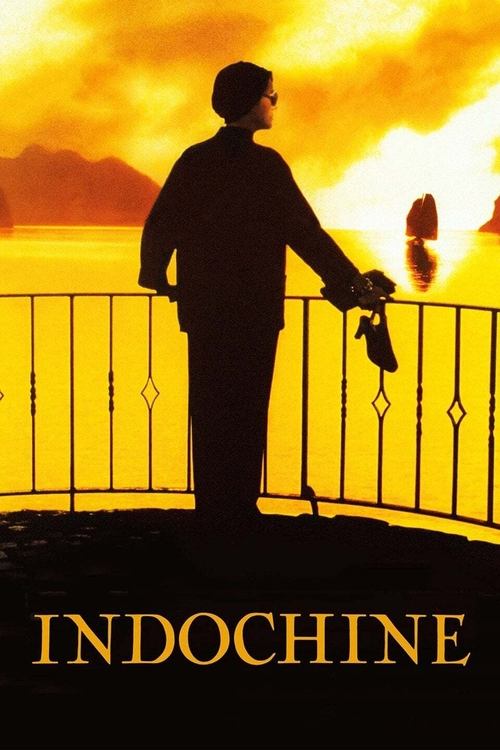
Indochine
Set in colonial French Indochina during the 1930s to 1950s, this is the story of Éliane Devries, a French plantation owner, and of her adopted Vietnamese daughter, Camille, set against the backdrop of the rising Vietnamese nationalist movement.
The film earned $29.6M at the global box office.


Plot Structure
Story beats plotted across runtime


Narrative Arc
Emotional journey through the story's key moments
Story Circle
Blueprint 15-beat structure
Arcplot Score Breakdown
Weighted: Precision (70%) + Arc (15%) + Theme (15%)
Indochine (1992) reveals deliberately positioned plot construction, characteristic of Régis Wargnier's storytelling approach. This structural analysis examines how the film's 15-point plot structure maps to proven narrative frameworks across 2 hours and 39 minutes. With an Arcplot score of 6.8, the film balances conventional beats with creative variation.
Characters
Cast & narrative archetypes

Eliane Devries
Camille
Jean-Baptiste Le Guen
Raymond
Guy Asselin
Main Cast & Characters
Eliane Devries
Played by Catherine Deneuve
French plantation owner in colonial Indochina who adopts a Vietnamese princess and loses her to both love and revolution.
Camille
Played by Linh Dan Pham
Adopted Vietnamese princess who falls in love with a French naval officer and becomes a revolutionary symbol.
Jean-Baptiste Le Guen
Played by Vincent Perez
French naval officer who becomes romantically involved with both Eliane and Camille, triggering the central conflict.
Raymond
Played by Jean Yanne
Eliane's loyal estate manager and friend who supports her through decades of change in Indochina.
Guy Asselin
Played by Dominique Blanc
French officer and Eliane's suitor who represents the old colonial order.
Structural Analysis
The Status Quo at 3 minutes (2% through the runtime) establishes Éliane Devries oversees her vast rubber plantation in French Indochina, living in colonial luxury with her adopted Vietnamese daughter Camille. The opening establishes their privileged world of wealth, power, and the illusion of permanence in this colonial paradise.. The analysis reveals that this early placement immediately immerses viewers in the story world.
The inciting incident occurs at 16 minutes when Jean-Baptiste Le Guen, a handsome French naval officer, arrives and meets Éliane at a social gathering. His presence disrupts the stable world—he represents both romantic possibility and the catalyst for future tragedy.. At 10% through the film, this Disruption aligns precisely with traditional story structure. This beat shifts the emotional landscape, launching the protagonist into the central conflict.
The First Threshold at 40 minutes marks the transition into Act II, occurring at 25% of the runtime. This demonstrates the protagonist's commitment to Éliane makes the painful decision to sacrifice her own happiness, arranging for Jean-Baptiste to be transferred away from Saigon. This active choice to let him go sets both women on irreversible paths—but Camille refuses to accept this fate., moving from reaction to action.
At 80 minutes, the Midpoint arrives at 50% of the runtime—precisely centered, creating perfect narrative symmetry. Significantly, this crucial beat False victory becomes false defeat: Camille and Jean-Baptiste are together, but political violence erupts around them. Camille witnesses colonial brutality firsthand. The stakes raise dramatically—this is no longer just a love story but a collision with history itself., fundamentally raising what's at risk. The emotional intensity shifts, dividing the narrative into clear before-and-after phases.
The Collapse moment at 111 minutes (70% through) represents the emotional nadir. Here, Camille is captured and imprisoned by French authorities. The whiff of death: Jean-Baptiste is dead, Camille is lost to Éliane, and the colonial dream itself is dying. Mother and daughter are completely separated, their relationship seemingly destroyed forever., reveals the protagonist at their lowest point. This beat's placement in the final quarter sets up the climactic reversal.
The Second Threshold at 128 minutes initiates the final act resolution at 81% of the runtime. The 1954 Geneva Conference approaches. Éliane learns Camille will attend as a Viet Minh delegate. New information creates synthesis: Éliane decides to bring Étienne (Camille's son) to Geneva, accepting the new reality and seeking reconciliation with history., demonstrating the transformation achieved throughout the journey.
Emotional Journey
Indochine's emotional architecture traces a deliberate progression across 15 carefully calibrated beats.
Narrative Framework
This structural analysis employs proven narrative structure principles that track dramatic progression. By mapping Indochine against these established plot points, we can identify how Régis Wargnier utilizes or subverts traditional narrative conventions. The plot point approach reveals not only adherence to structural principles but also creative choices that distinguish Indochine within the drama genre.
Régis Wargnier's Structural Approach
Among the 2 Régis Wargnier films analyzed on Arcplot, the average structural score is 7.0, reflecting strong command of classical structure. Indochine takes a more unconventional approach compared to the director's typical style. For comparative analysis, explore the complete Régis Wargnier filmography.
Comparative Analysis
Additional drama films include After Thomas, South Pacific and Dirty Dancing: Havana Nights. For more Régis Wargnier analyses, see East/West.
Plot Points by Act
Act I
SetupStatus Quo
Éliane Devries oversees her vast rubber plantation in French Indochina, living in colonial luxury with her adopted Vietnamese daughter Camille. The opening establishes their privileged world of wealth, power, and the illusion of permanence in this colonial paradise.
Theme
Early dialogue about possession and ownership: what truly belongs to us, and what we can never truly possess. A character reflects on the nature of belonging in a colonial society built on appropriation.
Worldbuilding
Introduction to French colonial society in 1930s Indochina. Éliane's relationship with Camille, a Vietnamese princess she adopted. The social hierarchy, plantation life, and the complex dynamics between French colonizers and Vietnamese subjects are established.
Disruption
Jean-Baptiste Le Guen, a handsome French naval officer, arrives and meets Éliane at a social gathering. His presence disrupts the stable world—he represents both romantic possibility and the catalyst for future tragedy.
Resistance
Éliane and Jean-Baptiste begin a passionate affair. At an auction, Camille encounters Jean-Baptiste and is immediately drawn to him. Éliane recognizes the dangerous attraction between them. She debates whether to end things or try to control the situation.
Act II
ConfrontationFirst Threshold
Éliane makes the painful decision to sacrifice her own happiness, arranging for Jean-Baptiste to be transferred away from Saigon. This active choice to let him go sets both women on irreversible paths—but Camille refuses to accept this fate.
Mirror World
Camille defies Éliane and embarks on a journey across Indochina to find Jean-Baptiste. This B-story represents the thematic counterpoint: Camille's quest for love becomes a journey of political awakening, contrasting with Éliane's attempt to maintain control.
Premise
Camille's odyssey through Vietnam—the promise of the premise. She experiences the real Indochina beyond colonial privilege: poverty, oppression, and growing revolutionary sentiment. She reunites with Jean-Baptiste. This section delivers the epic romance and political awakening the audience came for.
Midpoint
False victory becomes false defeat: Camille and Jean-Baptiste are together, but political violence erupts around them. Camille witnesses colonial brutality firsthand. The stakes raise dramatically—this is no longer just a love story but a collision with history itself.
Opposition
Revolutionary forces close in. Jean-Baptiste is killed during a Communist uprising. Camille, radicalized by what she's witnessed and experienced, joins the independence movement. Colonial authorities hunt her. Everything tightens—the personal and political become inseparable.
Collapse
Camille is captured and imprisoned by French authorities. The whiff of death: Jean-Baptiste is dead, Camille is lost to Éliane, and the colonial dream itself is dying. Mother and daughter are completely separated, their relationship seemingly destroyed forever.
Crisis
Éliane's dark night of the soul. She discovers Camille had a son by Jean-Baptiste and takes the child to raise. Years pass. She grieves the loss of both her lover and her daughter, processing the complete collapse of her world and the colonial order.
Act III
ResolutionSecond Threshold
The 1954 Geneva Conference approaches. Éliane learns Camille will attend as a Viet Minh delegate. New information creates synthesis: Éliane decides to bring Étienne (Camille's son) to Geneva, accepting the new reality and seeking reconciliation with history.
Synthesis
The finale at Geneva Conference. Camille and Éliane reunite briefly. Camille meets her grown son Étienne, who has been raised as French. The personal and political conflicts resolve: Vietnam gains independence, the colonial era ends, and mother and daughter make peace with their choices.
Transformation
Closing image mirrors the opening but inverted: the colonial paradise is gone. Éliane prepares to leave Indochina forever, returning to France. The transformation is complete—both personal (Éliane accepts loss and change) and historical (French Indochina becomes Vietnam).