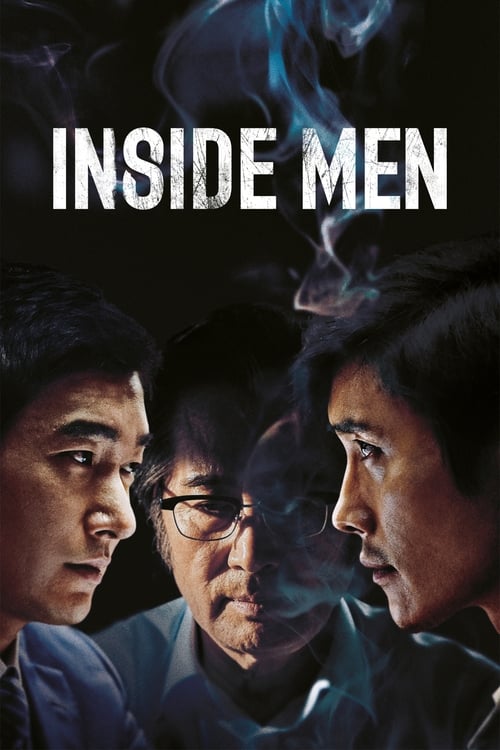
Inside Men
A disgruntled henchman teams up with an ambitious prosecutor to bring down a leading presidential candidate and the news editor behind him who is truly pulling the strings.
The film earned $62.0M at the global box office.



Plot Structure
Story beats plotted across runtime


Narrative Arc
Emotional journey through the story's key moments
Story Circle
Blueprint 15-beat structure
Arcplot Score Breakdown
Weighted: Precision (70%) + Arc (15%) + Theme (15%)
Inside Men (2015) exhibits meticulously timed narrative design, characteristic of Woo Min-ho's storytelling approach. This structural analysis examines how the film's 15-point plot structure maps to proven narrative frameworks across 2 hours and 10 minutes. With an Arcplot score of 7.0, the film balances conventional beats with creative variation.
Structural Analysis
The Status Quo at 1 minutes (1% through the runtime) establishes Ahn Sang-gu operates as a ruthless political fixer, delivering cash bribes and coordinating dirty deals between politicians, prosecutors, and corporate executives. He's a brutal man in a brutal system, serving his masters without question.. The analysis reveals that this early placement immediately immerses viewers in the story world.
The inciting incident occurs at 16 minutes when Sang-gu is brutally attacked and mutilated by his own side. His hand is cut off when he becomes a liability to the corruption network he served, betrayed by the very people he protected.. At 12% through the film, this Disruption aligns precisely with traditional story structure. This beat shifts the emotional landscape, launching the protagonist into the central conflict.
The First Threshold at 32 minutes marks the transition into Act II, occurring at 25% of the runtime. This reveals the protagonist's commitment to Sang-gu makes the active choice to cooperate with Woo Jang-hoon and testify against the corruption network. He crosses into a new world as a whistleblower and avenger rather than a loyal fixer., moving from reaction to action.
At 64 minutes, the Midpoint arrives at 49% of the runtime—precisely centered, creating perfect narrative symmetry. Significantly, this crucial beat Sang-gu's public testimony creates a media firestorm. It appears to be a victory as prosecutors are arrested and the scandal explodes. But this false victory masks the network's deeper resilience and capacity for counterattack., fundamentally raising what's at risk. The emotional intensity shifts, dividing the narrative into clear before-and-after phases.
The Collapse moment at 96 minutes (74% through) represents the emotional nadir. Here, The investigation collapses due to political interference and legal manipulation. Key witnesses recant, evidence disappears, and the powerful walk free. Woo Jang-hoon is discredited. Sang-gu faces the death of his hope for systemic justice., reveals the protagonist at their lowest point. This beat's placement in the final quarter sets up the climactic reversal.
The Second Threshold at 104 minutes initiates the final act resolution at 80% of the runtime. Sang-gu synthesizes his old skills with new purpose. He realizes he can't dismantle the system, but he can make the corrupt pay personally. He chooses direct, brutal revenge outside legal boundaries., demonstrating the transformation achieved throughout the journey.
Emotional Journey
Inside Men's emotional architecture traces a deliberate progression across 15 carefully calibrated beats.
Narrative Framework
This structural analysis employs proven narrative structure principles that track dramatic progression. By mapping Inside Men against these established plot points, we can identify how Woo Min-ho utilizes or subverts traditional narrative conventions. The plot point approach reveals not only adherence to structural principles but also creative choices that distinguish Inside Men within the crime genre.
Comparative Analysis
Additional crime films include The Bad Guys, Batman Forever and 12 Rounds.
Plot Points by Act
Act I
SetupStatus Quo
Ahn Sang-gu operates as a ruthless political fixer, delivering cash bribes and coordinating dirty deals between politicians, prosecutors, and corporate executives. He's a brutal man in a brutal system, serving his masters without question.
Theme
A character observes that "everyone in this game uses everyone else," establishing the central theme of systemic corruption where power perpetuates itself through mutual exploitation and compromise.
Worldbuilding
The intricate web of corruption is established: Jang Pil-woo (the newspaper editor), Lee Kang-hee (presidential candidate), and Prosecutor Woo Jang-hoon all coordinate through Sang-gu. We see how money, influence, and violence maintain the system.
Disruption
Sang-gu is brutally attacked and mutilated by his own side. His hand is cut off when he becomes a liability to the corruption network he served, betrayed by the very people he protected.
Resistance
Recovering in the hospital, Sang-gu wrestles with his desire for revenge. Journalist Woo Jang-hoon approaches him, offering an alliance to expose the corruption network. Sang-gu debates whether to testify or retreat into survival mode.
Act II
ConfrontationFirst Threshold
Sang-gu makes the active choice to cooperate with Woo Jang-hoon and testify against the corruption network. He crosses into a new world as a whistleblower and avenger rather than a loyal fixer.
Mirror World
Sang-gu forms an unlikely partnership with idealistic journalist Woo Jang-hoon, who represents the moral crusade Sang-gu never had. Their relationship becomes the thematic counterpoint: can the corrupt redeem themselves?
Premise
Sang-gu and Woo execute their plan to expose the corruption through testimony and media exposure. The promise of the premise: watching the insider use his knowledge to systematically dismantle the network that betrayed him.
Midpoint
Sang-gu's public testimony creates a media firestorm. It appears to be a victory as prosecutors are arrested and the scandal explodes. But this false victory masks the network's deeper resilience and capacity for counterattack.
Opposition
The corruption network strikes back viciously. Legal maneuvers, character assassination, and violence escalate. Sang-gu realizes the system is more entrenched than he thought. His allies are threatened, and he's forced to use increasingly brutal methods.
Collapse
The investigation collapses due to political interference and legal manipulation. Key witnesses recant, evidence disappears, and the powerful walk free. Woo Jang-hoon is discredited. Sang-gu faces the death of his hope for systemic justice.
Crisis
In the darkness following defeat, Sang-gu confronts what he's become and what he must do. The system cannot be defeated from within its own rules. He must fully embrace the monster he once was, but redirect it.
Act III
ResolutionSecond Threshold
Sang-gu synthesizes his old skills with new purpose. He realizes he can't dismantle the system, but he can make the corrupt pay personally. He chooses direct, brutal revenge outside legal boundaries.
Synthesis
Sang-gu executes his final plan with calculated violence and manipulation. He systematically destroys his enemies personally and professionally, using the same tools of corruption against them. The finale is revenge, not redemption.
Transformation
Sang-gu sits alone, having achieved revenge but not justice. He's become the same monster he fought against, perpetuating the cycle of violence and corruption. The closing image mirrors the opening but shows a man transformed into his enemy.