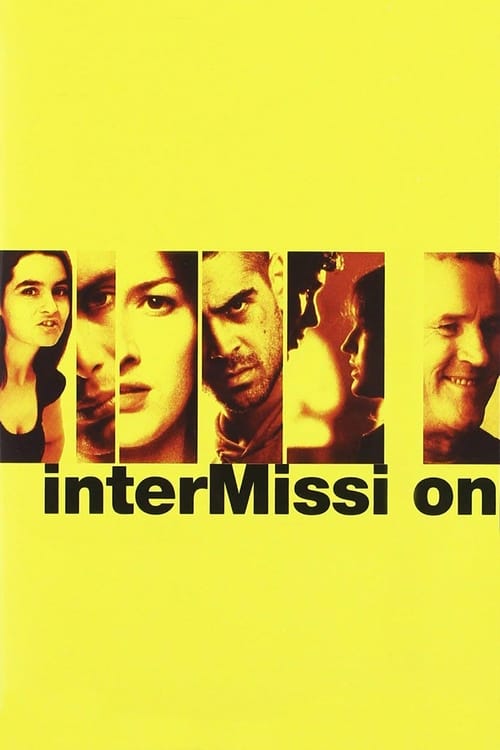
Intermission
A raucous story of the interweaving lives and loves of small-town delinquents, shady cops, pretty good girls and very bad boys. With Irish guts and grit, lives collide, preconceptions shatter and romance is tested to the extreme. An ill-timed and poorly executed couple's break-up sets off a chain of events affecting everyone in town.
The film underperformed commercially against its tight budget of $5.0M, earning $4.9M globally (-3% loss).
9 wins & 12 nominations


Plot Structure
Story beats plotted across runtime


Narrative Arc
Emotional journey through the story's key moments
Story Circle
Blueprint 15-beat structure
Arcplot Score Breakdown
Weighted: Precision (70%) + Arc (15%) + Theme (15%)
Intermission (2003) demonstrates precise story structure, characteristic of John Crowley's storytelling approach. This structural analysis examines how the film's 15-point plot structure maps to proven narrative frameworks across 1 hour and 45 minutes. With an Arcplot score of 6.9, the film balances conventional beats with creative variation.
Characters
Cast & narrative archetypes

John
Jerry Lynch
Lehiff
Sally
Deirdre
Sam
Oscar
Noelie
Main Cast & Characters
John
Played by Cillian Murphy
A grocery store manager dumped by his girlfriend Deirdre, struggling with heartbreak and making poor decisions in his desperation to win her back.
Jerry Lynch
Played by Colm Meaney
A volatile detective obsessed with catching petty criminals and hosting his own crime reality show, treating his job as personal entertainment.
Lehiff
Played by Colin Farrell
A small-time criminal planning a bank robbery who becomes romantically involved with Sally, complicating his criminal schemes.
Sally
Played by Shirley Henderson
A young woman dealing with her mother's affair and her own complicated relationship with the married Sam, who becomes involved with Lehiff.
Deirdre
Played by Kelly Macdonald
John's ex-girlfriend who leaves him for another man, setting off a chain of events affecting multiple characters.
Sam
Played by Michael McElhatton
A married man having an affair with Sally while dealing with his own domestic troubles and a violent encounter with Detective Lynch.
Oscar
Played by David Wilmot
A bus driver and Lehiff's accomplice in the planned bank robbery, caught between loyalty to his friend and his own conscience.
Noelie
Played by Brian F. O'Byrne
A young troublemaker and petty thief who becomes a particular target of Detective Lynch's aggressive policing methods.
Structural Analysis
The Status Quo at 1 minutes (1% through the runtime) establishes John breaks up with Deirdre at a cafe, establishing the interconnected world of Dublin's frustrated characters stuck in mundane lives, seeking escape or change.. Structural examination shows that this early placement immediately immerses viewers in the story world.
The inciting incident occurs at 13 minutes when Deirdre begins dating Sam (the older bank manager), which devastates John and sets multiple character arcs into motion as the breakup ripples through the community.. At 12% through the film, this Disruption aligns precisely with traditional story structure. This beat shifts the emotional landscape, launching the protagonist into the central conflict.
The First Threshold at 26 minutes marks the transition into Act II, occurring at 24% of the runtime. This shows the protagonist's commitment to Lehiff actively recruits John into the bank robbery scheme, while Sally commits to laser treatment, and Jerry gets approval to film his "cop on the street" documentary—all crossing into new territory., moving from reaction to action.
At 51 minutes, the Midpoint arrives at 49% of the runtime—precisely centered, creating perfect narrative symmetry. The analysis reveals that this crucial beat The bank robbery is set in motion and John discovers Sam is the manager of the target bank—a false defeat that raises the stakes and makes everything personal and dangerous., fundamentally raising what's at risk. The emotional intensity shifts, dividing the narrative into clear before-and-after phases.
The Collapse moment at 77 minutes (73% through) represents the emotional nadir. Here, The bank robbery goes disastrously wrong with a hostage situation, Sally is severely injured and disfigured, and all characters hit their lowest points as consequences of their choices manifest violently., shows the protagonist at their lowest point. This beat's placement in the final quarter sets up the climactic reversal.
The Second Threshold at 82 minutes initiates the final act resolution at 78% of the runtime. John realizes he must take responsibility and make things right, while other characters gain clarity about what truly matters—choosing honesty and genuine connection over schemes and desperation., demonstrating the transformation achieved throughout the journey.
Emotional Journey
Intermission's emotional architecture traces a deliberate progression across 15 carefully calibrated beats.
Narrative Framework
This structural analysis employs structural analysis methodology used to understand storytelling architecture. By mapping Intermission against these established plot points, we can identify how John Crowley utilizes or subverts traditional narrative conventions. The plot point approach reveals not only adherence to structural principles but also creative choices that distinguish Intermission within the comedy genre.
John Crowley's Structural Approach
Among the 4 John Crowley films analyzed on Arcplot, the average structural score is 7.2, reflecting strong command of classical structure. Intermission takes a more unconventional approach compared to the director's typical style. For comparative analysis, explore the complete John Crowley filmography.
Comparative Analysis
Additional comedy films include The Bad Guys, Ella Enchanted and The Evening Star. For more John Crowley analyses, see We Live in Time, Closed Circuit and Brooklyn.
Plot Points by Act
Act I
SetupStatus Quo
John breaks up with Deirdre at a cafe, establishing the interconnected world of Dublin's frustrated characters stuck in mundane lives, seeking escape or change.
Theme
Detective Jerry Lynch talks about "decisive moments" and how people reveal their true nature in crisis, setting up the film's theme about desperate actions and consequences.
Worldbuilding
Introduction of the ensemble cast: John's regret over the breakup, Lehiff's petty criminal schemes, Sally's insecurity about her mustache, Oscar's lonely bus route, and Sam's attraction to Deirdre.
Disruption
Deirdre begins dating Sam (the older bank manager), which devastates John and sets multiple character arcs into motion as the breakup ripples through the community.
Resistance
Characters debate their responses: John obsesses over winning Deirdre back, Lehiff plans a bank robbery, Sally considers mustache removal, and Jerry pitches his reality TV show idea.
Act II
ConfrontationFirst Threshold
Lehiff actively recruits John into the bank robbery scheme, while Sally commits to laser treatment, and Jerry gets approval to film his "cop on the street" documentary—all crossing into new territory.
Mirror World
Oscar and Sally's awkward but genuine connection develops on the bus route, representing authentic human connection that contrasts with the deception and manipulation in other relationships.
Premise
The "fun and games" of the ensemble plot: John and Lehiff plan the robbery, Deirdre and Sam's relationship progresses, Jerry films his documentary following criminals, Sally's treatment complications, and romantic entanglements deepen.
Midpoint
The bank robbery is set in motion and John discovers Sam is the manager of the target bank—a false defeat that raises the stakes and makes everything personal and dangerous.
Opposition
Complications mount: the robbery plan becomes chaotic, relationships deteriorate, Jerry's documentary obsession intensifies, Sally's injury from the botched laser treatment worsens, and all plotlines converge toward disaster.
Collapse
The bank robbery goes disastrously wrong with a hostage situation, Sally is severely injured and disfigured, and all characters hit their lowest points as consequences of their choices manifest violently.
Crisis
Characters face the fallout: John confronts his selfishness, Lehiff deals with the violence he's caused, and everyone processes how their desperate attempts to change their lives have led to destruction.
Act III
ResolutionSecond Threshold
John realizes he must take responsibility and make things right, while other characters gain clarity about what truly matters—choosing honesty and genuine connection over schemes and desperation.
Synthesis
Resolution of plotlines: the hostage crisis is resolved, legal consequences unfold, relationships are mended or ended with honesty, and characters accept their situations with newfound maturity and genuine human connection.
Transformation
The interconnected characters have found peace through acceptance rather than desperate schemes—John and Deirdre reconcile with understanding, Oscar and Sally find real connection, reflecting growth from the opening's discontent.