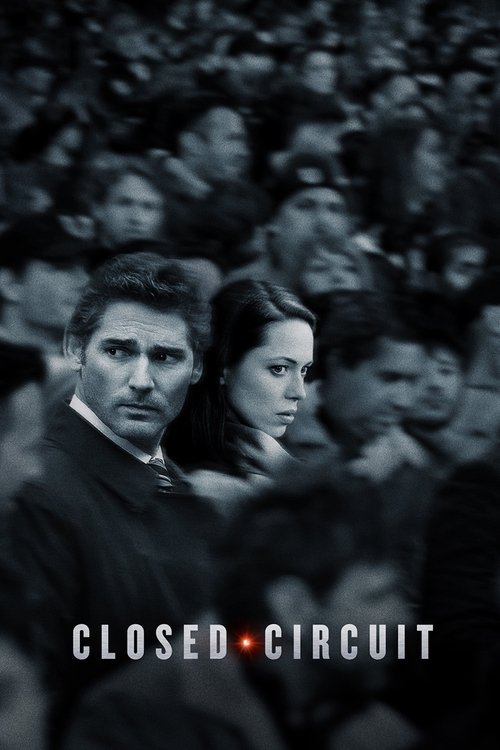
Closed Circuit
A high-profile terrorism case unexpectedly binds together two ex-lovers on the defense team - testing the limits of their loyalties and placing their lives in jeopardy.
The film earned $5.8M at the global box office.


Plot Structure
Story beats plotted across runtime


Narrative Arc
Emotional journey through the story's key moments
Story Circle
Blueprint 15-beat structure
Arcplot Score Breakdown
Weighted: Precision (70%) + Arc (15%) + Theme (15%)
Closed Circuit (2013) exemplifies strategically placed narrative design, characteristic of John Crowley's storytelling approach. This structural analysis examines how the film's 15-point plot structure maps to proven narrative frameworks across 1 hour and 36 minutes. With an Arcplot score of 7.6, the film showcases strong structural fundamentals.
Characters
Cast & narrative archetypes

Martin Rose
Claudia Simmons-Howe
Attorney General
Devlin
Nazrul Sharma
Main Cast & Characters
Martin Rose
Played by Eric Bana
A barrister assigned as special advocate in a terrorism trial who discovers a dangerous conspiracy involving state secrets.
Claudia Simmons-Howe
Played by Rebecca Hall
A brilliant barrister and Martin's former lover who becomes lead defense counsel in the same terrorism case.
Attorney General
Played by Jim Broadbent
The chief legal advisor to the government who oversees the sensitive terrorism prosecution.
Devlin
Played by Ciaran Hinds
A mysterious MI5 officer who monitors and manipulates the legal proceedings from the shadows.
Nazrul Sharma
Played by Riz Ahmed
A journalist who possesses dangerous information about the bombing case and government involvement.
Structural Analysis
The Status Quo at 1 minutes (1% through the runtime) establishes Multiple CCTV cameras capture ordinary life at Borough Market in London - shoppers, vendors, and daily routines under constant surveillance, establishing the film's theme of being watched.. Significantly, this early placement immediately immerses viewers in the story world.
The inciting incident occurs at 12 minutes when Martin learns Claudia is the Special Advocate on the case - his former lover, with whom contact is legally forbidden once proceedings begin. Their shared past becomes an immediate professional and personal complication.. At 12% through the film, this Disruption aligns precisely with traditional story structure. This beat shifts the emotional landscape, launching the protagonist into the central conflict.
The First Threshold at 25 minutes marks the transition into Act II, occurring at 26% of the runtime. This demonstrates the protagonist's commitment to Claudia secretly meets Martin to share what she's found - MI5 knew about the attack in advance through their informant. They choose to violate protocol and work together, knowingly putting themselves at risk from the intelligence services., moving from reaction to action.
At 48 minutes, the Midpoint arrives at 50% of the runtime—precisely centered, creating perfect narrative symmetry. Structural examination shows that this crucial beat Nazrul, Martin's investigator, is murdered - made to look like a hit-and-run accident. The conspiracy has shown it will kill to protect its secrets, transforming this from legal intrigue into a fight for survival., fundamentally raising what's at risk. The emotional intensity shifts, dividing the narrative into clear before-and-after phases.
The Collapse moment at 71 minutes (74% through) represents the emotional nadir. Here, Martin discovers he's been under surveillance the entire time - his home, his meetings with Claudia, everything. The Attorney General reveals they know about his violations and threatens to destroy his career and freedom. He appears utterly trapped., demonstrates the protagonist at their lowest point. This beat's placement in the final quarter sets up the climactic reversal.
The Second Threshold at 77 minutes initiates the final act resolution at 80% of the runtime. Martin contacts journalist Joanna Reece, choosing to leak the story to the press rather than fight within a compromised system. He commits to exposing the truth regardless of personal consequences., demonstrating the transformation achieved throughout the journey.
Emotional Journey
Closed Circuit's emotional architecture traces a deliberate progression across 15 carefully calibrated beats.
Narrative Framework
This structural analysis employs a 15-point narrative structure framework that maps key story moments. By mapping Closed Circuit against these established plot points, we can identify how John Crowley utilizes or subverts traditional narrative conventions. The plot point approach reveals not only adherence to structural principles but also creative choices that distinguish Closed Circuit within the mystery genre.
John Crowley's Structural Approach
Among the 4 John Crowley films analyzed on Arcplot, the average structural score is 7.2, reflecting strong command of classical structure. Closed Circuit represents one of the director's most structurally precise works. For comparative analysis, explore the complete John Crowley filmography.
Comparative Analysis
Additional mystery films include Lone Star, The Wicker Man and A Soldier's Story. For more John Crowley analyses, see We Live in Time, Intermission and Brooklyn.
Plot Points by Act
Act I
SetupStatus Quo
Multiple CCTV cameras capture ordinary life at Borough Market in London - shoppers, vendors, and daily routines under constant surveillance, establishing the film's theme of being watched.
Theme
The Attorney General states that national security requires certain evidence to remain hidden from the public and even the defense, establishing that truth and transparency are commodities the state controls.
Worldbuilding
The bombing devastates Borough Market, killing 120 people. Farroukh Erdogan is arrested as the alleged mastermind. The original defense attorney is found dead in an apparent suicide. Martin Rose is appointed as replacement counsel while Claudia Simmons-Howe serves as Special Advocate with access to classified evidence.
Disruption
Martin learns Claudia is the Special Advocate on the case - his former lover, with whom contact is legally forbidden once proceedings begin. Their shared past becomes an immediate professional and personal complication.
Resistance
Martin and Claudia navigate their forbidden contact while separately investigating the case. Claudia discovers classified documents revealing the defendant may have been an MI5 informant. Martin's investigator Nazrul begins digging into the original defense attorney's suspicious death.
Act II
ConfrontationFirst Threshold
Claudia secretly meets Martin to share what she's found - MI5 knew about the attack in advance through their informant. They choose to violate protocol and work together, knowingly putting themselves at risk from the intelligence services.
Mirror World
Martin visits his ex-wife and son, revealing the personal cost of his career. This relationship mirrors his dynamic with Claudia - people he's pushed away in pursuit of professional ambition, and whom he now risks losing entirely.
Premise
Martin and Claudia conduct parallel investigations, sharing information through clandestine meetings. They piece together that MI5 allowed the bombing to protect their intelligence operation. The conspiracy grows larger - reaching into the highest levels of government.
Midpoint
Nazrul, Martin's investigator, is murdered - made to look like a hit-and-run accident. The conspiracy has shown it will kill to protect its secrets, transforming this from legal intrigue into a fight for survival.
Opposition
MI5 increases surveillance on both lawyers. Martin is followed constantly. Evidence that could expose the conspiracy begins disappearing. The Attorney General applies pressure to close the case quickly. Erdogan's wife is threatened to ensure his guilty plea.
Collapse
Martin discovers he's been under surveillance the entire time - his home, his meetings with Claudia, everything. The Attorney General reveals they know about his violations and threatens to destroy his career and freedom. He appears utterly trapped.
Crisis
Martin must choose between saving himself by staying silent or exposing the truth and facing certain destruction. Claudia is similarly cornered. The system they believed in has revealed itself as fundamentally corrupt.
Act III
ResolutionSecond Threshold
Martin contacts journalist Joanna Reece, choosing to leak the story to the press rather than fight within a compromised system. He commits to exposing the truth regardless of personal consequences.
Synthesis
The story breaks publicly, revealing MI5's complicity. The Attorney General is exposed. Erdogan's case collapses as the government's conspiracy becomes undeniable. The surveillance state's own tools - the CCTV footage - become evidence of its crimes.
Transformation
Martin and Claudia walk through London, now aware they remain under surveillance but no longer afraid. The cameras still watch, but they've chosen transparency over secrecy - the watchers have become the watched.