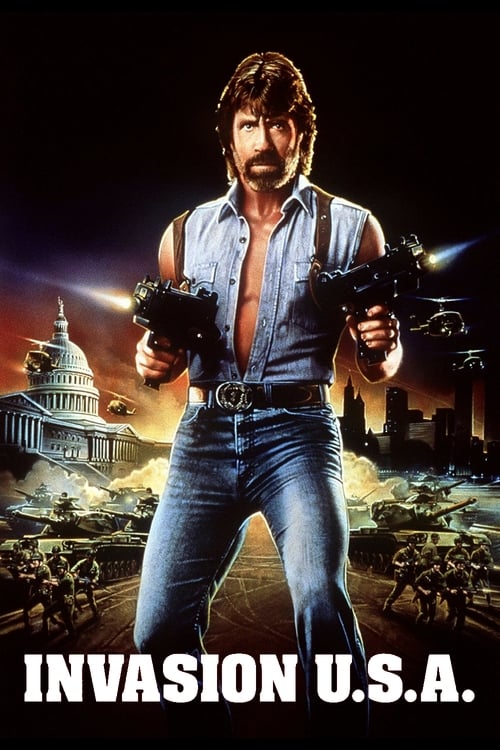
Invasion U.S.A.
A one-man army comes to the rescue of the United States when a spy attempts an invasion.
Working with a small-scale budget of $12.0M, the film achieved a steady performer with $17.5M in global revenue (+46% profit margin).


Plot Structure
Story beats plotted across runtime


Narrative Arc
Emotional journey through the story's key moments
Story Circle
Blueprint 15-beat structure
Arcplot Score Breakdown
Weighted: Precision (70%) + Arc (15%) + Theme (15%)
Invasion U.S.A. (1985) demonstrates deliberately positioned narrative design, characteristic of Joseph Zito's storytelling approach. This structural analysis examines how the film's 15-point plot structure maps to proven narrative frameworks across 1 hour and 47 minutes. With an Arcplot score of 7.3, the film balances conventional beats with creative variation.
Characters
Cast & narrative archetypes

Matt Hunter
Rostov
McGuire
Mickey
Main Cast & Characters
Matt Hunter
Played by Chuck Norris
Former CIA agent living in the Florida Everglades who is reluctantly drawn back into action to stop a terrorist invasion of America.
Rostov
Played by Richard Lynch
Ruthless Soviet terrorist leader orchestrating a massive invasion of the United States to destabilize the nation through fear and chaos.
McGuire
Played by Alex Colon
Matt Hunter's former CIA colleague who tries to recruit him back into service to stop the terrorist threat.
Mickey
Played by Dehl Berti
Matt Hunter's friend and companion in the Everglades who gets caught up in the terrorist attacks.
Structural Analysis
The Status Quo at 2 minutes (2% through the runtime) establishes Matt Hunter lives in peaceful retirement in the Florida Everglades, wrestling alligators and living a solitary life, having left behind his CIA career.. Notably, this early placement immediately immerses viewers in the story world.
The inciting incident occurs at 13 minutes when Rostov's men attack Hunter's home, killing his friend and mentor McGuire with a rocket launcher. Hunter survives but his peaceful world is shattered.. At 12% through the film, this Disruption aligns precisely with traditional story structure. This beat shifts the emotional landscape, launching the protagonist into the central conflict.
The First Threshold at 26 minutes marks the transition into Act II, occurring at 25% of the runtime. This reveals the protagonist's commitment to Hunter makes the active choice to hunt down Rostov and his army alone, arming himself and beginning his one-man counter-insurgency campaign., moving from reaction to action.
At 52 minutes, the Midpoint arrives at 49% of the runtime—precisely centered, creating perfect narrative symmetry. Structural examination shows that this crucial beat False defeat: Rostov escalates with a massive coordinated attack on a shopping mall during Christmas, killing dozens. The invasion appears unstoppable despite Hunter's efforts., fundamentally raising what's at risk. The emotional intensity shifts, dividing the narrative into clear before-and-after phases.
The Collapse moment at 79 minutes (74% through) represents the emotional nadir. Here, Rostov captures innocents and threatens mass execution. America appears lost to terror, martial law looms, and Hunter seems unable to stop the overwhelming force alone., demonstrates the protagonist at their lowest point. This beat's placement in the final quarter sets up the climactic reversal.
The Second Threshold at 84 minutes initiates the final act resolution at 78% of the runtime. Hunter realizes he must take the fight directly to Rostov's base, using knowledge of his enemy from their past encounters. He arms up for the final assault., demonstrating the transformation achieved throughout the journey.
Emotional Journey
Invasion U.S.A.'s emotional architecture traces a deliberate progression across 15 carefully calibrated beats.
Narrative Framework
This structural analysis employs proven narrative structure principles that track dramatic progression. By mapping Invasion U.S.A. against these established plot points, we can identify how Joseph Zito utilizes or subverts traditional narrative conventions. The plot point approach reveals not only adherence to structural principles but also creative choices that distinguish Invasion U.S.A. within the action genre.
Joseph Zito's Structural Approach
Among the 3 Joseph Zito films analyzed on Arcplot, the average structural score is 7.2, reflecting strong command of classical structure. Invasion U.S.A. represents one of the director's most structurally precise works. For comparative analysis, explore the complete Joseph Zito filmography.
Comparative Analysis
Additional action films include The Bad Guys, Puss in Boots and Venom: The Last Dance. For more Joseph Zito analyses, see Missing in Action, Friday the 13th: The Final Chapter.
Plot Points by Act
Act I
SetupStatus Quo
Matt Hunter lives in peaceful retirement in the Florida Everglades, wrestling alligators and living a solitary life, having left behind his CIA career.
Theme
CIA agent McGuire tells Hunter: "This is your country too" - establishing the theme of personal responsibility and defending freedom when evil threatens home.
Worldbuilding
Soviet terrorist Rostov arrives in America with hundreds of sleeper cell fighters. We see Hunter's peaceful life contrasted with Rostov's brutal preparation for invasion. McGuire tries to recruit Hunter back.
Disruption
Rostov's men attack Hunter's home, killing his friend and mentor McGuire with a rocket launcher. Hunter survives but his peaceful world is shattered.
Resistance
Hunter debates getting involved. Terrorist attacks begin across America - a suburban neighborhood is shot up, creating chaos and fear. Hunter investigates and gathers intel on the invasion.
Act II
ConfrontationFirst Threshold
Hunter makes the active choice to hunt down Rostov and his army alone, arming himself and beginning his one-man counter-insurgency campaign.
Mirror World
Reporter McGuire's daughter appears, seeking to document the story and representing civilian courage and the media's role in exposing truth versus spreading terror.
Premise
Hunter systematically hunts terrorist cells across Florida. Action set pieces deliver the promise: Hunter stopping attacks, saving civilians, and using guerrilla tactics against the invaders.
Midpoint
False defeat: Rostov escalates with a massive coordinated attack on a shopping mall during Christmas, killing dozens. The invasion appears unstoppable despite Hunter's efforts.
Opposition
Rostov's forces intensify attacks. Hunter is hunted while hunting. The violence spreads to churches and neighborhoods. Rostov gets closer to finding Hunter while chaos reigns.
Collapse
Rostov captures innocents and threatens mass execution. America appears lost to terror, martial law looms, and Hunter seems unable to stop the overwhelming force alone.
Crisis
Hunter faces the darkness of what America could become under terrorist control. He processes the loss and prepares for final confrontation.
Act III
ResolutionSecond Threshold
Hunter realizes he must take the fight directly to Rostov's base, using knowledge of his enemy from their past encounters. He arms up for the final assault.
Synthesis
Hunter assaults Rostov's compound. Massive firefight and explosions as Hunter eliminates the terrorist army. Final confrontation between Hunter and Rostov, ending with Rostov's death.
Transformation
Hunter walks away from the burning compound, having defended his country. No longer the peaceful hermit, he has become the warrior-protector America needed.