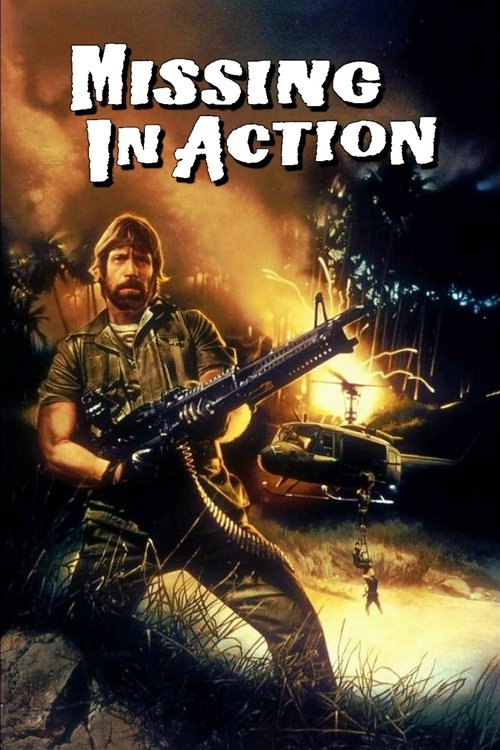
Missing in Action
American servicemen are still being held captive in Vietnam and it's up to one man to bring them home in this blistering, fast-paced action/adventure starring martial arts superstar Chuck Norris. Following a daring escape from a Vietnamese POW camp, Special Forces Colonel James Braddock (Norris) is on a mission to locate and save remaining MIAs.
Despite its tight budget of $2.5M, Missing in Action became a commercial juggernaut, earning $22.8M worldwide—a remarkable 795% return. The film's compelling narrative attracted moviegoers, illustrating how strong storytelling can transcend budget limitations.


Plot Structure
Story beats plotted across runtime


Narrative Arc
Emotional journey through the story's key moments
Story Circle
Blueprint 15-beat structure
Arcplot Score Breakdown
Weighted: Precision (70%) + Arc (15%) + Theme (15%)
Missing in Action (1984) exhibits strategically placed narrative architecture, characteristic of Joseph Zito's storytelling approach. This structural analysis examines how the film's 15-point plot structure maps to proven narrative frameworks across 1 hour and 41 minutes. With an Arcplot score of 6.7, the film balances conventional beats with creative variation.
Characters
Cast & narrative archetypes

Colonel James Braddock
Ann Fitzgerald
Tuck
Colonel Yin
General Trau
MacLeod
Main Cast & Characters
Colonel James Braddock
Played by Chuck Norris
A former POW who returns to Vietnam to rescue American soldiers still held captive, driven by guilt and duty.
Ann Fitzgerald
Played by Lenore Kasdorf
A government aide and Braddock's romantic interest who believes in his mission and provides support.
Tuck
Played by M. Emmet Walsh
Braddock's loyal friend and fellow soldier who assists in the rescue mission with unwavering commitment.
Colonel Yin
Played by James Hong
The Vietnamese antagonist who runs the POW camp and previously tortured Braddock.
General Trau
Played by Ernie Ortega
A Vietnamese general who denies the existence of POWs during diplomatic negotiations.
MacLeod
Played by David Tress
A cynical government official who opposes Braddock's claims about remaining POWs.
Structural Analysis
The Status Quo at 1 minutes (1% through the runtime) establishes Colonel Braddock arrives in Saigon for a diplomatic inquiry into American POWs. He carries visible trauma from his past captivity.. Significantly, this early placement immediately immerses viewers in the story world.
The inciting incident occurs at 12 minutes when The Vietnamese delegation presents "evidence" that no POWs remain, humiliating Braddock publicly. The diplomatic process is revealed as a sham.. At 12% through the film, this Disruption aligns precisely with traditional story structure. This beat shifts the emotional landscape, launching the protagonist into the central conflict.
The First Threshold at 26 minutes marks the transition into Act II, occurring at 25% of the runtime. This illustrates the protagonist's commitment to Braddock chooses to go AWOL from the diplomatic mission and launch his own unauthorized rescue operation, crossing into the Vietnamese jungle., moving from reaction to action.
At 51 minutes, the Midpoint arrives at 51% of the runtime—precisely centered, creating perfect narrative symmetry. Notably, this crucial beat Braddock locates the POW camp and confirms his men are alive. False victory: he's found them, but extraction will be far more difficult than infiltration., fundamentally raising what's at risk. The emotional intensity shifts, dividing the narrative into clear before-and-after phases.
The Collapse moment at 77 minutes (76% through) represents the emotional nadir. Here, Braddock is captured and brought before his old nemesis, the Vietnamese colonel. Facing execution, the rescue seems impossible. His one-man war appears finished., demonstrates the protagonist at their lowest point. This beat's placement in the final quarter sets up the climactic reversal.
The Second Threshold at 82 minutes initiates the final act resolution at 81% of the runtime. Braddock escapes using the survival skills forged in his original captivity. He synthesizes past trauma into present strength, turning his prison experience into tactical advantage., demonstrating the transformation achieved throughout the journey.
Emotional Journey
Missing in Action's emotional architecture traces a deliberate progression across 15 carefully calibrated beats.
Narrative Framework
This structural analysis employs systematic plot point analysis that identifies crucial turning points. By mapping Missing in Action against these established plot points, we can identify how Joseph Zito utilizes or subverts traditional narrative conventions. The plot point approach reveals not only adherence to structural principles but also creative choices that distinguish Missing in Action within the action genre.
Joseph Zito's Structural Approach
Among the 3 Joseph Zito films analyzed on Arcplot, the average structural score is 7.2, reflecting strong command of classical structure. Missing in Action takes a more unconventional approach compared to the director's typical style. For comparative analysis, explore the complete Joseph Zito filmography.
Comparative Analysis
Additional action films include The Bad Guys, Puss in Boots and Venom: The Last Dance. For more Joseph Zito analyses, see Friday the 13th: The Final Chapter, Invasion U.S.A..
Plot Points by Act
Act I
SetupStatus Quo
Colonel Braddock arrives in Saigon for a diplomatic inquiry into American POWs. He carries visible trauma from his past captivity.
Theme
Tuck, Braddock's friend, says "They're still over there, we left them behind." The theme: America abandoned its soldiers, and honor demands action.
Worldbuilding
Flashbacks reveal Braddock's brutal POW experience and escape. Present-day diplomatic hearings show Vietnamese denying POWs exist. We meet Tuck and Ann, establish bureaucratic obstacles.
Disruption
The Vietnamese delegation presents "evidence" that no POWs remain, humiliating Braddock publicly. The diplomatic process is revealed as a sham.
Resistance
Braddock debates whether to take matters into his own hands. He receives photos proving POWs exist. Tuck provides intel and equipment. Ann warns against going rogue.
Act II
ConfrontationFirst Threshold
Braddock chooses to go AWOL from the diplomatic mission and launch his own unauthorized rescue operation, crossing into the Vietnamese jungle.
Mirror World
Braddock reconnects with local contacts and black market operatives who represent the underground network that keeps faith with the abandoned soldiers.
Premise
The "one-man army" promise: Braddock wages guerrilla warfare, gathering intelligence, eliminating guards, and methodically working toward the POW camp through explosive action sequences.
Midpoint
Braddock locates the POW camp and confirms his men are alive. False victory: he's found them, but extraction will be far more difficult than infiltration.
Opposition
Vietnamese forces close in. Braddock's extraction plan faces obstacles. The enemy anticipates his moves. Time pressure mounts as diplomatic authorities hunt for him.
Collapse
Braddock is captured and brought before his old nemesis, the Vietnamese colonel. Facing execution, the rescue seems impossible. His one-man war appears finished.
Crisis
In captivity, Braddock confronts his trauma and the faces of the men he came to save. The weight of potential failure and their continued suffering.
Act III
ResolutionSecond Threshold
Braddock escapes using the survival skills forged in his original captivity. He synthesizes past trauma into present strength, turning his prison experience into tactical advantage.
Synthesis
Full-scale assault on the POW camp. Braddock frees the prisoners, defeats the Vietnamese colonel, and fights through enemy forces to reach the extraction point with the POWs.
Transformation
Braddock and the rescued POWs arrive back in Thailand. The haunted soldier from the opening is now resolved, having honored his promise to never leave a man behind.