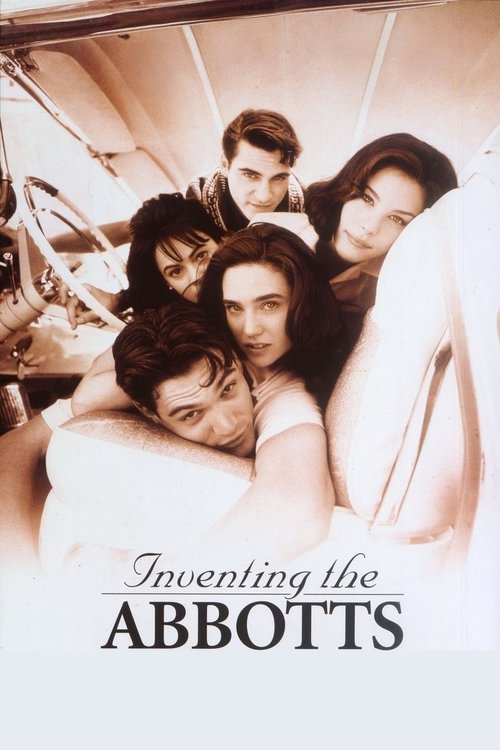
Inventing the Abbotts
In the 1950s, brothers Jacey and Doug Holt, who come from the poorer side of their sleepy Midwestern town, vie for the affections of the wealthy, lovely Abbott sisters. Lady-killer Jacey alternates between Eleanor and Alice, wanting simply to break the hearts of rich young women. But sensitive Doug has a real romance with Pamela, which Jacey and the Abbott patriarch, Lloyd, both frown upon.
The film earned $5.9M at the global box office.


Plot Structure
Story beats plotted across runtime


Narrative Arc
Emotional journey through the story's key moments
Story Circle
Blueprint 15-beat structure
Arcplot Score Breakdown
Weighted: Precision (70%) + Arc (15%) + Theme (15%)
Inventing the Abbotts (1997) exhibits deliberately positioned dramatic framework, characteristic of Pat O'Connor's storytelling approach. This structural analysis examines how the film's 15-point plot structure maps to proven narrative frameworks across 1 hour and 50 minutes. With an Arcplot score of 7.4, the film balances conventional beats with creative variation.
Characters
Cast & narrative archetypes

Doug Holt
Jacey Holt
Pamela Abbott
Eleanor Abbott
Alice Abbott
Lloyd Abbott
Helen Holt
Main Cast & Characters
Doug Holt
Played by Joaquin Phoenix
The younger Holt brother who falls in love with Pamela Abbott and narrates the story of his family's complex relationship with the wealthy Abbott family.
Jacey Holt
Played by Billy Crudup
Doug's older brother, bitter and resentful toward the Abbotts, who becomes involved with all three Abbott sisters.
Pamela Abbott
Played by Liv Tyler
The youngest and most genuine of the Abbott sisters who develops a relationship with Doug.
Eleanor Abbott
Played by Jennifer Connelly
The eldest Abbott sister, sophisticated and engaged to be married, who has a secret past with Jacey.
Alice Abbott
Played by Joanna Going
The middle Abbott sister, rebellious and wild, who becomes involved with Jacey.
Lloyd Abbott
Played by Will Patton
The wealthy patriarch of the Abbott family who may harbor a dark secret about the Holt family's past.
Helen Holt
Played by Kathy Baker
The hardworking mother of Doug and Jacey who raised her sons alone after their father's death.
Structural Analysis
The Status Quo at 1 minutes (1% through the runtime) establishes Doug Holt narrates his working-class childhood in 1950s Illinois, watching the wealthy Abbott family from afar. The Holts are mechanics; the Abbotts are society elites.. Of particular interest, this early placement immediately immerses viewers in the story world.
The inciting incident occurs at 14 minutes when Doug meets Pamela Abbott at a dance and they share an unexpected connection. Unlike his brother's conquests, this feels genuine and disrupts Doug's resigned acceptance of the class barrier.. At 13% through the film, this Disruption is delayed, allowing extended setup of the story world. This beat shifts the emotional landscape, launching the protagonist into the central conflict.
The First Threshold at 28 minutes marks the transition into Act II, occurring at 25% of the runtime. This demonstrates the protagonist's commitment to Doug actively chooses to pursue a relationship with Pamela, meeting her secretly and crossing the social boundary his family warned him about. He commits to the risk., moving from reaction to action.
At 55 minutes, the Midpoint arrives at 50% of the runtime—precisely centered, creating perfect narrative symmetry. Of particular interest, this crucial beat False defeat: Pamela breaks things off with Doug under family pressure, or Doug discovers painful truths about his father's connection to Lloyd Abbott. The class barrier reasserts itself, and the easy romance ends., fundamentally raising what's at risk. The emotional intensity shifts, dividing the narrative into clear before-and-after phases.
The Collapse moment at 83 minutes (75% through) represents the emotional nadir. Here, Doug fully embraces his family's bitterness, losing himself in resentment toward the Abbotts. The "death" of his authentic self—he becomes what he feared, defined by class hatred rather than his own identity., indicates the protagonist at their lowest point. This beat's placement in the final quarter sets up the climactic reversal.
The Second Threshold at 88 minutes initiates the final act resolution at 80% of the runtime. Doug realizes he must let go of the family grudge and define himself on his own terms. He chooses forgiveness and self-determination over inherited bitterness, synthesizing his authentic self with hard-won wisdom., demonstrating the transformation achieved throughout the journey.
Emotional Journey
Inventing the Abbotts's emotional architecture traces a deliberate progression across 15 carefully calibrated beats.
Narrative Framework
This structural analysis employs systematic plot point analysis that identifies crucial turning points. By mapping Inventing the Abbotts against these established plot points, we can identify how Pat O'Connor utilizes or subverts traditional narrative conventions. The plot point approach reveals not only adherence to structural principles but also creative choices that distinguish Inventing the Abbotts within the drama genre.
Pat O'Connor's Structural Approach
Among the 2 Pat O'Connor films analyzed on Arcplot, the average structural score is 7.2, reflecting strong command of classical structure. Inventing the Abbotts represents one of the director's most structurally precise works. For comparative analysis, explore the complete Pat O'Connor filmography.
Comparative Analysis
Additional drama films include After Thomas, South Pacific and Dirty Dancing: Havana Nights. For more Pat O'Connor analyses, see Sweet November.
Plot Points by Act
Act I
SetupStatus Quo
Doug Holt narrates his working-class childhood in 1950s Illinois, watching the wealthy Abbott family from afar. The Holts are mechanics; the Abbotts are society elites.
Theme
Doug's mother Helen tells him: "You can't spend your life obsessed with people who don't give a damn about you." This foreshadows the brothers' destructive fixation on the Abbotts.
Worldbuilding
Establishment of the class divide in small-town Illinois. Jacey aggressively pursues Abbott daughters while Doug remains reserved. The family's resentment toward Lloyd Abbott is revealed through their father's death story.
Disruption
Doug meets Pamela Abbott at a dance and they share an unexpected connection. Unlike his brother's conquests, this feels genuine and disrupts Doug's resigned acceptance of the class barrier.
Resistance
Doug wrestles with pursuing Pamela despite the social gap. Jacey's reckless affairs with Eleanor and Alice Abbott serve as cautionary examples. Doug hesitates, fearing he'll be used or rejected.
Act II
ConfrontationFirst Threshold
Doug actively chooses to pursue a relationship with Pamela, meeting her secretly and crossing the social boundary his family warned him about. He commits to the risk.
Mirror World
Pamela becomes Doug's mirror—she represents authenticity versus his family's bitterness. Their relationship explores whether love can transcend class resentment and whether Doug can define himself beyond his family's grudges.
Premise
Doug and Pamela's romance blossoms in secret. The "promise of the premise"—can a working-class boy and wealthy girl overcome their divide? Meanwhile, Jacey's destructive path with the Abbott sisters escalates.
Midpoint
False defeat: Pamela breaks things off with Doug under family pressure, or Doug discovers painful truths about his father's connection to Lloyd Abbott. The class barrier reasserts itself, and the easy romance ends.
Opposition
Doug struggles with rejection and family revelations. Jacey's vendetta against the Abbotts intensifies, pulling Doug into the family's cycle of resentment. Doug's identity crisis deepens—is he defined by his family's bitterness?
Collapse
Doug fully embraces his family's bitterness, losing himself in resentment toward the Abbotts. The "death" of his authentic self—he becomes what he feared, defined by class hatred rather than his own identity.
Crisis
Doug sits in the darkness of bitterness and regret, reflecting on how the obsession with the Abbotts has poisoned his family. He realizes he must choose his own path or be consumed by inherited resentment.
Act III
ResolutionSecond Threshold
Doug realizes he must let go of the family grudge and define himself on his own terms. He chooses forgiveness and self-determination over inherited bitterness, synthesizing his authentic self with hard-won wisdom.
Synthesis
Doug confronts his past, reconciles with Pamela or makes peace with their separation, and breaks free from the cycle of resentment. He leaves town to forge his own identity, no longer defined by class warfare.
Transformation
Doug narrates his liberation from the past. Unlike the opening where he was defined by the Abbott-Holt divide, he now defines himself. He has escaped the gravitational pull of inherited resentment and found his own identity.