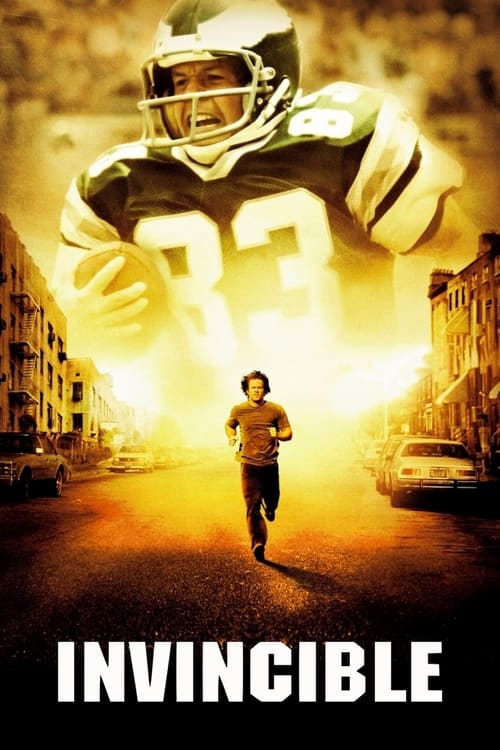
Invincible
Inspired by the true story of Vince Papale, a man with nothing to lose who ignored the staggering odds and made his dream come true. When the coach of Papale's beloved hometown football team hosted an unprecedented open tryout, the public consensus was that it was a waste of time – no one good enough to play professional football was going to be found this way.
Working with a moderate budget of $30.0M, the film achieved a respectable showing with $57.8M in global revenue (+93% profit margin).


Plot Structure
Story beats plotted across runtime


Narrative Arc
Emotional journey through the story's key moments
Story Circle
Blueprint 15-beat structure
Arcplot Score Breakdown
Weighted: Precision (70%) + Arc (15%) + Theme (15%)
Invincible (2006) reveals carefully calibrated story structure, characteristic of Ericson Core's storytelling approach. This structural analysis examines how the film's 15-point plot structure maps to proven narrative frameworks across 1 hour and 45 minutes. With an Arcplot score of 6.2, the film takes an unconventional approach to traditional narrative frameworks.
Characters
Cast & narrative archetypes

Vince Papale
Dick Vermeil
Janet Cantrell
Frank Papale
Max Cantrell
Tommy
Johnny
Main Cast & Characters
Vince Papale
Played by Mark Wahlberg
A 30-year-old bartender and substitute teacher who becomes the oldest rookie in NFL history with the Philadelphia Eagles.
Dick Vermeil
Played by Greg Kinnear
The new head coach of the Philadelphia Eagles who holds open tryouts and sees potential in Vince.
Janet Cantrell
Played by Elizabeth Banks
A Giants fan and bartender who becomes Vince's love interest and supports his dream.
Frank Papale
Played by Kevin Conway
Vince's father, a former factory worker who provides grounded wisdom and emotional support.
Max Cantrell
Played by Michael Rispoli
Janet's uncle and bar owner who hires Vince and serves as a supportive father figure.
Tommy
Played by Kirk Acevedo
Vince's loyal best friend who plays on the neighborhood football team and supports his tryout.
Johnny
Played by Michael Kelly
One of Vince's close friends from the neighborhood who encourages him to pursue his dream.
Structural Analysis
The Status Quo at 1 minutes (1% through the runtime) establishes Vince Papale plays sandlot football in his struggling South Philadelphia neighborhood in 1976. He's a 30-year-old substitute teacher and bartender, living a blue-collar life far from his football dreams.. The analysis reveals that this early placement immediately immerses viewers in the story world.
The inciting incident occurs at 13 minutes when Vince's wife Sharon leaves him, saying he'll never amount to anything and will always be a loser. She abandons him with only a note, crushing his already fragile world.. At 13% through the film, this Disruption is delayed, allowing extended setup of the story world. This beat shifts the emotional landscape, launching the protagonist into the central conflict.
The First Threshold at 26 minutes marks the transition into Act II, occurring at 25% of the runtime. This illustrates the protagonist's commitment to Vince decides to attend the open tryouts at Veterans Stadium. He crosses onto the professional field for the first time, actively choosing to pursue an impossible dream rather than accepting his lot in life., moving from reaction to action.
At 53 minutes, the Midpoint arrives at 50% of the runtime—precisely centered, creating perfect narrative symmetry. Structural examination shows that this crucial beat Coach Vermeil tells Vince he's made the team. False victory: Vince has achieved the impossible and made the Eagles roster, but now the real challenge begins—he must prove he belongs and actually contribute., fundamentally raising what's at risk. The emotional intensity shifts, dividing the narrative into clear before-and-after phases.
The Collapse moment at 79 minutes (75% through) represents the emotional nadir. Here, Vince fumbles during a crucial game moment, confirming his teammates' doubts and his own fears. His dream appears to be dying—he's proved the doubters right and seems destined to be cut from the team., reveals the protagonist at their lowest point. This beat's placement in the final quarter sets up the climactic reversal.
The Second Threshold at 84 minutes initiates the final act resolution at 80% of the runtime. Vince realizes that his value isn't about being perfect—it's about heart, effort, and representing hope for regular people. He synthesizes his blue-collar toughness with his newfound professional skills and chooses to fight., demonstrating the transformation achieved throughout the journey.
Emotional Journey
Invincible's emotional architecture traces a deliberate progression across 15 carefully calibrated beats.
Narrative Framework
This structural analysis employs proven narrative structure principles that track dramatic progression. By mapping Invincible against these established plot points, we can identify how Ericson Core utilizes or subverts traditional narrative conventions. The plot point approach reveals not only adherence to structural principles but also creative choices that distinguish Invincible within the drama genre.
Comparative Analysis
Additional drama films include After Thomas, South Pacific and Dirty Dancing: Havana Nights.
Plot Points by Act
Act I
SetupStatus Quo
Vince Papale plays sandlot football in his struggling South Philadelphia neighborhood in 1976. He's a 30-year-old substitute teacher and bartender, living a blue-collar life far from his football dreams.
Theme
Vince's friend Tommy tells him, "You got to have a little faith," when discussing the city's despair and the Eagles' failures. This establishes the theme of belief against impossible odds.
Worldbuilding
Exposition of Vince's world: his dead-end jobs, his crumbling marriage, Philadelphia's economic decline, the Eagles' losing streak, and the neighborhood bar culture where football is religion but hope is scarce.
Disruption
Vince's wife Sharon leaves him, saying he'll never amount to anything and will always be a loser. She abandons him with only a note, crushing his already fragile world.
Resistance
New Eagles coach Dick Vermeil announces open tryouts. Vince's friends and bartender Janet push him to try out despite his age and doubts. He debates whether he's too old and if it's foolish to even attempt.
Act II
ConfrontationFirst Threshold
Vince decides to attend the open tryouts at Veterans Stadium. He crosses onto the professional field for the first time, actively choosing to pursue an impossible dream rather than accepting his lot in life.
Mirror World
Vince's relationship with Janet deepens. She represents faith, optimism, and belief in him. Unlike his ex-wife, Janet sees his potential and embodies the thematic counterpoint to his self-doubt.
Premise
Vince survives cuts and makes it to training camp. The promise of the premise: a regular guy competing with professional athletes. He faces hazing, doubt from veterans, grueling practices, but shows heart and determination.
Midpoint
Coach Vermeil tells Vince he's made the team. False victory: Vince has achieved the impossible and made the Eagles roster, but now the real challenge begins—he must prove he belongs and actually contribute.
Opposition
Vince struggles with veteran players who resent him, media scrutiny, self-doubt about whether he truly belongs. His mistakes in practice are magnified. The stakes intensify as he must perform in actual games or be cut.
Collapse
Vince fumbles during a crucial game moment, confirming his teammates' doubts and his own fears. His dream appears to be dying—he's proved the doubters right and seems destined to be cut from the team.
Crisis
Vince faces his darkest moment of self-doubt. He processes the humiliation and considers quitting. Janet and his friends remind him of how far he's come and what he represents to the city.
Act III
ResolutionSecond Threshold
Vince realizes that his value isn't about being perfect—it's about heart, effort, and representing hope for regular people. He synthesizes his blue-collar toughness with his newfound professional skills and chooses to fight.
Synthesis
The finale: Vince plays in a game against the Giants. He makes a crucial special teams play, recovering a fumble that helps the Eagles win. He proves his worth not as a star, but as a contributor who earned his place.
Transformation
Vince is carried off the field by fans who stormed Veterans Stadium. He's transformed from a man who saw himself as a loser into someone who inspired a city by proving that ordinary people can achieve extraordinary things through faith and perseverance.