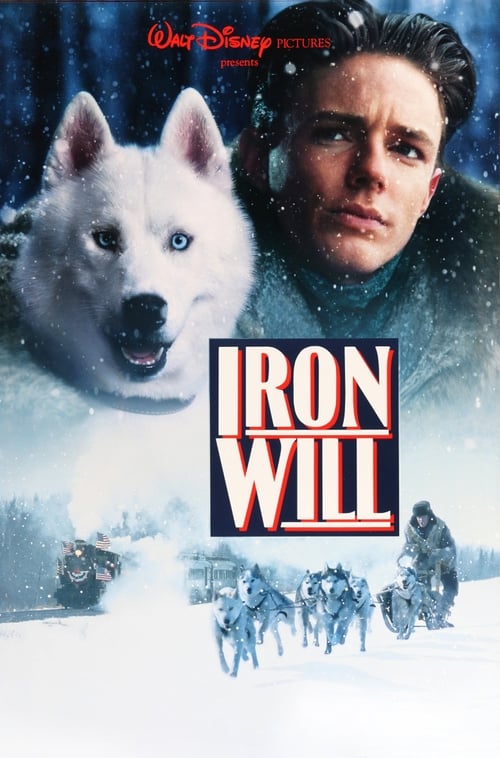
Iron Will
When Will Stoneman's father dies, he is left alone to take care of his mother and their land. Needing money to maintain it, he decides to join a cross country dogsled race. This race will require days of racing for long hours, through harsh weather and terrain. This young man will need a lot of courage and a strong will to complete this race.
The film earned $21.0M at the global box office.


Plot Structure
Story beats plotted across runtime


Narrative Arc
Emotional journey through the story's key moments
Story Circle
Blueprint 15-beat structure
Arcplot Score Breakdown
Weighted: Precision (70%) + Arc (15%) + Theme (15%)
Iron Will (1994) exemplifies precise story structure, characteristic of Charles Haid's storytelling approach. This structural analysis examines how the film's 15-point plot structure maps to proven narrative frameworks across 1 hour and 48 minutes. With an Arcplot score of 7.3, the film balances conventional beats with creative variation.
Characters
Cast & narrative archetypes

Will Stoneman
Harry Kingsley
Maggie Stoneman
Ned Dodd
J.W. Harper
Angus McTeague
Main Cast & Characters
Will Stoneman
Played by Mackenzie Astin
A determined 17-year-old farm boy who enters a grueling dog sled race to save his family's farm after his father's death.
Harry Kingsley
Played by Kevin Spacey
A cynical journalist who initially exploits Will's story but gradually becomes his ally and mentor.
Maggie Stoneman
Played by Penelope Windust
Will's strong and resilient mother who struggles to keep the farm running while supporting her son's dangerous decision.
Ned Dodd
Played by August Schellenberg
A kind-hearted general store owner who quietly supports the Stoneman family and believes in Will.
J.W. Harper
Played by Brian Cox
A wealthy and ruthless mining magnate who pressures the Stonemans to sell their land and sponsors Will's rival.
Angus McTeague
Played by George Gerdes
Harper's brutal champion musher who uses intimidation and dirty tactics to eliminate Will from the race.
Structural Analysis
The Status Quo at 1 minutes (1% through the runtime) establishes Will Stoneman lives a peaceful life in South Dakota with his parents, helping with the family farm and dog sled team. The family dynamic is warm and loving, showing Will as a capable young man preparing for college.. The analysis reveals that this early placement immediately immerses viewers in the story world.
The inciting incident occurs at 13 minutes when Will's father dies in a tragic accident during a training run with the dog sled team. This devastating loss destroys the family's stability and threatens Will's future, including his college education.. At 12% through the film, this Disruption aligns precisely with traditional story structure. This beat shifts the emotional landscape, launching the protagonist into the central conflict.
The First Threshold at 28 minutes marks the transition into Act II, occurring at 26% of the runtime. This demonstrates the protagonist's commitment to Will makes the active choice to enter the race despite his mother's objections and his own inexperience. He commits to the dangerous journey, leaving his safe world behind to save his family., moving from reaction to action.
At 54 minutes, the Midpoint arrives at 50% of the runtime—precisely centered, creating perfect narrative symmetry. Notably, this crucial beat Will moves into a leading position in the race, gaining national attention and proving himself capable. This false victory raises stakes - now he's a threat, and his competitors actively work against him. The stakes shift from just participating to actually winning., fundamentally raising what's at risk. The emotional intensity shifts, dividing the narrative into clear before-and-after phases.
The Collapse moment at 80 minutes (74% through) represents the emotional nadir. Here, Will's lead dog Gus collapses from exhaustion and appears to be dying. Will faces losing his father's beloved dog and his chance to finish the race. This "whiff of death" represents the potential death of Will's dream and his connection to his father., indicates the protagonist at their lowest point. This beat's placement in the final quarter sets up the climactic reversal.
The Second Threshold at 87 minutes initiates the final act resolution at 81% of the runtime. Will realizes finishing isn't about winning or the money - it's about honoring his father's lesson about perseverance and doing what's right. He chooses to continue, synthesizing his father's wisdom with his own strength. Gus recovers enough to continue., demonstrating the transformation achieved throughout the journey.
Emotional Journey
Iron Will's emotional architecture traces a deliberate progression across 15 carefully calibrated beats.
Narrative Framework
This structural analysis employs structural analysis methodology used to understand storytelling architecture. By mapping Iron Will against these established plot points, we can identify how Charles Haid utilizes or subverts traditional narrative conventions. The plot point approach reveals not only adherence to structural principles but also creative choices that distinguish Iron Will within the adventure genre.
Comparative Analysis
Additional adventure films include The Black Stallion, The Bad Guys and Puss in Boots.
Plot Points by Act
Act I
SetupStatus Quo
Will Stoneman lives a peaceful life in South Dakota with his parents, helping with the family farm and dog sled team. The family dynamic is warm and loving, showing Will as a capable young man preparing for college.
Theme
Will's father tells him "It's not how you start, it's how you finish" - establishing the film's core theme about perseverance, determination, and completing what you start despite obstacles.
Worldbuilding
Establishment of 1917 rural South Dakota, the Stoneman family dynamics, Will's college aspirations, his father's experience with dog sledding, and the family's financial struggles. Introduction of the famous cross-country dog sled race.
Disruption
Will's father dies in a tragic accident during a training run with the dog sled team. This devastating loss destroys the family's stability and threatens Will's future, including his college education.
Resistance
Will struggles with grief and learns the family farm will be foreclosed. He debates whether to enter the dangerous 522-mile Winnipeg to Saint Paul dog sled race for the prize money. His mother opposes it, fearing she'll lose him too. Will researches his father's racing knowledge.
Act II
ConfrontationFirst Threshold
Will makes the active choice to enter the race despite his mother's objections and his own inexperience. He commits to the dangerous journey, leaving his safe world behind to save his family.
Mirror World
Will meets journalist Harper, who initially wants to exploit Will's story for headlines but becomes a mentor figure who helps Will understand what true grit means and believes in him when others doubt.
Premise
The race itself - the promise of the premise. Will faces the brutal elements, learns to handle his dog team, competes against experienced racers including the arrogant Borg Guillarson, and proves he belongs despite being an underdog.
Midpoint
Will moves into a leading position in the race, gaining national attention and proving himself capable. This false victory raises stakes - now he's a threat, and his competitors actively work against him. The stakes shift from just participating to actually winning.
Opposition
Borg and other racers sabotage Will. The physical toll intensifies - frostbite, exhaustion, dwindling supplies. Will faces moral tests about cheating to win. The elements become more brutal. His dogs are pushed to their limits.
Collapse
Will's lead dog Gus collapses from exhaustion and appears to be dying. Will faces losing his father's beloved dog and his chance to finish the race. This "whiff of death" represents the potential death of Will's dream and his connection to his father.
Crisis
Will sits with Gus in the dark night of the soul, questioning whether the race is worth the cost. He must decide whether to quit and save Gus or find a way to continue honoring his father's memory and save his family.
Act III
ResolutionSecond Threshold
Will realizes finishing isn't about winning or the money - it's about honoring his father's lesson about perseverance and doing what's right. He chooses to continue, synthesizing his father's wisdom with his own strength. Gus recovers enough to continue.
Synthesis
The final leg of the race. Will pushes through impossible conditions with renewed purpose. He races not just for victory but to prove the power of determination. The finale brings him to Saint Paul in a climactic finish against Borg.
Transformation
Will crosses the finish line victorious, having transformed from a grieving boy into a man of iron will. The closing image mirrors the opening - Will with his dogs - but now he embodies his father's wisdom and has saved his family, completing what he started.