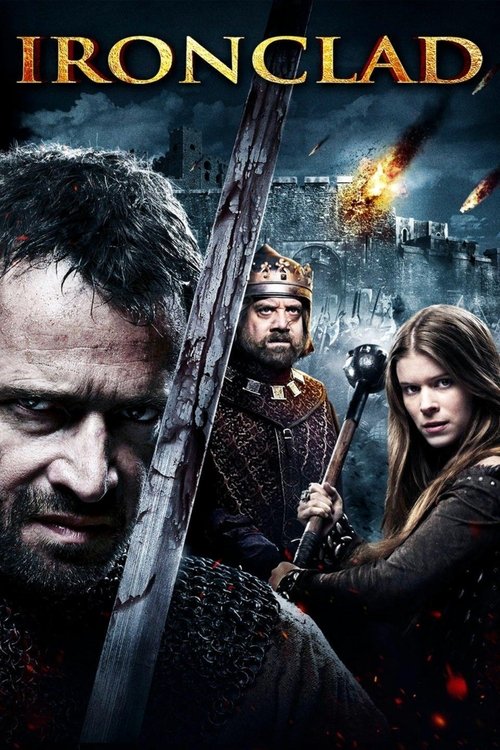
Ironclad
In the year 1215, the rebel barons of England have forced their despised King John to put his royal seal on the Magna Carta, a seminal document that upheld the rights of free men. Yet within months of pledging himself to the great charter, the King reneged on his word and assembled a mercenary army on the south coast of England with the intention of bringing the barons and the country back under his tyrannical rule. Barring his way stood the mighty Rochester castle, a place that would become the symbol of the rebel's momentous struggle for justice and freedom.
The film financial setback against its moderate budget of $25.0M, earning $5.2M globally (-79% loss). While initial box office returns were modest, the film has gained appreciation for its compelling narrative within the romance genre.


Plot Structure
Story beats plotted across runtime


Narrative Arc
Emotional journey through the story's key moments
Story Circle
Blueprint 15-beat structure
Arcplot Score Breakdown
Weighted: Precision (70%) + Arc (15%) + Theme (15%)
Ironclad (2011) exemplifies precise dramatic framework, characteristic of Jonathan English's storytelling approach. This structural analysis examines how the film's 15-point plot structure maps to proven narrative frameworks across 2 hours and 1 minutes. With an Arcplot score of 6.9, the film balances conventional beats with creative variation.
Characters
Cast & narrative archetypes

Thomas Marshall
King John
William d'Aubigny
Lady Isabel
Becket
Tiberius
Guy
Marks
Wulfstan
Main Cast & Characters
Thomas Marshall
Played by James Purefoy
A battle-hardened Templar Knight sworn to protect Rochester Castle against King John's forces.
King John
Played by Paul Giamatti
The tyrannical King of England seeking to crush baronial resistance after Magna Carta.
William d'Aubigny
Played by Brian Cox
The Baron of Rochester Castle who leads the defense against the King's siege.
Lady Isabel
Played by Kate Mara
The young wife of Baron d'Aubigny who develops feelings for Marshall during the siege.
Becket
Played by Jason Flemyng
A Danish mercenary and skilled archer defending the castle alongside Marshall.
Tiberius
Played by Vladimir Kulich
A professional squire and veteran warrior fighting to defend Rochester Castle.
Guy
Played by Aneurin Barnard
A young squire eager to prove himself in battle during the castle siege.
Marks
Played by Jamie Foreman
A competent fighter and defender of Rochester Castle.
Wulfstan
Played by Derek Jacobi
The castle's pragmatic cook who joins the defense out of necessity.
Structural Analysis
The Status Quo at 1 minutes (1% through the runtime) establishes Thomas Marshall, a Templar Knight haunted by violence, lives in silent penance at a monastery. His sword arm is devoted to God, but his soul remains burdened by the bloodshed of the Crusades.. Notably, this early placement immediately immerses viewers in the story world.
The inciting incident occurs at 15 minutes when King John's mercenaries attack Archbishop Langton's party. Thomas is forced to break his vow of non-violence to save the Archbishop, killing multiple soldiers and revealing his deadly skills.. At 12% through the film, this Disruption aligns precisely with traditional story structure. This beat shifts the emotional landscape, launching the protagonist into the central conflict.
The First Threshold at 30 minutes marks the transition into Act II, occurring at 25% of the runtime. This illustrates the protagonist's commitment to Thomas chooses to join Albany's band of warriors and march to Rochester Castle. He commits fully to the cause, abandoning his peaceful existence for one final battle., moving from reaction to action.
At 61 minutes, the Midpoint arrives at 50% of the runtime—precisely centered, creating perfect narrative symmetry. Structural examination shows that this crucial beat King John's forces breach the outer defenses after a devastating assault. Several defenders are killed, and the survivors retreat to the inner keep. The false victory of early defense gives way to the reality of their desperate situation., fundamentally raising what's at risk. The emotional intensity shifts, dividing the narrative into clear before-and-after phases.
The Collapse moment at 91 minutes (75% through) represents the emotional nadir. Here, The castle tower collapses from King John's mining. Baron Albany is killed in the destruction. Only a handful of defenders survive, trapped in the crumbling keep with no hope of reinforcement. All seems lost., shows the protagonist at their lowest point. This beat's placement in the final quarter sets up the climactic reversal.
The Second Threshold at 97 minutes initiates the final act resolution at 80% of the runtime. Thomas declares they will fight to the death, not for victory but for what is right. He fully embraces both his warrior nature and his humanity, finding peace in the choice to sacrifice everything for a just cause., demonstrating the transformation achieved throughout the journey.
Emotional Journey
Ironclad's emotional architecture traces a deliberate progression across 15 carefully calibrated beats.
Narrative Framework
This structural analysis employs proven narrative structure principles that track dramatic progression. By mapping Ironclad against these established plot points, we can identify how Jonathan English utilizes or subverts traditional narrative conventions. The plot point approach reveals not only adherence to structural principles but also creative choices that distinguish Ironclad within the romance genre.
Comparative Analysis
Additional romance films include South Pacific, Dirty Dancing: Havana Nights and The Evening Star.
Plot Points by Act
Act I
SetupStatus Quo
Thomas Marshall, a Templar Knight haunted by violence, lives in silent penance at a monastery. His sword arm is devoted to God, but his soul remains burdened by the bloodshed of the Crusades.
Theme
Archbishop Langton speaks of the Magna Carta and the duty of righteous men: "There are causes worth dying for." The theme of sacrifice and choosing one's battles is established.
Worldbuilding
England, 1215. King John has signed the Magna Carta under duress but seeks revenge. Thomas serves the Church while Danish mercenaries loyal to King John terrorize the land. The political stakes and Thomas's warrior past are established.
Disruption
King John's mercenaries attack Archbishop Langton's party. Thomas is forced to break his vow of non-violence to save the Archbishop, killing multiple soldiers and revealing his deadly skills.
Resistance
Baron Albany and Archbishop Langton recruit Thomas for a desperate mission: hold Rochester Castle against King John until French reinforcements arrive. Thomas initially refuses, bound by his Templar vows, but is convinced by duty and the cause of liberty.
Act II
ConfrontationFirst Threshold
Thomas chooses to join Albany's band of warriors and march to Rochester Castle. He commits fully to the cause, abandoning his peaceful existence for one final battle.
Mirror World
Lady Isabel, wife of the elderly castle lord, is introduced. She represents the humanity and connection Thomas has denied himself. Her courage and spirit begin to awaken something in the stoic knight.
Premise
The small band of warriors fortifies Rochester Castle and prepares for siege. Thomas leads tactical preparations while bonding with his fellow defenders. King John's massive army arrives and the siege begins with brutal assaults on the walls.
Midpoint
King John's forces breach the outer defenses after a devastating assault. Several defenders are killed, and the survivors retreat to the inner keep. The false victory of early defense gives way to the reality of their desperate situation.
Opposition
The siege intensifies with King John using increasingly brutal tactics. Defenders fall one by one. Thomas and Isabel grow closer as death surrounds them. King John orders the castle corner undermined and collapsed using pig fat fires.
Collapse
The castle tower collapses from King John's mining. Baron Albany is killed in the destruction. Only a handful of defenders survive, trapped in the crumbling keep with no hope of reinforcement. All seems lost.
Crisis
The survivors face certain death. Thomas confronts his feelings for Isabel and his long-buried humanity. The remaining defenders question whether to surrender or fight to the last man.
Act III
ResolutionSecond Threshold
Thomas declares they will fight to the death, not for victory but for what is right. He fully embraces both his warrior nature and his humanity, finding peace in the choice to sacrifice everything for a just cause.
Synthesis
The final battle. Thomas leads the last defenders against King John's forces in brutal hand-to-hand combat. Thomas confronts and defeats the Danish mercenary leader. The French forces finally arrive, forcing King John to retreat.
Transformation
Thomas survives against all odds. He and Isabel embrace among the ruins. The Templar who sought to escape violence has found redemption through righteous battle and human connection. His sacrifice has preserved liberty for England.