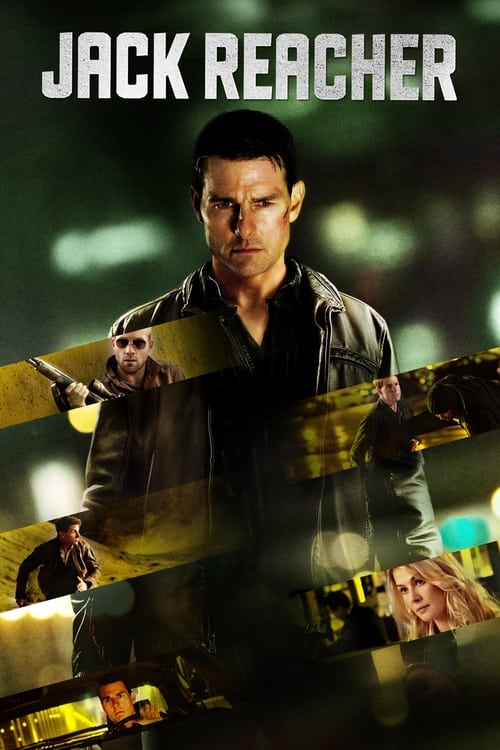
Jack Reacher
One morning in an ordinary town, five people are shot dead in a seemingly random attack. All evidence points to a single suspect: an ex-military sniper who is quickly brought into custody. The interrogation yields one written note: 'Get Jack Reacher!'. Reacher, an enigmatic ex-Army investigator, believes the authorities have the right man but agrees to help the sniper's defense attorney. However, the more Reacher delves into the case, the less clear-cut it appears. So begins an extraordinary chase for the truth, pitting Jack Reacher against an unexpected enemy, with a skill for violence and a secret to keep.
Despite a mid-range budget of $60.0M, Jack Reacher became a financial success, earning $218.3M worldwide—a 264% return.
1 win & 6 nominations


Plot Structure
Story beats plotted across runtime


Narrative Arc
Emotional journey through the story's key moments
Story Circle
Blueprint 15-beat structure
Arcplot Score Breakdown
Weighted: Precision (70%) + Arc (15%) + Theme (15%)
Jack Reacher (2012) exhibits meticulously timed dramatic framework, characteristic of Christopher McQuarrie's storytelling approach. This structural analysis examines how the film's 15-point plot structure maps to proven narrative frameworks across 2 hours and 10 minutes. With an Arcplot score of 6.2, the film takes an unconventional approach to traditional narrative frameworks.
Characters
Cast & narrative archetypes

Jack Reacher
Helen Rodin
The Zec
Charlie
District Attorney Rodin
James Barr
Detective Emerson
Cash
Main Cast & Characters
Jack Reacher
Played by Tom Cruise
A former Military Police Major who investigates a sniper case while operating outside the law with his own moral code.
Helen Rodin
Played by Rosamund Pike
A defense attorney determined to prove her client's innocence despite evidence against him.
The Zec
Played by Werner Herzog
A ruthless crime lord missing fingers from his past who orchestrates violence with cold calculation.
Charlie
Played by Jai Courtney
The Zec's brutal enforcer who carries out violent orders without hesitation.
District Attorney Rodin
Played by Richard Jenkins
Helen's father and the DA prosecuting the case, who believes in the system and the evidence.
James Barr
Played by Joseph Sikora
The accused sniper who claims innocence and specifically requests Jack Reacher to investigate.
Detective Emerson
Played by David Oyelowo
A local detective investigating the sniper case who is skeptical of Reacher's involvement.
Cash
Played by Robert Duvall
A menacing thug working for The Zec who confronts Reacher in a bar.
Structural Analysis
The Status Quo at 1 minutes (1% through the runtime) establishes A sniper methodically shoots five random people in Pittsburgh. The opening establishes a world where violence disrupts ordinary life, and justice will be hard to find.. Of particular interest, this early placement immediately immerses viewers in the story world.
The inciting incident occurs at 15 minutes when Jack Reacher arrives unannounced, having seen the news. His arrival disrupts the case - he knew Barr from the military and believes he might actually be guilty, contrary to everyone's expectations.. At 12% through the film, this Disruption aligns precisely with traditional story structure. This beat shifts the emotional landscape, launching the protagonist into the central conflict.
The First Threshold at 33 minutes marks the transition into Act II, occurring at 25% of the runtime. This indicates the protagonist's commitment to Reacher chooses to actively investigate with Helen after the bar fight confirms a conspiracy. He commits to uncovering the truth, shifting from observer to active participant in pursuit of real justice., moving from reaction to action.
At 65 minutes, the Midpoint arrives at 50% of the runtime—precisely centered, creating perfect narrative symmetry. Significantly, this crucial beat Reacher and Helen are ambushed in a brutal car chase. They survive, but the stakes raise dramatically. The enemy knows they're getting close. False defeat: they're in real danger, and the conspiracy is bigger than they thought., fundamentally raising what's at risk. The emotional intensity shifts, dividing the narrative into clear before-and-after phases.
The Collapse moment at 97 minutes (75% through) represents the emotional nadir. Here, Helen is kidnapped by the Zec's men. Reacher's investigation has put her in mortal danger. The woman who made him care about justice again is now a hostage. Everything he worked for could cost her life - the "whiff of death" moment., shows the protagonist at their lowest point. This beat's placement in the final quarter sets up the climactic reversal.
The Second Threshold at 104 minutes initiates the final act resolution at 80% of the runtime. Reacher devises a plan to infiltrate the quarry. He synthesizes his military skills with what he's learned about the conspiracy. He chooses to go in alone, accepting the risk, committed to saving Helen and delivering justice., demonstrating the transformation achieved throughout the journey.
Emotional Journey
Jack Reacher's emotional architecture traces a deliberate progression across 15 carefully calibrated beats.
Narrative Framework
This structural analysis employs structural analysis methodology used to understand storytelling architecture. By mapping Jack Reacher against these established plot points, we can identify how Christopher McQuarrie utilizes or subverts traditional narrative conventions. The plot point approach reveals not only adherence to structural principles but also creative choices that distinguish Jack Reacher within the crime genre.
Christopher McQuarrie's Structural Approach
Among the 5 Christopher McQuarrie films analyzed on Arcplot, the average structural score is 6.6, demonstrating varied approaches to story architecture. Jack Reacher takes a more unconventional approach compared to the director's typical style. For comparative analysis, explore the complete Christopher McQuarrie filmography.
Comparative Analysis
Additional crime films include The Bad Guys, Rustom and The Whole Ten Yards. For more Christopher McQuarrie analyses, see Mission: Impossible - Fallout, Mission: Impossible - Rogue Nation and Mission: Impossible - The Final Reckoning.
Plot Points by Act
Act I
SetupStatus Quo
A sniper methodically shoots five random people in Pittsburgh. The opening establishes a world where violence disrupts ordinary life, and justice will be hard to find.
Theme
Helen Rodin tells her father the DA: "Everyone is entitled to a defense." The theme of justice versus the law, and doing what's right even when it's difficult, is established.
Worldbuilding
The investigation unfolds. James Barr is arrested for the sniper murders. Evidence is overwhelming. Before being beaten into a coma, Barr writes: "Get Jack Reacher." We learn about Reacher's background as an ex-military investigator who lives off the grid.
Disruption
Jack Reacher arrives unannounced, having seen the news. His arrival disrupts the case - he knew Barr from the military and believes he might actually be guilty, contrary to everyone's expectations.
Resistance
Reacher debates whether to get involved. He meets Helen, who wants to defend Barr. Reacher resists helping but begins investigating. He discovers discrepancies: wrong victims were killed. A bar fight with thugs proves someone wants him gone.
Act II
ConfrontationFirst Threshold
Reacher chooses to actively investigate with Helen after the bar fight confirms a conspiracy. He commits to uncovering the truth, shifting from observer to active participant in pursuit of real justice.
Mirror World
Reacher and Helen's partnership deepens. She represents the legal system and belief in due process; he represents justice outside the law. Their developing connection embodies the theme of finding truth beyond legal formalities.
Premise
Reacher investigates: tracks down the girl from the parking meter, discovers she's been killed, finds the shooting range, uncovers evidence that Barr was framed. The "detective work" we came to see - Reacher using his skills to piece together the conspiracy.
Midpoint
Reacher and Helen are ambushed in a brutal car chase. They survive, but the stakes raise dramatically. The enemy knows they're getting close. False defeat: they're in real danger, and the conspiracy is bigger than they thought.
Opposition
Reacher meets the Zec and learns the true conspiracy: a construction company killing to protect a contract. Detective Emerson is revealed as corrupt. The enemy closes in. Cash is captured as leverage. Reacher's isolation and the enormity of the conspiracy weigh on him.
Collapse
Helen is kidnapped by the Zec's men. Reacher's investigation has put her in mortal danger. The woman who made him care about justice again is now a hostage. Everything he worked for could cost her life - the "whiff of death" moment.
Crisis
Reacher must process his darkest moment: work alone or risk Helen's life. He realizes he can't walk away - he's connected to these people now. He prepares for the final confrontation, accepting he must act.
Act III
ResolutionSecond Threshold
Reacher devises a plan to infiltrate the quarry. He synthesizes his military skills with what he's learned about the conspiracy. He chooses to go in alone, accepting the risk, committed to saving Helen and delivering justice.
Synthesis
The quarry finale: Reacher systematically takes down the guards, confronts Charlie and the Zec, saves Helen, ensures justice is served. He executes his plan with precision, combining detective work and combat skills to dismantle the conspiracy.
Transformation
Reacher says goodbye to Helen and disappears back into anonymity. But he's changed: he connected with people, delivered justice, and leaves knowing he made a difference. The drifter has purpose, even if he won't stay.