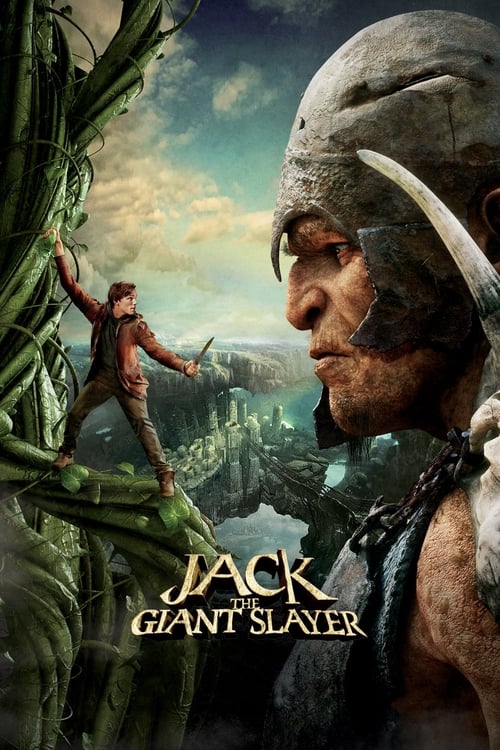
Jack the Giant Slayer
The ancient war between humans and a race of giants is reignited when Jack, a young farmhand fighting for a kingdom and the love of a princess, opens a gateway between the two worlds.
Working with a blockbuster budget of $195.0M, the film achieved a steady performer with $197.7M in global revenue (+1% profit margin).
1 win & 4 nominations


Plot Structure
Story beats plotted across runtime


Narrative Arc
Emotional journey through the story's key moments
Story Circle
Blueprint 15-beat structure
Characters
Cast & narrative archetypes

Jack
Princess Isabelle
Elmont
Fallon
Roderick
King Brahmwell
Crawe
Main Cast & Characters
Jack
Played by Nicholas Hoult
A young farmhand who climbs the beanstalk to rescue Princess Isabelle and becomes an unlikely hero.
Princess Isabelle
Played by Eleanor Tomlinson
An adventurous princess who seeks freedom from palace life and becomes trapped in the giants' realm.
Elmont
Played by Ewan McGregor
The head of the King's Guard, a skilled and honorable warrior who leads the rescue mission.
Fallon
Played by Bill Nighy
The two-headed leader of the giants, brutal and cunning, seeking to invade the human world.
Roderick
Played by Stanley Tucci
The King's treacherous advisor who seeks the crown and possesses the giants' magic.
King Brahmwell
Played by Ian McShane
Isabelle's protective father who must balance his love for his daughter with his duty to the kingdom.
Crawe
Played by Ewan Bremner
Elmont's loyal second-in-command and friend, a skilled soldier who supports the rescue mission.
Structural Analysis
The Status Quo at 1 minutes (1% through the runtime) establishes Young Jack listens to his father tell the bedtime story of giants and the magical crown, establishing Jack as a dreamer. Young Isabelle receives the same story from her mother, establishing parallel protagonists in their ordinary worlds.. Structural examination shows that this early placement immediately immerses viewers in the story world.
The inciting incident occurs at 13 minutes when A monk gives Jack magic beans (instead of money for the horse) and warns they must be kept from water. Jack reluctantly accepts, disrupting his plan to save his uncle's farm and setting the adventure in motion.. At 12% through the film, this Disruption aligns precisely with traditional story structure. This beat shifts the emotional landscape, launching the protagonist into the central conflict.
The First Threshold at 28 minutes marks the transition into Act II, occurring at 24% of the runtime. This illustrates the protagonist's commitment to Jack actively chooses to climb the beanstalk with Elmont's group to rescue Isabelle, leaving his ordinary world behind. This is his decision to enter the adventure and the giant's realm above the clouds., moving from reaction to action.
At 57 minutes, the Midpoint arrives at 50% of the runtime—precisely centered, creating perfect narrative symmetry. Notably, this crucial beat Roderick betrays the group and obtains the magical crown, taking control of the giant army. False defeat: the villain has won the ultimate power, the rescue mission has failed, and Roderick crowns himself while planning to invade the kingdom below. Stakes are raised enormously., fundamentally raising what's at risk. The emotional intensity shifts, dividing the narrative into clear before-and-after phases.
The Collapse moment at 84 minutes (74% through) represents the emotional nadir. Here, The King is killed by Roderick and the giants breach the castle walls. Elmont is captured. All seems lost as the kingdom falls and the crown's power appears unstoppable. Death of the father figure and the old order., demonstrates the protagonist at their lowest point. This beat's placement in the final quarter sets up the climactic reversal.
The Second Threshold at 91 minutes initiates the final act resolution at 80% of the runtime. Jack realizes the crown can be removed and destroyed. He formulates the plan: get close to Roderick, take the crown, and end the giant threat forever. Synthesis of his cleverness (commoner traits) with his newfound courage (heroic traits)., demonstrating the transformation achieved throughout the journey.
Emotional Journey
Jack the Giant Slayer's emotional architecture traces a deliberate progression across 15 carefully calibrated beats.
Narrative Framework
This structural analysis employs a 15-point narrative structure framework that maps key story moments. By mapping Jack the Giant Slayer against these established plot points, we can identify how Bryan Singer utilizes or subverts traditional narrative conventions. The plot point approach reveals not only adherence to structural principles but also creative choices that distinguish Jack the Giant Slayer within the action genre.
Bryan Singer's Structural Approach
Among the 10 Bryan Singer films analyzed on Arcplot, the average structural score is 6.6, demonstrating varied approaches to story architecture. Jack the Giant Slayer exemplifies the director's characteristic narrative technique. For comparative analysis, explore the complete Bryan Singer filmography.
Comparative Analysis
Additional action films include The Bad Guys, Puss in Boots and Venom: The Last Dance. For more Bryan Singer analyses, see X-Men, Superman Returns and The Usual Suspects.
Plot Points by Act
Act I
SetupStatus Quo
Young Jack listens to his father tell the bedtime story of giants and the magical crown, establishing Jack as a dreamer. Young Isabelle receives the same story from her mother, establishing parallel protagonists in their ordinary worlds.
Theme
Jack's uncle says "Your father would want you to do something with your life, not waste it on dreams." The theme: choosing between safe practicality and courageous action, head versus heart.
Worldbuilding
Establishes adult Jack as a poor farm boy stuck in his ordinary life, mourning his father. Isabelle is a princess trapped in her castle, forced into political marriage. Both are dreamers constrained by duty and class. Jack must sell his horse; Isabelle rebels against her arranged marriage to Roderick.
Disruption
A monk gives Jack magic beans (instead of money for the horse) and warns they must be kept from water. Jack reluctantly accepts, disrupting his plan to save his uncle's farm and setting the adventure in motion.
Resistance
Jack meets runaway Isabelle in town and is smitten. When rain soaks the beans at Jack's house, a beanstalk erupts, carrying Isabelle and the house into the sky. Elmont and the King's guards arrive. Jack debates joining the rescue mission but ultimately volunteers, driven by guilt and attraction.
Act II
ConfrontationFirst Threshold
Jack actively chooses to climb the beanstalk with Elmont's group to rescue Isabelle, leaving his ordinary world behind. This is his decision to enter the adventure and the giant's realm above the clouds.
Mirror World
Jack and Isabelle share a genuine moment after he rescues her from the giant's lair. She sees him as brave and capable despite his commoner status. Their relationship begins to carry the theme: courage and character matter more than birthright.
Premise
The fun and games of giant adventures: climbing the beanstalk, exploring the giant world, narrow escapes from enormous creatures, discovering the giants' castle, and uncovering Roderick's treachery as he seeks the magical crown to control the giants.
Midpoint
Roderick betrays the group and obtains the magical crown, taking control of the giant army. False defeat: the villain has won the ultimate power, the rescue mission has failed, and Roderick crowns himself while planning to invade the kingdom below. Stakes are raised enormously.
Opposition
The group is imprisoned by giants and Roderick. Jack must use his wits to escape. They flee down the beanstalk while Roderick sends the giant army down to invade the kingdom. The opposition intensifies as the giants lay siege to the castle and the crown seems unbeatable.
Collapse
The King is killed by Roderick and the giants breach the castle walls. Elmont is captured. All seems lost as the kingdom falls and the crown's power appears unstoppable. Death of the father figure and the old order.
Crisis
Jack processes the loss and recognizes he must act. He moves through despair to determination, understanding that courage isn't about birthright but about choosing to stand up. Isabelle also finds her resolve as the new queen.
Act III
ResolutionSecond Threshold
Jack realizes the crown can be removed and destroyed. He formulates the plan: get close to Roderick, take the crown, and end the giant threat forever. Synthesis of his cleverness (commoner traits) with his newfound courage (heroic traits).
Synthesis
The finale: Jack confronts Roderick, retrieves and destroys the crown, defeats the giant leader Fallon, and saves the kingdom. Elmont is rescued. The beanstalk is cut down, sending the giants back to their realm forever. Jack proves his worth through action, not status.
Transformation
Jack, now a knight and hero, marries Queen Isabelle. The commoner farm boy has become a leader through courage, and Isabelle has become a queen who values character over class. The crown is melted into the royal crown of England, and their story becomes legend told to children—mirroring the opening.