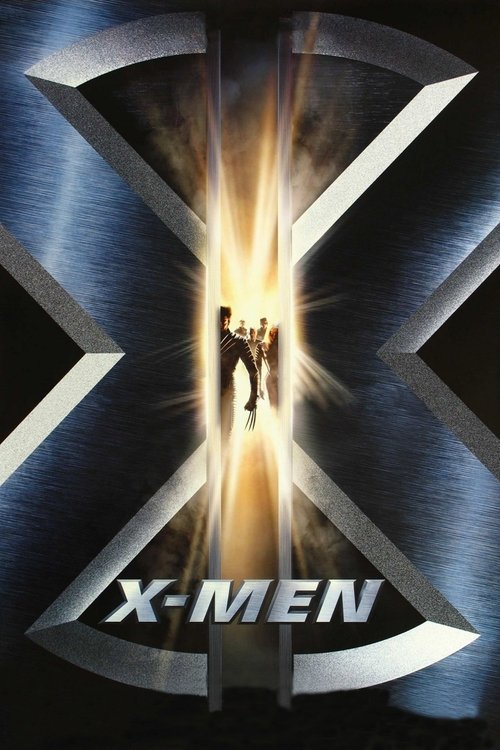
X-Men
Two mutants, Rogue and Wolverine, come to a private academy for their kind whose resident superhero team, the X-Men, must oppose a terrorist organization with similar powers.
Despite a significant budget of $75.0M, X-Men became a financial success, earning $296.3M worldwide—a 295% return.
14 wins & 26 nominations


Plot Structure
Story beats plotted across runtime


Narrative Arc
Emotional journey through the story's key moments
Story Circle
Blueprint 15-beat structure
Arcplot Score Breakdown
Weighted: Precision (70%) + Arc (15%) + Theme (15%)
X-Men (2000) demonstrates carefully calibrated narrative design, characteristic of Bryan Singer's storytelling approach. This structural analysis examines how the film's 15-point plot structure maps to proven narrative frameworks across 1 hour and 44 minutes. With an Arcplot score of 7.6, the film showcases strong structural fundamentals.
Structural Analysis
The Status Quo at 1 minutes (1% through the runtime) establishes Poland 1944: Young Erik Lehnsherr is separated from his parents at a concentration camp gate. His magnetic powers manifest in desperation as he bends the metal gates, establishing a world where mutants exist but are persecuted.. The analysis reveals that this early placement immediately immerses viewers in the story world.
The inciting incident occurs at 12 minutes when Rogue runs away from home after nearly killing her boyfriend with her power-absorbing touch. She hitchhikes north, leaving behind her ordinary life, disrupting any chance at normalcy.. At 11% through the film, this Disruption aligns precisely with traditional story structure. This beat shifts the emotional landscape, launching the protagonist into the central conflict.
The First Threshold at 25 minutes marks the transition into Act II, occurring at 24% of the runtime. This reveals the protagonist's commitment to Wolverine chooses to stay at the mansion to protect Rogue after she begs him not to leave. He accepts Xavier's offer to help him recover his memories, actively choosing to enter the world of the X-Men rather than remaining a loner., moving from reaction to action.
At 51 minutes, the Midpoint arrives at 49% of the runtime—precisely centered, creating perfect narrative symmetry. Significantly, this crucial beat Mystique infiltrates Cerebro and sabotages it. When Xavier uses it to find Magneto, it nearly kills him, leaving him in a coma. False defeat: the team's leader is incapacitated and they're now vulnerable. Stakes are raised dramatically., fundamentally raising what's at risk. The emotional intensity shifts, dividing the narrative into clear before-and-after phases.
The Collapse moment at 75 minutes (72% through) represents the emotional nadir. Here, Rogue runs away from the mansion (believing she's a danger) and is captured by Magneto at the train station. Senator Kelly dies from the mutation, dissolved into water - a literal death showing Magneto's machine is fatal. All hope seems lost., shows the protagonist at their lowest point. This beat's placement in the final quarter sets up the climactic reversal.
The Second Threshold at 82 minutes initiates the final act resolution at 79% of the runtime. Xavier awakens from his coma and uses Jean's mind to locate Rogue on Liberty Island. The team synthesizes their abilities: Wolverine's combat skills, Storm and Cyclops' powers, and Jean's telepathy. They have a plan and renewed purpose for the final confrontation., demonstrating the transformation achieved throughout the journey.
Emotional Journey
X-Men's emotional architecture traces a deliberate progression across 15 carefully calibrated beats.
Narrative Framework
This structural analysis employs systematic plot point analysis that identifies crucial turning points. By mapping X-Men against these established plot points, we can identify how Bryan Singer utilizes or subverts traditional narrative conventions. The plot point approach reveals not only adherence to structural principles but also creative choices that distinguish X-Men within the adventure genre.
Bryan Singer's Structural Approach
Among the 10 Bryan Singer films analyzed on Arcplot, the average structural score is 6.6, demonstrating varied approaches to story architecture. X-Men represents one of the director's most structurally precise works. For comparative analysis, explore the complete Bryan Singer filmography.
Comparative Analysis
Additional adventure films include The Black Stallion, The Bad Guys and Puss in Boots. For more Bryan Singer analyses, see Superman Returns, The Usual Suspects and Bohemian Rhapsody.
Plot Points by Act
Act I
SetupStatus Quo
Poland 1944: Young Erik Lehnsherr is separated from his parents at a concentration camp gate. His magnetic powers manifest in desperation as he bends the metal gates, establishing a world where mutants exist but are persecuted.
Theme
Senator Kelly addresses Congress: "Mutants are a threat to our way of life. We must know who they are and what they can do." The theme of fear versus tolerance, persecution versus acceptance is explicitly stated.
Worldbuilding
Introduction to the world of mutants: Rogue discovers her powers and accidentally harms her boyfriend. We meet Wolverine as a cage fighter in Canada. Jean Grey and Storm are introduced at Xavier's school. Magneto demonstrates his powers and philosophy to Mystique and his Brotherhood.
Disruption
Rogue runs away from home after nearly killing her boyfriend with her power-absorbing touch. She hitchhikes north, leaving behind her ordinary life, disrupting any chance at normalcy.
Resistance
Rogue meets Wolverine in a truck stop bar in Canada. They're attacked by Sabretooth in Magneto's first strike. Storm and Cyclops rescue them and bring them to Xavier's School. Wolverine debates whether to stay or leave, resistant to joining the X-Men.
Act II
ConfrontationFirst Threshold
Wolverine chooses to stay at the mansion to protect Rogue after she begs him not to leave. He accepts Xavier's offer to help him recover his memories, actively choosing to enter the world of the X-Men rather than remaining a loner.
Mirror World
Xavier uses Cerebro to locate mutants and discusses his dream with Wolverine. The relationship between Xavier and Magneto is revealed - former friends divided by philosophy. This B-story carries the thematic question: coexistence or domination?
Premise
Wolverine explores the mansion and bonds with the students. Magneto kidnaps Senator Kelly and reveals his machine that can turn humans into mutants. Xavier and the X-Men investigate Magneto's plan. The "fun and games" of seeing the school, powers, and team dynamics in action.
Midpoint
Mystique infiltrates Cerebro and sabotages it. When Xavier uses it to find Magneto, it nearly kills him, leaving him in a coma. False defeat: the team's leader is incapacitated and they're now vulnerable. Stakes are raised dramatically.
Opposition
The X-Men must operate without Xavier. Mystique (disguised as Bobby) convinces Rogue she's a danger to others. Senator Kelly, mutated and dying, seeks Xavier's help. Magneto's plan becomes clear: use his machine at the UN Summit. Pressure intensifies as the team fractures.
Collapse
Rogue runs away from the mansion (believing she's a danger) and is captured by Magneto at the train station. Senator Kelly dies from the mutation, dissolved into water - a literal death showing Magneto's machine is fatal. All hope seems lost.
Crisis
The X-Men regroup in darkness. They realize Magneto will use Rogue's power-absorption ability to fuel his machine (so he doesn't die). Wolverine processes his failure to protect her. The team faces their fear of failure.
Act III
ResolutionSecond Threshold
Xavier awakens from his coma and uses Jean's mind to locate Rogue on Liberty Island. The team synthesizes their abilities: Wolverine's combat skills, Storm and Cyclops' powers, and Jean's telepathy. They have a plan and renewed purpose for the final confrontation.
Synthesis
The Finale on Liberty Island: The X-Men battle Magneto's Brotherhood. Wolverine fights Sabretooth and Mystique. Storm and Toad clash. Magneto activates his machine with Rogue as the power source. Wolverine transfers his healing ability to Rogue, saving her life and stopping the machine. Magneto is defeated and imprisoned.
Transformation
Wolverine visits Magneto in his plastic prison and then returns to the mansion. Rogue, now confident, jokes with Wolverine. The school thrives. Xavier visits Magneto for a chess game, maintaining hope for future understanding. Transformation: fear gives way to tentative hope; isolation becomes community.