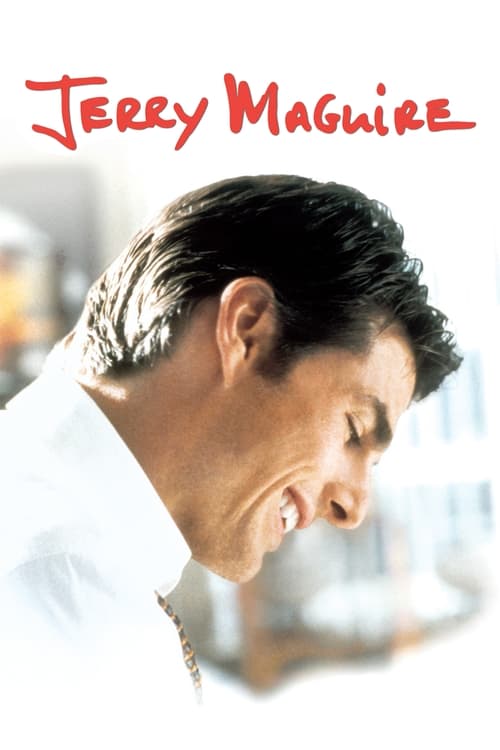
Jerry Maguire
Jerry Maguire used to be a typical sports agent: willing to do just about anything he could to get the biggest possible contracts for his clients, plus a nice commission for himself. Then, one day, he suddenly has second thoughts about what he's really doing. When he voices these doubts, he ends up losing his job and all of his clients, save Rod Tidwell, an egomaniacal football player.
Despite a respectable budget of $50.0M, Jerry Maguire became a financial success, earning $273.6M worldwide—a 447% return.
1 Oscar. 26 wins & 41 nominations


Plot Structure
Story beats plotted across runtime


Narrative Arc
Emotional journey through the story's key moments
Story Circle
Blueprint 15-beat structure
Arcplot Score Breakdown
Weighted: Precision (70%) + Arc (15%) + Theme (15%)
Jerry Maguire (1996) reveals meticulously timed narrative architecture, characteristic of Cameron Crowe's storytelling approach. This structural analysis examines how the film's 15-point plot structure maps to proven narrative frameworks across 2 hours and 19 minutes. With an Arcplot score of 6.5, the film balances conventional beats with creative variation.
Structural Analysis
The Status Quo at 2 minutes (1% through the runtime) establishes Jerry Maguire is a successful sports agent living the high life, surrounded by clients and colleagues at SMI, but something feels hollow. His opening narration reveals a man going through the motions in a superficial world.. The analysis reveals that this early placement immediately immerses viewers in the story world.
The inciting incident occurs at 16 minutes when Jerry distributes his idealistic mission statement "The Things We Think and Do Not Say" throughout the company. The next morning, he receives applause but his mentor Bob Sugar sees it as career suicide. Jerry is fired and his world collapses.. At 12% through the film, this Disruption aligns precisely with traditional story structure. This beat shifts the emotional landscape, launching the protagonist into the central conflict.
The First Threshold at 34 minutes marks the transition into Act II, occurring at 24% of the runtime. This illustrates the protagonist's commitment to Jerry decides to start his own agency with Dorothy as his only employee and Rod Tidwell as his only client. He chooses integrity over the comfortable corporate world, committing to his mission statement ideals even though success is far from guaranteed., moving from reaction to action.
At 70 minutes, the Midpoint arrives at 50% of the runtime—precisely centered, creating perfect narrative symmetry. Significantly, this crucial beat At a family gathering, Jerry has a panic attack and realizes he married Dorothy without truly loving her the way she deserves. He confesses to her sister that he doesn't know what love is anymore. The false victory of the marriage reveals itself as a false start built on his old transactional thinking., fundamentally raising what's at risk. The emotional intensity shifts, dividing the narrative into clear before-and-after phases.
The Collapse moment at 104 minutes (75% through) represents the emotional nadir. Here, Dorothy's sister tells Jerry that Dorothy is leaving him because he can't love her the way she deserves. Jerry loses his wife and his home. His attempt to have it all—integrity and success, marriage without transformation—has failed completely. He's alone with just his work., indicates the protagonist at their lowest point. This beat's placement in the final quarter sets up the climactic reversal.
The Second Threshold at 111 minutes initiates the final act resolution at 80% of the runtime. Rod Tidwell makes a spectacular touchdown catch, gets injured but holds onto the ball, and celebrates with genuine joy and love for his family on national television. Watching Rod choose love and loyalty over ego, Jerry finally understands what quan means—complete authentic living. He knows what he must do., demonstrating the transformation achieved throughout the journey.
Emotional Journey
Jerry Maguire's emotional architecture traces a deliberate progression across 15 carefully calibrated beats.
Narrative Framework
This structural analysis employs a 15-point narrative structure framework that maps key story moments. By mapping Jerry Maguire against these established plot points, we can identify how Cameron Crowe utilizes or subverts traditional narrative conventions. The plot point approach reveals not only adherence to structural principles but also creative choices that distinguish Jerry Maguire within the comedy genre.
Cameron Crowe's Structural Approach
Among the 7 Cameron Crowe films analyzed on Arcplot, the average structural score is 7.0, demonstrating varied approaches to story architecture. Jerry Maguire takes a more unconventional approach compared to the director's typical style. For comparative analysis, explore the complete Cameron Crowe filmography.
Comparative Analysis
Additional comedy films include The Bad Guys, Ella Enchanted and The Evening Star. For more Cameron Crowe analyses, see Singles, Aloha and We Bought a Zoo.
Plot Points by Act
Act I
SetupStatus Quo
Jerry Maguire is a successful sports agent living the high life, surrounded by clients and colleagues at SMI, but something feels hollow. His opening narration reveals a man going through the motions in a superficial world.
Theme
Injured client Rod Tidwell's young son says "You are my ambassador of quan," introducing the concept of wholeness and authentic human connection that will drive Jerry's journey from transactional relationships to meaningful ones.
Worldbuilding
We see Jerry's world: the cutthroat sports agency business, his roster of clients, his relationship with fellow agent Avery, and the moment of crisis when injured client's son makes him question everything. Late at night in a hotel, Jerry has a breakdown and writes a mission statement calling for fewer clients and more personal attention.
Disruption
Jerry distributes his idealistic mission statement "The Things We Think and Do Not Say" throughout the company. The next morning, he receives applause but his mentor Bob Sugar sees it as career suicide. Jerry is fired and his world collapses.
Resistance
Jerry scrambles to save his career, frantically calling all his clients from his car to convince them to leave SMI with him. One by one they refuse except for Rod Tidwell. Single mother Dorothy Boyd quits SMI to join Jerry, inspired by his mission statement, bringing her young son Ray with her into this uncertain venture.
Act II
ConfrontationFirst Threshold
Jerry decides to start his own agency with Dorothy as his only employee and Rod Tidwell as his only client. He chooses integrity over the comfortable corporate world, committing to his mission statement ideals even though success is far from guaranteed.
Mirror World
Jerry bonds with Dorothy and her son Ray at their home. Ray, with his innocent wisdom, becomes Jerry's moral compass. Dorothy represents the authentic human connection Jerry's been missing, contrasting sharply with his superficial engagement to Avery.
Premise
Jerry works to build his agency with one difficult client, Rod Tidwell, who demands "show me the money!" Jerry breaks up with Avery and grows closer to Dorothy. He struggles to get Rod a better contract while Rod refuses to play it safe. Jerry and Dorothy fall in love and impulsively marry, though Jerry hasn't fully transformed yet.
Midpoint
At a family gathering, Jerry has a panic attack and realizes he married Dorothy without truly loving her the way she deserves. He confesses to her sister that he doesn't know what love is anymore. The false victory of the marriage reveals itself as a false start built on his old transactional thinking.
Opposition
Jerry's marriage deteriorates as Dorothy realizes he doesn't truly love her. His business struggles continue as Rod remains unsigned and difficult. The pressure mounts from all sides—financial stress, marital tension, and professional uncertainty. Bob Sugar continues to succeed with Jerry's old clients, highlighting Jerry's failures.
Collapse
Dorothy's sister tells Jerry that Dorothy is leaving him because he can't love her the way she deserves. Jerry loses his wife and his home. His attempt to have it all—integrity and success, marriage without transformation—has failed completely. He's alone with just his work.
Crisis
Jerry watches Rod Tidwell play a crucial Monday Night Football game that will determine both their futures. In this dark period, Jerry can only observe and hope, unable to control the outcome. Everything depends on whether his one client can prove his worth.
Act III
ResolutionSecond Threshold
Rod Tidwell makes a spectacular touchdown catch, gets injured but holds onto the ball, and celebrates with genuine joy and love for his family on national television. Watching Rod choose love and loyalty over ego, Jerry finally understands what quan means—complete authentic living. He knows what he must do.
Synthesis
Jerry secures Rod a $11.2 million contract, finally achieving professional success with integrity intact. But more importantly, Jerry rushes to Dorothy's support group to declare his love. He delivers the famous "you complete me" speech, finally understanding that love isn't transactional—it's about being fully present and vulnerable with another person.
Transformation
Jerry is now at home with Dorothy and Ray, having achieved both professional success and personal fulfillment. He's no longer the hollow man from the opening—he's found quan, the balance of complete authentic living in both work and love. Ray tenderly says "You had me at hello" was Dorothy's response, showing the family is whole.