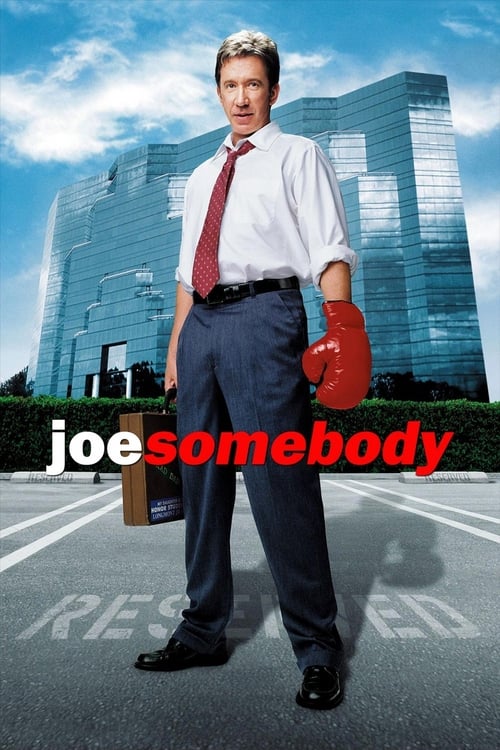
Joe Somebody
When underappreciated video specialist Joe Scheffer is brutally humiliated by office bully Mark McKinney in front of his daughter, Joe begins a quest for personal redemption. He proceeds by enduring a personal makeover and takes martial arts lessons from a B-action star. As news spreads of his rematch with Mark, Joe suddenly finds himself the center of attention, ascending the corporate ladder and growing in popularity.
The film struggled financially against its moderate budget of $38.0M, earning $24.5M globally (-36% loss). While initial box office returns were modest, the film has gained appreciation for its bold vision within the comedy genre.


Plot Structure
Story beats plotted across runtime


Narrative Arc
Emotional journey through the story's key moments
Story Circle
Blueprint 15-beat structure
Arcplot Score Breakdown
Weighted: Precision (70%) + Arc (15%) + Theme (15%)
Joe Somebody (2001) reveals precise dramatic framework, characteristic of John Pasquin's storytelling approach. This structural analysis examines how the film's 15-point plot structure maps to proven narrative frameworks across 1 hour and 39 minutes. With an Arcplot score of 7.3, the film balances conventional beats with creative variation.
Characters
Cast & narrative archetypes

Joe Scheffer
Meg Harper
Mark McKinney
Chuck Scarett
Natalie Scheffer
Callie Scheffer
Main Cast & Characters
Joe Scheffer
Played by Tim Allen
A timid corporate video producer who gets humiliated in the parking lot and decides to stand up for himself through confrontation and personal transformation.
Meg Harper
Played by Julie Bowen
A compassionate wellness coordinator who becomes Joe's romantic interest and helps guide his personal growth journey.
Mark McKinney
Played by Patrick Warburton
The aggressive workplace bully who humiliates Joe in the parking lot, serving as the physical antagonist Joe must confront.
Chuck Scarett
Played by James Belushi
A washed-up action movie coordinator who trains Joe in martial arts and life lessons, though his methods are questionable.
Natalie Scheffer
Played by Hayden Panettiere
Joe's young daughter who loves and supports her father, providing emotional motivation for his transformation.
Callie Scheffer
Played by Kelly Lynch
Joe's ex-wife who has moved on with her life but remains concerned about Joe's wellbeing and their daughter.
Structural Analysis
The Status Quo at 1 minutes (1% through the runtime) establishes Joe Scheffer is introduced as an invisible, underappreciated corporate employee at a pharmaceutical company, walking through the building unnoticed, representing his low status and lack of recognition in his life.. The analysis reveals that this early placement immediately immerses viewers in the story world.
The inciting incident occurs at 11 minutes when Mark McKinney, a corporate bully, viciously beats up Joe in the parking lot in front of his daughter and co-workers over a parking space dispute. Joe is humiliated, physically hurt, and his daughter witnesses his complete emasculation.. At 12% through the film, this Disruption aligns precisely with traditional story structure. This beat shifts the emotional landscape, launching the protagonist into the central conflict.
The First Threshold at 24 minutes marks the transition into Act II, occurring at 24% of the runtime. This reveals the protagonist's commitment to Joe makes the active choice to challenge Mark McKinney to a rematch fight in three weeks. He hires Chuck Scarett as his trainer and commits to the path of standing up for himself through physical confrontation., moving from reaction to action.
At 50 minutes, the Midpoint arrives at 51% of the runtime—precisely centered, creating perfect narrative symmetry. Notably, this crucial beat False victory: Joe receives a major promotion and office upgrade, his popularity peaks, and he feels on top of the world. But the stakes raise—he's now more invested in his image as a fighter than in what truly matters, and the fight becomes unavoidable., fundamentally raising what's at risk. The emotional intensity shifts, dividing the narrative into clear before-and-after phases.
The Collapse moment at 74 minutes (75% through) represents the emotional nadir. Here, Joe discovers that Chuck Scarett is a fraud—never a real action star or fighter, just a desperate man who lied. Joe's entire foundation for the fight crumbles. Additionally, Meg breaks off their relationship, seeing that Joe has become what he hated: someone who defines worth through dominance., illustrates the protagonist at their lowest point. This beat's placement in the final quarter sets up the climactic reversal.
The Second Threshold at 80 minutes initiates the final act resolution at 81% of the runtime. Joe has a realization: he doesn't need to prove himself through fighting. His worth isn't determined by whether he can beat McKinney. He decides to show up to the fight but to handle it on his own terms, with integrity rather than violence., demonstrating the transformation achieved throughout the journey.
Emotional Journey
Joe Somebody's emotional architecture traces a deliberate progression across 15 carefully calibrated beats.
Narrative Framework
This structural analysis employs a 15-point narrative structure framework that maps key story moments. By mapping Joe Somebody against these established plot points, we can identify how John Pasquin utilizes or subverts traditional narrative conventions. The plot point approach reveals not only adherence to structural principles but also creative choices that distinguish Joe Somebody within the comedy genre.
John Pasquin's Structural Approach
Among the 4 John Pasquin films analyzed on Arcplot, the average structural score is 7.1, reflecting strong command of classical structure. Joe Somebody represents one of the director's most structurally precise works. For comparative analysis, explore the complete John Pasquin filmography.
Comparative Analysis
Additional comedy films include The Bad Guys, Ella Enchanted and The Evening Star. For more John Pasquin analyses, see The Santa Clause, Miss Congeniality 2: Armed and Fabulous and Jungle 2 Jungle.
Plot Points by Act
Act I
SetupStatus Quo
Joe Scheffer is introduced as an invisible, underappreciated corporate employee at a pharmaceutical company, walking through the building unnoticed, representing his low status and lack of recognition in his life.
Theme
Joe's daughter Natalie expresses how proud she is of him and mentions "Bring Your Daughter to Work Day," establishing the theme: true worth comes from who you are to those who matter, not your status or ability to fight.
Worldbuilding
Establishment of Joe's ordinary world: his mundane job in corporate video production, his divorce, his loving relationship with daughter Natalie, his invisibility at work, and the upcoming "Bring Your Daughter to Work Day" that he's excited about.
Disruption
Mark McKinney, a corporate bully, viciously beats up Joe in the parking lot in front of his daughter and co-workers over a parking space dispute. Joe is humiliated, physically hurt, and his daughter witnesses his complete emasculation.
Resistance
Joe debates what to do about the humiliation. He receives unexpected attention and sympathy at work, meets Chuck Scarett (a former action star turned martial arts instructor), and wrestles with whether to seek revenge or let it go. His co-workers and daughter watch to see how he'll respond.
Act II
ConfrontationFirst Threshold
Joe makes the active choice to challenge Mark McKinney to a rematch fight in three weeks. He hires Chuck Scarett as his trainer and commits to the path of standing up for himself through physical confrontation.
Mirror World
Meg Harper, a wellness coordinator at the company, is introduced as a potential romantic interest. She represents the thematic alternative to violence and ego—genuine human connection and self-worth not based on fighting or status.
Premise
The "promise of the premise"—Joe trains with Chuck, experiences newfound respect and visibility at work, gets promoted, develops a relationship with Meg, and enjoys being "somebody" for the first time. The corporate world embraces him as a symbol of standing up to bullies.
Midpoint
False victory: Joe receives a major promotion and office upgrade, his popularity peaks, and he feels on top of the world. But the stakes raise—he's now more invested in his image as a fighter than in what truly matters, and the fight becomes unavoidable.
Opposition
Pressure intensifies: Joe becomes consumed with the upcoming fight, his relationship with Meg becomes strained as she sees his ego growing, his daughter becomes worried about the violence, and Chuck reveals he's been lying about his credentials. Joe's transformation into "somebody" is corrupting him.
Collapse
Joe discovers that Chuck Scarett is a fraud—never a real action star or fighter, just a desperate man who lied. Joe's entire foundation for the fight crumbles. Additionally, Meg breaks off their relationship, seeing that Joe has become what he hated: someone who defines worth through dominance.
Crisis
Joe sits in dark contemplation, realizing he's lost what truly mattered (Meg, his daughter's respect, his authentic self) in pursuit of being "somebody" through violence and status. He questions whether revenge and ego are worth the cost.
Act III
ResolutionSecond Threshold
Joe has a realization: he doesn't need to prove himself through fighting. His worth isn't determined by whether he can beat McKinney. He decides to show up to the fight but to handle it on his own terms, with integrity rather than violence.
Synthesis
At the public fight, Joe refuses to engage in violence. He speaks truth to McKinney and the watching crowd about what really matters, walks away from the fight with dignity, and reconciles with his daughter and Meg. He demonstrates true courage by refusing to play the game.
Transformation
Closing image mirrors the opening: Joe walks through the office, but now he's genuinely content and connected to people who matter. He's "somebody" not because of status or fighting, but because he knows his own worth. He's with Meg and has his daughter's true respect.