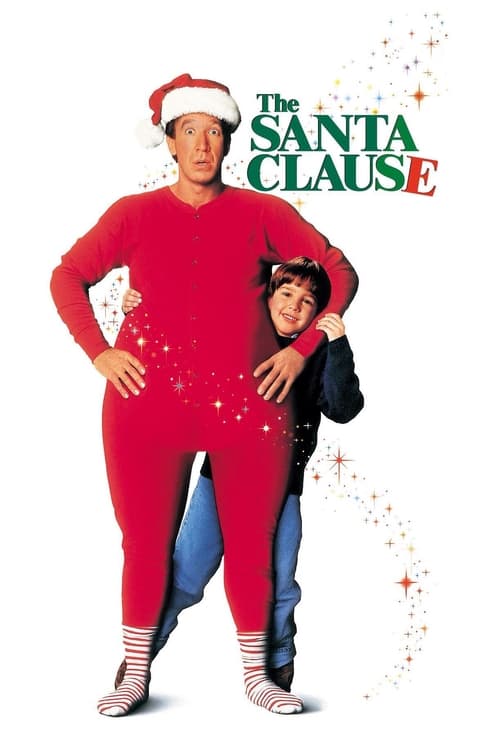
The Santa Clause
When a man inadvertently makes Santa fall off his roof on Christmas Eve, he finds himself magically recruited to take his place.
Despite a respectable budget of $22.0M, The Santa Clause became a massive hit, earning $189.8M worldwide—a remarkable 763% return.
2 wins & 9 nominations


Plot Structure
Story beats plotted across runtime


Narrative Arc
Emotional journey through the story's key moments
Story Circle
Blueprint 15-beat structure
Structural Analysis
The Status Quo at 1 minutes (1% through the runtime) establishes Scott Calvin is a cynical advertising executive at a toy company, divorced and struggling to connect with his son Charlie during their awkward Christmas Eve custody visit.. The analysis reveals that this early placement immediately immerses viewers in the story world.
The inciting incident occurs at 12 minutes when A noise on the roof leads Scott outside where he startles Santa Claus, causing him to fall off the roof and vanish, leaving behind only his suit and a card reading "The Santa Clause.".. At 12% through the film, this Disruption aligns precisely with traditional story structure. This beat shifts the emotional landscape, launching the protagonist into the central conflict.
The First Threshold at 25 minutes marks the transition into Act II, occurring at 25% of the runtime. This shows the protagonist's commitment to Scott wakes up at the North Pole and learns from Bernard the head elf about "The Santa Clause" - by putting on the suit, he has contractually agreed to become the new Santa Claus., moving from reaction to action.
At 48 minutes, the Midpoint arrives at 49% of the runtime—precisely centered, creating perfect narrative symmetry. The analysis reveals that this crucial beat Scott's transformation becomes undeniable - he now looks exactly like Santa Claus, gets fired from his job, and can no longer hide the changes, making his double life impossible to maintain., fundamentally raising what's at risk. The emotional intensity shifts, dividing the narrative into clear before-and-after phases.
The Collapse moment at 72 minutes (75% through) represents the emotional nadir. Here, The court rules against Scott, stripping him of visitation rights. He is forbidden from seeing Charlie, losing both his identity as a father and seemingly his chance to be Santa - his two worlds collapsing simultaneously., demonstrates the protagonist at their lowest point. This beat's placement in the final quarter sets up the climactic reversal.
The Second Threshold at 78 minutes initiates the final act resolution at 80% of the runtime. Christmas Eve arrives and Scott fully commits to being Santa Claus. He takes the sleigh and reindeer, choosing to fulfill his duty and prove himself, no longer running from his destiny., demonstrating the transformation achieved throughout the journey.
Emotional Journey
The Santa Clause's emotional architecture traces a deliberate progression across 15 carefully calibrated beats.
Narrative Framework
This structural analysis employs structural analysis methodology used to understand storytelling architecture. By mapping The Santa Clause against these established plot points, we can identify how John Pasquin utilizes or subverts traditional narrative conventions. The plot point approach reveals not only adherence to structural principles but also creative choices that distinguish The Santa Clause within the comedy genre.
John Pasquin's Structural Approach
Among the 4 John Pasquin films analyzed on Arcplot, the average structural score is 7.1, reflecting strong command of classical structure. The Santa Clause exemplifies the director's characteristic narrative technique. For comparative analysis, explore the complete John Pasquin filmography.
Comparative Analysis
Additional comedy films include The Bad Guys, Ella Enchanted and The Evening Star. For more John Pasquin analyses, see Joe Somebody, Miss Congeniality 2: Armed and Fabulous and Jungle 2 Jungle.
Plot Points by Act
Act I
SetupStatus Quo
Scott Calvin is a cynical advertising executive at a toy company, divorced and struggling to connect with his son Charlie during their awkward Christmas Eve custody visit.
Theme
Charlie tells Scott that "Seeing isn't believing. Believing is seeing," establishing the film's core message that faith and wonder must come before proof.
Worldbuilding
We see Scott's disconnected life: his soulless job selling toys he doesn't believe in, his strained relationship with ex-wife Laura and her psychiatrist husband Neal, and Charlie's desperate desire for his father to believe in Christmas magic.
Disruption
A noise on the roof leads Scott outside where he startles Santa Claus, causing him to fall off the roof and vanish, leaving behind only his suit and a card reading "The Santa Clause."
Resistance
Scott reluctantly puts on the Santa suit at Charlie's urging, magically delivers presents around the world, and debates whether the night's events were real or a dream, resisting the implications of what happened.
Act II
ConfrontationFirst Threshold
Scott wakes up at the North Pole and learns from Bernard the head elf about "The Santa Clause" - by putting on the suit, he has contractually agreed to become the new Santa Claus.
Mirror World
Charlie becomes Scott's greatest believer and ally, their father-son bond deepening as Charlie fully embraces that his dad is becoming Santa, representing the pure faith Scott must learn to embody.
Premise
Scott undergoes a hilarious physical transformation - gaining weight, growing a white beard that won't shave, his hair turning white - while trying to maintain his normal life and job, creating comedic chaos.
Midpoint
Scott's transformation becomes undeniable - he now looks exactly like Santa Claus, gets fired from his job, and can no longer hide the changes, making his double life impossible to maintain.
Opposition
Laura and Neal grow increasingly alarmed by Scott's appearance and Charlie's "delusions" about Santa, leading them to seek full custody. The situation escalates as Scott's Santa identity threatens to cost him his son.
Collapse
The court rules against Scott, stripping him of visitation rights. He is forbidden from seeing Charlie, losing both his identity as a father and seemingly his chance to be Santa - his two worlds collapsing simultaneously.
Crisis
Scott faces his darkest hour alone, seemingly having lost everything - his son, his credibility, and his purpose. He must decide whether to give up or embrace his destiny fully.
Act III
ResolutionSecond Threshold
Christmas Eve arrives and Scott fully commits to being Santa Claus. He takes the sleigh and reindeer, choosing to fulfill his duty and prove himself, no longer running from his destiny.
Synthesis
Scott delivers presents as the true Santa, picks up Charlie from Laura's house, gets pursued by police, and ultimately proves to everyone - including the skeptical adults - that he really is Santa Claus when the elves and magic of Christmas are revealed.
Transformation
Scott stands triumphant as Santa with Charlie by his side. Laura and Neal finally believe, the family is reconciled, and the once-cynical ad man has transformed into the embodiment of Christmas joy and wonder.