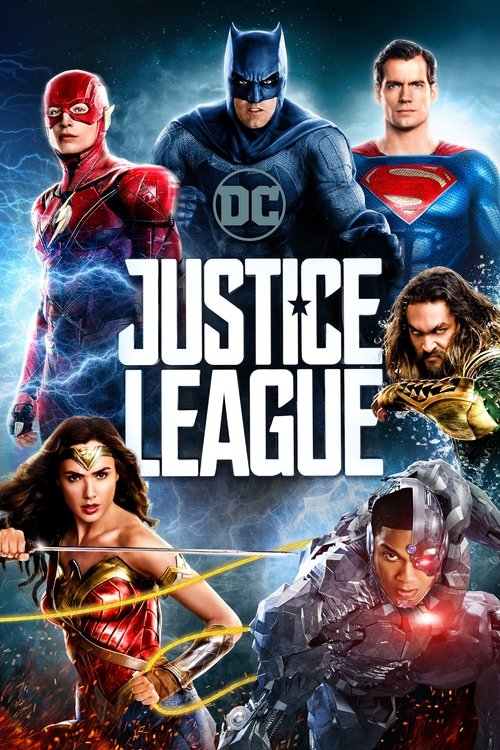
Justice League
Steppenwolf and his Parademons return after eons to capture Earth. However, Batman seeks the help of Wonder Woman to recruit and assemble Flash, Cyborg and Aquaman to fight the powerful new enemy.
Despite a massive budget of $300.0M, Justice League became a solid performer, earning $661.3M worldwide—a 120% return. This commercial performance validated the ambitious narrative scope, proving that audiences embrace distinctive approach even at blockbuster scale.
2 wins & 15 nominations


Plot Structure
Story beats plotted across runtime


Narrative Arc
Emotional journey through the story's key moments
Story Circle
Blueprint 15-beat structure
Characters
Cast & narrative archetypes

Bruce Wayne / Batman
Diana Prince / Wonder Woman
Clark Kent / Superman
Barry Allen / The Flash
Arthur Curry / Aquaman
Victor Stone / Cyborg
Steppenwolf
Main Cast & Characters
Bruce Wayne / Batman
Played by Ben Affleck
Billionaire vigilante who assembles the Justice League to honor Superman's sacrifice and defend Earth from threats.
Diana Prince / Wonder Woman
Played by Gal Gadot
Amazonian warrior princess who emerges from hiding to help lead the Justice League against Steppenwolf.
Clark Kent / Superman
Played by Henry Cavill
The world's greatest hero, resurrected to help the Justice League defeat an apocalyptic threat.
Barry Allen / The Flash
Played by Ezra Miller
Young speedster with a witty sense of humor who joins the Justice League seeking purpose and friendship.
Arthur Curry / Aquaman
Played by Jason Momoa
Half-human, half-Atlantean warrior reluctant to embrace his destiny as protector of both worlds.
Victor Stone / Cyborg
Played by Ray Fisher
Former athlete transformed into a cybernetic being struggling to accept his new existence and powers.
Steppenwolf
Played by Ciarán Hinds
Ancient New God general seeking to conquer Earth by uniting three Mother Boxes for his master Darkseid.
Structural Analysis
The Status Quo at 1 minutes (1% through the runtime) establishes Opening montage shows world in mourning after Superman's death. Crime rising, hope fading, darkness spreading. Batman pursues a parademon alone.. Significantly, this early placement immediately immerses viewers in the story world.
The inciting incident occurs at 14 minutes when Steppenwolf arrives on Earth at Themyscira, attacks the Amazons to claim the first Mother Box. The ancient threat awakens.. At 12% through the film, this Disruption aligns precisely with traditional story structure. This beat shifts the emotional landscape, launching the protagonist into the central conflict.
The First Threshold at 31 minutes marks the transition into Act II, occurring at 26% of the runtime. This indicates the protagonist's commitment to The team assembles for the first time at the Batcave. Bruce, Diana, Flash, and Cyborg (who finally joins) commit to working together to stop Steppenwolf., moving from reaction to action.
At 56 minutes, the Midpoint arrives at 47% of the runtime—precisely centered, creating perfect narrative symmetry. Notably, this crucial beat Steppenwolf captures the second Mother Box from Atlantis. The team realizes they cannot win without Superman - false defeat as they acknowledge their inadequacy., fundamentally raising what's at risk. The emotional intensity shifts, dividing the narrative into clear before-and-after phases.
The Collapse moment at 86 minutes (72% through) represents the emotional nadir. Here, While team deals with Superman, Steppenwolf attacks STAR Labs, kills Cyborg's father, and steals the final Mother Box. Total failure - the "whiff of death" with Silas Stone's sacrifice., illustrates the protagonist at their lowest point. This beat's placement in the final quarter sets up the climactic reversal.
The Second Threshold at 95 minutes initiates the final act resolution at 79% of the runtime. Superman, now fully restored with his humanity intact, chooses to join the fight. "I believe in truth, but I'm also a big fan of justice." The League is now complete., demonstrating the transformation achieved throughout the journey.
Emotional Journey
Justice League's emotional architecture traces a deliberate progression across 15 carefully calibrated beats.
Narrative Framework
This structural analysis employs structural analysis methodology used to understand storytelling architecture. By mapping Justice League against these established plot points, we can identify how Zack Snyder utilizes or subverts traditional narrative conventions. The plot point approach reveals not only adherence to structural principles but also creative choices that distinguish Justice League within the action genre.
Zack Snyder's Structural Approach
Among the 12 Zack Snyder films analyzed on Arcplot, the average structural score is 7.0, demonstrating varied approaches to story architecture. Justice League exemplifies the director's characteristic narrative technique. For comparative analysis, explore the complete Zack Snyder filmography.
Comparative Analysis
Additional action films include The Bad Guys, Puss in Boots and Venom: The Last Dance. For more Zack Snyder analyses, see Dawn of the Dead, Army of the Dead and Sucker Punch.
Plot Points by Act
Act I
SetupStatus Quo
Opening montage shows world in mourning after Superman's death. Crime rising, hope fading, darkness spreading. Batman pursues a parademon alone.
Theme
Bruce tells Diana: "I was wrong. We have to bring everyone together." The film's central question: Can individuals unite to become something greater?
Worldbuilding
World without Superman established. Bruce investigates parademon technology, discovers Steppenwolf's coming invasion. Diana works at Louvre, stops terrorist attack. Bruce begins recruiting metahumans.
Disruption
Steppenwolf arrives on Earth at Themyscira, attacks the Amazons to claim the first Mother Box. The ancient threat awakens.
Resistance
Diana learns of Steppenwolf's return. Bruce recruits Flash and Aquaman (who refuses). Team learns about the three Mother Boxes and Steppenwolf's plan. Cyborg struggles with his powers and humanity.
Act II
ConfrontationFirst Threshold
The team assembles for the first time at the Batcave. Bruce, Diana, Flash, and Cyborg (who finally joins) commit to working together to stop Steppenwolf.
Mirror World
Flash meets the team and brings youthful optimism and heart. His subplot about finding purpose and family mirrors the team's need for unity and belonging.
Premise
Heroes in action together. First battle in Gotham tunnel against Steppenwolf - they fail. Realize they're outmatched. Commissioner Gordon helps. Team explores their dynamics, learns to work together, investigates Steppenwolf's plan.
Midpoint
Steppenwolf captures the second Mother Box from Atlantis. The team realizes they cannot win without Superman - false defeat as they acknowledge their inadequacy.
Opposition
Team debates resurrecting Superman using the Mother Box. Dig up Clark's body. Cyborg's father helps at STAR Labs. Plan goes forward despite moral concerns. Superman returns but is confused and hostile, attacks the team.
Collapse
While team deals with Superman, Steppenwolf attacks STAR Labs, kills Cyborg's father, and steals the final Mother Box. Total failure - the "whiff of death" with Silas Stone's sacrifice.
Crisis
Team regroups in despair. Clark reunites with Lois and begins to remember who he is. Heroes process their failure and Silas's death. Bruce and Diana discuss hope and leadership.
Act III
ResolutionSecond Threshold
Superman, now fully restored with his humanity intact, chooses to join the fight. "I believe in truth, but I'm also a big fan of justice." The League is now complete.
Synthesis
Final battle in Russia. Justice League works as unified team against Steppenwolf and his army. Each hero uses their unique abilities in concert. Superman and Cyborg separate the Mother Boxes. Steppenwolf defeated, dragged away by parademons.
Transformation
Closing montage: Clark returns to Daily Planet, Bruce buys back Kent farm and plans Hall of Justice, Flash visits his father in prison, Aquaman returns to the sea, Cyborg embraces his identity. Heroes have found family and purpose through unity.