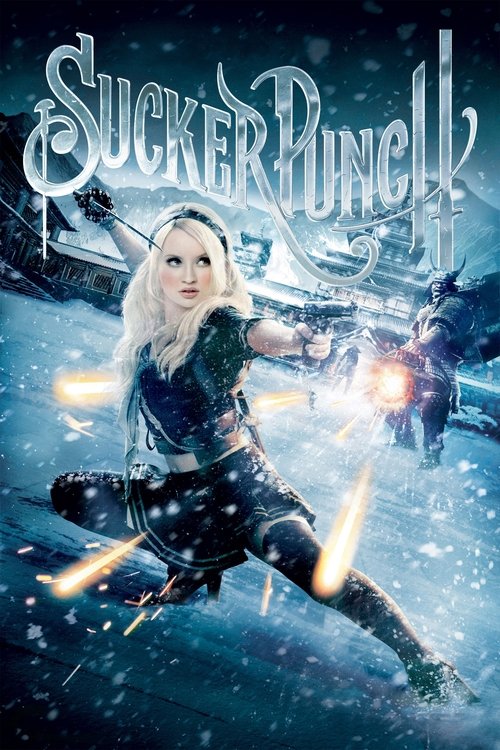
Sucker Punch
A young woman, institutionalized by her abusive stepfather, retreats into a vivid fantasy world where she envisions a plan to escape. Gathering a group of fellow inmates, she embarks on a quest to collect five mystical items, blurring the lines between reality and imagination.
Working with a considerable budget of $82.0M, the film achieved a respectable showing with $89.8M in global revenue (+10% profit margin).
1 win & 11 nominations


Plot Structure
Story beats plotted across runtime


Narrative Arc
Emotional journey through the story's key moments
Story Circle
Blueprint 15-beat structure
Arcplot Score Breakdown
Weighted: Precision (70%) + Arc (15%) + Theme (15%)
Sucker Punch (2011) reveals carefully calibrated plot construction, characteristic of Zack Snyder's storytelling approach. This structural analysis examines how the film's 15-point plot structure maps to proven narrative frameworks across 1 hour and 50 minutes. With an Arcplot score of 7.5, the film showcases strong structural fundamentals.
Characters
Cast & narrative archetypes

Babydoll
Sweet Pea
Rocket
Blondie
Amber
Blue Jones
Dr. Vera Gorski
Wise Man
Main Cast & Characters
Babydoll
Played by Emily Browning
A young woman institutionalized by her stepfather who retreats into fantasy worlds to cope and plan her escape.
Sweet Pea
Played by Abbie Cornish
The eldest and most cautious of the group, protective sister figure who questions the escape plan.
Rocket
Played by Jena Malone
Sweet Pea's younger sister, impulsive and eager to escape, who befriends Babydoll immediately.
Blondie
Played by Vanessa Hudgens
A pragmatic member of the group who struggles with loyalty and fear of the consequences.
Amber
Played by Jamie Chung
The pilot and driver of the group, skilled and brave but vulnerable.
Blue Jones
Played by Oscar Isaac
The corrupt orderly who runs the asylum like a brothel, controlling and abusing the women.
Dr. Vera Gorski
Played by Carla Gugino
The dance therapist who unknowingly aids the escape plan through her sessions.
Wise Man
Played by Scott Glenn
The mysterious guide who appears in Babydoll's fantasy worlds to provide cryptic advice and weapons.
Structural Analysis
The Status Quo at 1 minutes (1% through the runtime) establishes Babydoll lives with her abusive stepfather after her mother's death. Opening image shows her grief and vulnerability in a stylized 1950s bedroom as she mourns, establishing the gothic fairy-tale aesthetic and her trapped state.. The analysis reveals that this early placement immediately immerses viewers in the story world.
The inciting incident occurs at 13 minutes when Babydoll is brought to the asylum and scheduled for lobotomy. Blue reveals he's been paid off by her stepfather. She has five days before the High Roller (surgeon) arrives to perform the procedure. Her old life is gone; death looms.. At 11% through the film, this Disruption aligns precisely with traditional story structure. This beat shifts the emotional landscape, launching the protagonist into the central conflict.
The First Threshold at 27 minutes marks the transition into Act II, occurring at 25% of the runtime. This reveals the protagonist's commitment to Babydoll chooses to fight for freedom. She recruits the other girls and shares the Wise Man's plan: collect five items (map, fire, knife, key, mystery fifth item) to escape. They actively commit to the dangerous plan despite the risks., moving from reaction to action.
At 56 minutes, the Midpoint arrives at 50% of the runtime—precisely centered, creating perfect narrative symmetry. Notably, this crucial beat False victory becomes defeat: During the mission to steal the knife from the cook, Rocket saves Sweet Pea but is killed. The girls obtain the item but lose one of their own. The stakes become real - this isn't a game. The cook discovers their plan, raising the threat level., fundamentally raising what's at risk. The emotional intensity shifts, dividing the narrative into clear before-and-after phases.
The Collapse moment at 82 minutes (74% through) represents the emotional nadir. Here, Blue kills Amber and Blondie. Three of the five girls are now dead. The escape plan seems impossible with only two survivors. Babydoll faces the reality that her fantasy world couldn't protect her friends. Death pervades; hope collapses., indicates the protagonist at their lowest point. This beat's placement in the final quarter sets up the climactic reversal.
The Second Threshold at 89 minutes initiates the final act resolution at 81% of the runtime. Babydoll realizes the fifth item is herself - she must sacrifice her freedom for Sweet Pea's. The mystery element revealed: one of them can escape, but not both. Babydoll synthesizes the Wise Man's teachings and chooses to be the distraction, the guardian angel for another., demonstrating the transformation achieved throughout the journey.
Emotional Journey
Sucker Punch's emotional architecture traces a deliberate progression across 15 carefully calibrated beats.
Narrative Framework
This structural analysis employs systematic plot point analysis that identifies crucial turning points. By mapping Sucker Punch against these established plot points, we can identify how Zack Snyder utilizes or subverts traditional narrative conventions. The plot point approach reveals not only adherence to structural principles but also creative choices that distinguish Sucker Punch within the action genre.
Zack Snyder's Structural Approach
Among the 12 Zack Snyder films analyzed on Arcplot, the average structural score is 7.0, demonstrating varied approaches to story architecture. Sucker Punch represents one of the director's most structurally precise works. For comparative analysis, explore the complete Zack Snyder filmography.
Comparative Analysis
Additional action films include The Bad Guys, Puss in Boots and Venom: The Last Dance. For more Zack Snyder analyses, see Dawn of the Dead, Justice League and Army of the Dead.
Plot Points by Act
Act I
SetupStatus Quo
Babydoll lives with her abusive stepfather after her mother's death. Opening image shows her grief and vulnerability in a stylized 1950s bedroom as she mourns, establishing the gothic fairy-tale aesthetic and her trapped state.
Theme
Dr. Gorski (later revealed) and the theatrical framing suggest the theme: "You have all the weapons you need. Now fight." The film explores whether escape is mental, physical, or both - can we free ourselves through imagination?
Worldbuilding
Babydoll's stepfather kills her sister and frames Babydoll. He commits her to Lennox House asylum and bribes orderly Blue to forge Dr. Gorski's signature for a lobotomy in five days. The asylum's dark atmosphere, corrupt staff, and imprisoned girls are established.
Disruption
Babydoll is brought to the asylum and scheduled for lobotomy. Blue reveals he's been paid off by her stepfather. She has five days before the High Roller (surgeon) arrives to perform the procedure. Her old life is gone; death looms.
Resistance
Reality shifts to fantasy layer: the asylum becomes a brothel, inmates become dancers, Dr. Gorski becomes dance instructor. Babydoll meets fellow prisoners Sweet Pea, Rocket, Blondie, and Amber. She debates whether to accept her fate or fight. The Wise Man appears in her first dance-vision, becoming her guide.
Act II
ConfrontationFirst Threshold
Babydoll chooses to fight for freedom. She recruits the other girls and shares the Wise Man's plan: collect five items (map, fire, knife, key, mystery fifth item) to escape. They actively commit to the dangerous plan despite the risks.
Mirror World
Sweet Pea emerges as thematic mirror - the skeptic who questions whether fantasy is escape or evasion. Her relationship with sister Rocket and resistance to the plan embodies the central question: is survival enough, or must we fight even if we might lose?
Premise
The film delivers its promised spectacle: Babydoll's dance performances create third-layer fantasies (WWI zombies, orcs, robots) where the girls fight for each item. They successfully steal the map from Blue's office, obtain fire (lighter) from a guard, and take a knife from the cook. Action-packed fantasy sequences visualize their psychological battles.
Midpoint
False victory becomes defeat: During the mission to steal the knife from the cook, Rocket saves Sweet Pea but is killed. The girls obtain the item but lose one of their own. The stakes become real - this isn't a game. The cook discovers their plan, raising the threat level.
Opposition
Blue grows suspicious and violent. The cook reports the knife theft. During the mission to copy the Mayor's key, Blue confronts and kills Blondie and Amber after they're discovered. The plan unravels as Blue tightens control. Only Babydoll and Sweet Pea remain.
Collapse
Blue kills Amber and Blondie. Three of the five girls are now dead. The escape plan seems impossible with only two survivors. Babydoll faces the reality that her fantasy world couldn't protect her friends. Death pervades; hope collapses.
Crisis
Babydoll and Sweet Pea process their devastating losses. Sweet Pea wants to give up, believing the plan has failed. Babydoll wrestles with guilt and the realization that escape may require sacrifice. The dark night forces her to understand the true cost of freedom.
Act III
ResolutionSecond Threshold
Babydoll realizes the fifth item is herself - she must sacrifice her freedom for Sweet Pea's. The mystery element revealed: one of them can escape, but not both. Babydoll synthesizes the Wise Man's teachings and chooses to be the distraction, the guardian angel for another.
Synthesis
Babydoll distracts Blue and allows Sweet Pea to escape through the final door. Blue assaults Babydoll before the High Roller arrives. The lobotomy is performed. In the asylum reality, Sweet Pea escapes during the chaos of Blue's arrest for forgery and sexual assault. Babydoll's sacrifice enables another's freedom.
Transformation
Sweet Pea boards a bus to freedom, met by the Wise Man as bus driver. Lobotomized Babydoll smiles peacefully - she's free in her mind. The final image mirrors the opening: another girl trapped, but this time one escapes through another's sacrifice. Angels and guardians can be anyone who chooses to fight.