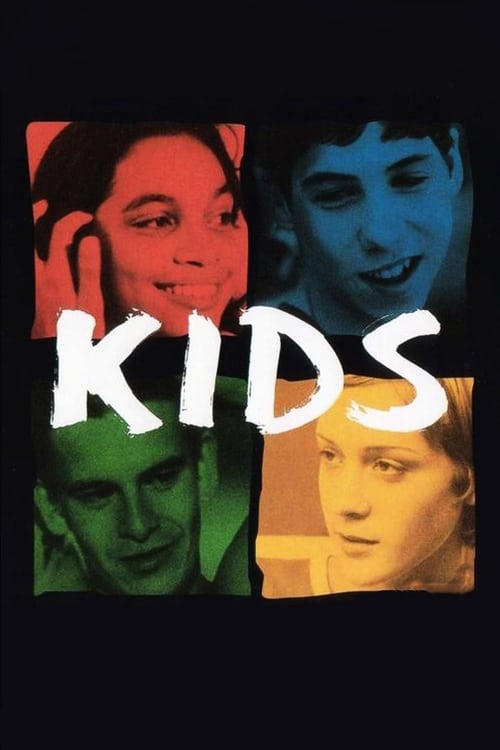
Kids
A day in the life of a group of teens as they travel around New York City skating, drinking, smoking and deflowering virgins.
Despite its small-scale budget of $1.5M, Kids became a runaway success, earning $20.4M worldwide—a remarkable 1261% return. The film's fresh perspective attracted moviegoers, demonstrating that strong storytelling can transcend budget limitations.
1 win & 5 nominations
Plot Structure
Story beats plotted across runtime


Narrative Arc
Emotional journey through the story's key moments
Story Circle
Blueprint 15-beat structure
Arcplot Score Breakdown
Weighted: Precision (70%) + Arc (15%) + Theme (15%)
Kids (1995) exemplifies carefully calibrated dramatic framework, characteristic of Larry Clark's storytelling approach. This structural analysis examines how the film's 15-point plot structure maps to proven narrative frameworks across 1 hour and 31 minutes. With an Arcplot score of 7.4, the film balances conventional beats with creative variation.
Characters
Cast & narrative archetypes

Telly
Jenny
Casper
Ruby
Darcy
Main Cast & Characters
Telly
Played by Leo Fitzpatrick
A manipulative teenager who pursues virgin girls, unaware he's HIV-positive and spreading the disease.
Jenny
Played by Chloe Sevigny
A teenage girl who discovers she's HIV-positive after only one sexual encounter and desperately searches for Telly to warn him.
Casper
Played by Justin Pierce
Telly's nihilistic best friend who engages in reckless behavior including violence, drugs, and alcohol.
Ruby
Played by Rosario Dawson
Jenny's friend who accompanies her on the desperate search for Telly through New York City.
Darcy
Played by Yakira Peguero
A young virgin girl who becomes Telly's target and victim near the end of the film.
Structural Analysis
The Status Quo at 1 minutes (1% through the runtime) establishes Telly seduces and deflowers a young virgin in a bedroom, establishing his predatory worldview and the film's raw depiction of teenage nihilism in mid-90s NYC.. The analysis reveals that this early placement immediately immerses viewers in the story world.
The inciting incident occurs at 11 minutes when Jennie receives her HIV-positive test results at the clinic. Having only had sex with Telly once, she realizes he infected her and is unknowingly spreading the virus to other virgins.. At 12% through the film, this Disruption aligns precisely with traditional story structure. This beat shifts the emotional landscape, launching the protagonist into the central conflict.
The First Threshold at 22 minutes marks the transition into Act II, occurring at 25% of the runtime. This shows the protagonist's commitment to Jennie decides she must find Telly before he infects another girl. She leaves with Ruby to search the city for him, beginning her desperate journey through NYC's teenage underworld., moving from reaction to action.
At 45 minutes, the Midpoint arrives at 49% of the runtime—precisely centered, creating perfect narrative symmetry. Significantly, this crucial beat The group arrives at a large apartment rave. Drugs circulate freely, violence erupts, and chaos intensifies. Jennie gets closer to finding Telly, but the stakes rise as time runs out and she becomes increasingly intoxicated and disoriented., fundamentally raising what's at risk. The emotional intensity shifts, dividing the narrative into clear before-and-after phases.
The Collapse moment at 67 minutes (74% through) represents the emotional nadir. Here, Jennie arrives too late. She finds Telly has already had sex with Darcy in a back room. Devastated and drugged, Jennie collapses, unable to save the girl or stop the cycle. Innocence dies—literally and metaphorically., indicates the protagonist at their lowest point. This beat's placement in the final quarter sets up the climactic reversal.
The Second Threshold at 75 minutes initiates the final act resolution at 82% of the runtime. Casper, high and without understanding consequences, rapes the semi-conscious Jennie. The virus continues its invisible spread, now passed to Casper, completing the cycle of unknowing transmission and exploitation., demonstrating the transformation achieved throughout the journey.
Emotional Journey
Kids's emotional architecture traces a deliberate progression across 15 carefully calibrated beats.
Narrative Framework
This structural analysis employs systematic plot point analysis that identifies crucial turning points. By mapping Kids against these established plot points, we can identify how Larry Clark utilizes or subverts traditional narrative conventions. The plot point approach reveals not only adherence to structural principles but also creative choices that distinguish Kids within the drama genre.
Comparative Analysis
Additional drama films include After Thomas, South Pacific and Dirty Dancing: Havana Nights.
Plot Points by Act
Act I
SetupStatus Quo
Telly seduces and deflowers a young virgin in a bedroom, establishing his predatory worldview and the film's raw depiction of teenage nihilism in mid-90s NYC.
Theme
Telly brags to Casper about his virginity obsession, stating "Virgins. I love 'em." The theme of consequence-free exploitation and invisible danger is established through their casual conversation about sex.
Worldbuilding
Introduction to the world of unsupervised NYC teenagers: kids hanging out in Washington Square Park, conversations about sex and violence, skateboarding culture, shoplifting, drug use, and complete absence of adult supervision or consequences.
Disruption
Jennie receives her HIV-positive test results at the clinic. Having only had sex with Telly once, she realizes he infected her and is unknowingly spreading the virus to other virgins.
Resistance
Jennie processes her diagnosis with her friend Ruby, discussing her sexual history and realizing the danger Telly poses. Meanwhile, Telly and his friends continue their day of skating, drugs, and seeking out another virgin for Telly.
Act II
ConfrontationFirst Threshold
Jennie decides she must find Telly before he infects another girl. She leaves with Ruby to search the city for him, beginning her desperate journey through NYC's teenage underworld.
Mirror World
Telly meets and begins grooming Darcy, his next virgin target, while Jennie's search intensifies. The parallel storylines represent opposing moral universes: awareness versus obliviousness, consequence versus recklessness.
Premise
The film delivers its premise: a day-in-the-life following two parallel tracks. Telly pursues Darcy while partying with friends. Jennie and Ruby search desperately through parties, parks, and apartments, encountering the full spectrum of teenage excess and nihilism.
Midpoint
The group arrives at a large apartment rave. Drugs circulate freely, violence erupts, and chaos intensifies. Jennie gets closer to finding Telly, but the stakes rise as time runs out and she becomes increasingly intoxicated and disoriented.
Opposition
The party descends into drugs, alcohol, and sexual activity. Jennie struggles through the crowd, increasingly impaired. Telly successfully isolates Darcy. The environment works against Jennie as obstacles multiply: crowds, drugs, her weakening state.
Collapse
Jennie arrives too late. She finds Telly has already had sex with Darcy in a back room. Devastated and drugged, Jennie collapses, unable to save the girl or stop the cycle. Innocence dies—literally and metaphorically.
Crisis
Jennie, incapacitated by drugs and despair, lies among passed-out teenagers. The camera observes the aftermath: unconscious bodies, the wreckage of youth. Telly sleeps, satisfied and ignorant. Jennie remains aware but powerless.
Act III
ResolutionSecond Threshold
Casper, high and without understanding consequences, rapes the semi-conscious Jennie. The virus continues its invisible spread, now passed to Casper, completing the cycle of unknowing transmission and exploitation.
Synthesis
Morning arrives. Teenagers wake among the debris of the party. The synthesis is devastatingly clear: nothing has changed, nothing will change. The cycle will continue because no one learns, no one intervenes, no one is held accountable.
Transformation
Casper wakes and stares directly at the camera, asking "Jesus Christ, what happened?" The fourth-wall break implicates the audience in the voyeurism and inaction. No transformation occurs—only the recognition that this world continues unchanged.