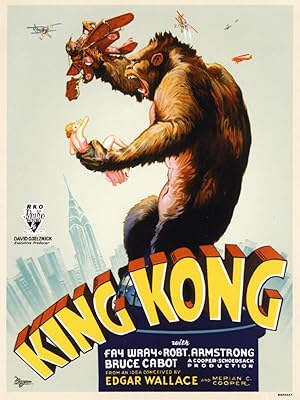
King Kong
Carl Denham needs to finish his movie and has the perfect location: Skull Island. But he still needs to find a leading lady. This 'soon-to-be-unfortunate' soul is Ann Darrow. No one knows what they will encounter on this island and why it is so mysterious, but once they reach it, they will soon find out. Living on this hidden island is a giant gorilla and this beast now has Ann in its grasps. Carl and Ann's new love, Jack Driscoll, must travel through the jungle looking for Kong and Ann, whilst avoiding all sorts of creatures and beasts.
Despite its shoestring budget of $672K, King Kong became a massive hit, earning $10.0M worldwide—a remarkable 1388% return. The film's distinctive approach engaged audiences, proving that strong storytelling can transcend budget limitations.
4 wins & 8 nominations


Plot Structure
Story beats plotted across runtime


Narrative Arc
Emotional journey through the story's key moments
Story Circle
Blueprint 15-beat structure
Arcplot Score Breakdown
Weighted: Precision (70%) + Arc (15%) + Theme (15%)
King Kong (1933) demonstrates strategically placed story structure, characteristic of Ernest B. Schoedsack's storytelling approach. This structural analysis examines how the film's 15-point plot structure maps to proven narrative frameworks across 1 hour and 44 minutes. With an Arcplot score of 6.9, the film balances conventional beats with creative variation.
Characters
Cast & narrative archetypes

Ann Darrow
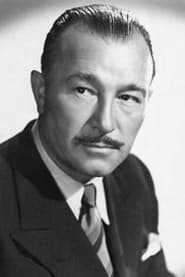
Carl Denham
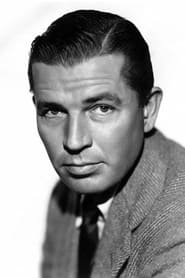
John Driscoll

King Kong
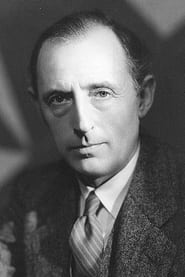
Captain Englehorn
Main Cast & Characters
Ann Darrow
Played by Fay Wray
A struggling vaudeville actress who becomes the beauty to Kong's beast, captured and brought to Skull Island as a sacrifice.
Carl Denham
Played by Robert Armstrong
An ambitious and reckless filmmaker who leads the expedition to Skull Island in search of a spectacular adventure film.
John Driscoll
Played by Bruce Cabot
The ship's first mate who falls in love with Ann and becomes her protector and rescuer throughout the ordeal.
King Kong
Played by King Kong (Stop-Motion)
A giant ape who rules Skull Island and develops a tragic attachment to Ann Darrow, ultimately leading to his downfall in New York.
Captain Englehorn
Played by Frank Reicher
The pragmatic captain of the Venture who expresses skepticism about Denham's dangerous expedition but follows through.
Structural Analysis
The Status Quo at 1 minutes (1% through the runtime) establishes A ship sits in New York harbor at night. Filmmaker Carl Denham prepares for a mysterious voyage, but his theatrical agent informs him no agency will provide a woman for his dangerous, unspecified expedition.. Significantly, this early placement immediately immerses viewers in the story world.
The inciting incident occurs at 12 minutes when Ann accepts Denham's offer to join the expedition, stepping aboard the Venture. Her desperate circumstances push her toward an unknown fate, setting the adventure in motion.. At 12% through the film, this Disruption aligns precisely with traditional story structure. This beat shifts the emotional landscape, launching the protagonist into the central conflict.
The First Threshold at 26 minutes marks the transition into Act II, occurring at 25% of the runtime. This shows the protagonist's commitment to The Venture arrives at Skull Island and the crew goes ashore. They discover natives performing a ritual sacrifice to Kong behind the massive wall. When the Chief sees Ann's golden hair, he offers to trade six native women for her—"the golden woman."., moving from reaction to action.
At 52 minutes, the Midpoint arrives at 50% of the runtime—precisely centered, creating perfect narrative symmetry. Structural examination shows that this crucial beat Kong battles and kills a Tyrannosaurus Rex to protect Ann, then tenderly examines her in his mountain lair. This false victory reveals Kong's capacity for gentleness beneath his ferocity—he has saved his "bride" but at the cost of revealing his vulnerability. Ann sees the beast who could crush her is instead fascinated by her., fundamentally raising what's at risk. The emotional intensity shifts, dividing the narrative into clear before-and-after phases.
The Collapse moment at 78 minutes (75% through) represents the emotional nadir. Here, Kong lies unconscious at the base of the broken gate, chains being fastened around him. Denham declares triumphantly: "We'll give him more than chains. He's always been King of his world, but we'll teach him fear." The mighty god of Skull Island has fallen—the death of his freedom and sovereignty., demonstrates the protagonist at their lowest point. This beat's placement in the final quarter sets up the climactic reversal.
The Second Threshold at 83 minutes initiates the final act resolution at 80% of the runtime. At the Broadway premiere, photographers' flashbulbs enrage Kong. Believing they're attacking Ann (seated in the audience), he breaks his chrome-steel chains and escapes into Manhattan. The caged god is unleashed upon the modern world., demonstrating the transformation achieved throughout the journey.
Emotional Journey
King Kong's emotional architecture traces a deliberate progression across 15 carefully calibrated beats.
Narrative Framework
This structural analysis employs systematic plot point analysis that identifies crucial turning points. By mapping King Kong against these established plot points, we can identify how Ernest B. Schoedsack utilizes or subverts traditional narrative conventions. The plot point approach reveals not only adherence to structural principles but also creative choices that distinguish King Kong within the adventure genre.
Comparative Analysis
Additional adventure films include The Black Stallion, The Bad Guys and Puss in Boots.
Plot Points by Act
Act I
SetupStatus Quo
A ship sits in New York harbor at night. Filmmaker Carl Denham prepares for a mysterious voyage, but his theatrical agent informs him no agency will provide a woman for his dangerous, unspecified expedition.
Theme
Denham declares to Weston: "The public wants a pretty face to look at... I'm going to make the greatest picture in the world. Something that nobody's ever seen or heard of." This foreshadows the exploitation of beauty for spectacle that will doom Kong.
Worldbuilding
The Depression-era world is established. Ann Darrow is discovered starving on the streets, desperate enough to steal an apple. Denham recruits her with promises of adventure and fame. The ship's crew, including First Mate Jack Driscoll, is introduced. Denham hints at their destination: a mysterious island with something monstrous behind a great wall.
Disruption
Ann accepts Denham's offer to join the expedition, stepping aboard the Venture. Her desperate circumstances push her toward an unknown fate, setting the adventure in motion.
Resistance
During the voyage, Ann learns to act for Denham's camera, practicing her screaming. Jack Driscoll falls for her despite his stated distrust of women on ships. Denham reveals the legend of Kong and shows them the map to Skull Island. The crew debates whether to turn back as they approach the fog-shrouded island.
Act II
ConfrontationFirst Threshold
The Venture arrives at Skull Island and the crew goes ashore. They discover natives performing a ritual sacrifice to Kong behind the massive wall. When the Chief sees Ann's golden hair, he offers to trade six native women for her—"the golden woman."
Mirror World
The natives kidnap Ann from the ship and offer her as a sacrifice to Kong. She is tied to the altar beyond the great gate as drums summon the beast. This establishes the parallel between Kong's obsessive desire for Ann and Denham's obsessive desire to capture Kong—both forms of possession disguised as love or ambition.
Premise
Kong emerges from the jungle and claims Ann, carrying her into the wilderness. The rescue party pursues through prehistoric dangers: a stegosaurus attack, a brontosaurus in the swamp that kills several sailors, and the infamous log bridge scene where Kong shakes men to their deaths. Jack alone continues the pursuit while Denham returns for more men and weapons.
Midpoint
Kong battles and kills a Tyrannosaurus Rex to protect Ann, then tenderly examines her in his mountain lair. This false victory reveals Kong's capacity for gentleness beneath his ferocity—he has saved his "bride" but at the cost of revealing his vulnerability. Ann sees the beast who could crush her is instead fascinated by her.
Opposition
Kong fights off a pteranodon and a giant snake while protecting Ann. Jack reaches Kong's lair and escapes with Ann while Kong is distracted. Kong pursues them to the native village, breaking through the great gate in his rage. He destroys the village and kills natives before Denham subdues him with gas bombs.
Collapse
Kong lies unconscious at the base of the broken gate, chains being fastened around him. Denham declares triumphantly: "We'll give him more than chains. He's always been King of his world, but we'll teach him fear." The mighty god of Skull Island has fallen—the death of his freedom and sovereignty.
Crisis
Time passes. Kong is transported to New York and prepared as a Broadway spectacle. Denham has achieved his dream of "the greatest picture in the world"—but Kong is now "Kong, the Eighth Wonder of the World," displayed in chains for a paying audience. The tragedy of exploitation crystallizes.
Act III
ResolutionSecond Threshold
At the Broadway premiere, photographers' flashbulbs enrage Kong. Believing they're attacking Ann (seated in the audience), he breaks his chrome-steel chains and escapes into Manhattan. The caged god is unleashed upon the modern world.
Synthesis
Kong rampages through New York, destroying an elevated train, terrorizing citizens, and scaling buildings searching for Ann. He finds her in a hotel room and carries her to the top of the Empire State Building—the highest point in his new jungle. Navy biplanes arrive and attack. Kong gently sets Ann down and fights the planes, but is mortally wounded by machine gun fire.
Transformation
Kong falls from the Empire State Building to his death. A policeman says the planes got him, but Denham delivers the famous final line: "No, it wasn't the airplanes. It was Beauty killed the Beast." The prehistoric god lies dead on a Manhattan street—sacrificed to spectacle, destroyed by his love for something he could never possess.