Kingdom
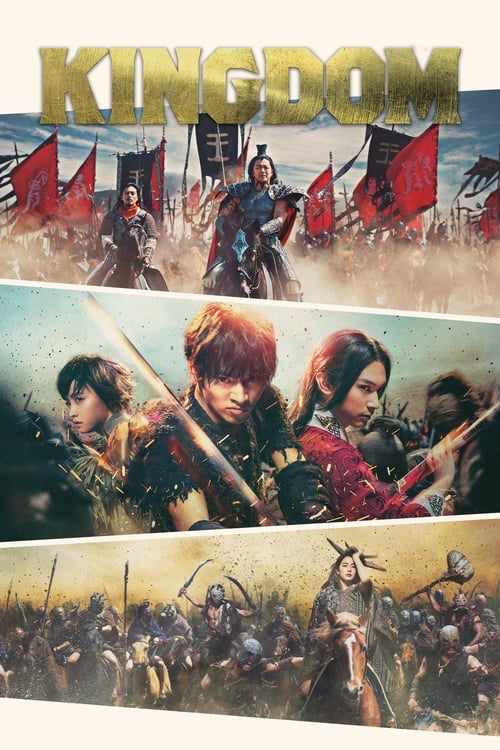
Set in Qin Dynasty during the warring states period in ancient China. Shin was a war orphan. He has a dream of becoming a great general Shin has a fateful encounter with young King Eisei. King Eisei aims to unify all of China.
The film earned $50.6M at the global box office.
3 wins & 7 nominations


Plot Structure
Story beats plotted across runtime


Narrative Arc
Emotional journey through the story's key moments
Story Circle
Blueprint 15-beat structure
Arcplot Score Breakdown
Weighted: Precision (70%) + Arc (15%) + Theme (15%)
Kingdom (2019) exemplifies precise dramatic framework, characteristic of Shinsuke Sato's storytelling approach. This structural analysis examines how the film's 15-point plot structure maps to proven narrative frameworks across 2 hours and 13 minutes. With an Arcplot score of 7.4, the film balances conventional beats with creative variation.
Characters
Cast & narrative archetypes

Alvey Kulina
Jay Kulina
Nate Kulina
Lisa Prince
Christina
Ryan Wheeler
Main Cast & Characters
Alvey Kulina
Played by Frank Grillo
Former MMA fighter who runs Navy St. MMA gym, struggling patriarch trying to hold his fractured family together
Jay Kulina
Played by Jonathan Tucker
The prodigal son and talented lightweight fighter, recently released from prison and fighting his way back
Nate Kulina
Played by Nick Jonas
The older brother and recovering addict, a talented fighter haunted by his demons and rivalry with Jay
Lisa Prince
Played by Joanna Going
Alvey's ex-wife, a recovering addict and therapist who maintains complex ties to the family
Christina
Played by Natalie Martinez
Jay's girlfriend and mother of his son, trying to build stability amid the chaos of the fighting world
Ryan Wheeler
Played by Matt Lauria
Young up-and-coming fighter at Navy St. gym, seeking guidance and his place in the brutal sport
Structural Analysis
The Status Quo at 2 minutes (1% through the runtime) establishes Crown Prince Lee Chang lives in political limbo, unable to see his ailing father the King, while the Haewon Cho clan consolidates power through the pregnant Queen Consort.. Significantly, this early placement immediately immerses viewers in the story world.
The inciting incident occurs at 16 minutes when Crown Prince Chang is accused of treason and learns that his father may already be dead, forcing him to flee the palace to uncover the truth about the King's condition.. At 12% through the film, this Disruption aligns precisely with traditional story structure. This beat shifts the emotional landscape, launching the protagonist into the central conflict.
The First Threshold at 33 minutes marks the transition into Act II, occurring at 25% of the runtime. This demonstrates the protagonist's commitment to Chang arrives at Dongnae and chooses to enter the magistrate's compound to investigate, crossing into a world of horror as he discovers the first infected victims., moving from reaction to action.
At 67 minutes, the Midpoint arrives at 50% of the runtime—precisely centered, creating perfect narrative symmetry. Structural examination shows that this crucial beat The zombie horde attacks Jiyulheon clinic in full force at night, overwhelming the defenders. Chang realizes the true scale of the plague and that the Cho clan has weaponized it for political gain., fundamentally raising what's at risk. The emotional intensity shifts, dividing the narrative into clear before-and-after phases.
The Collapse moment at 99 minutes (75% through) represents the emotional nadir. Here, Chang learns the devastating truth: his father the King is dead and has been reanimated as a zombie, kept hidden by the Cho clan. His legitimacy and hope for justice collapse., reveals the protagonist at their lowest point. This beat's placement in the final quarter sets up the climactic reversal.
The Second Threshold at 106 minutes initiates the final act resolution at 80% of the runtime. Chang synthesizes political strategy with survival tactics, realizing he must unite the people against the common threat and use the zombie King to expose the Cho clan's crimes., demonstrating the transformation achieved throughout the journey.
Emotional Journey
Kingdom's emotional architecture traces a deliberate progression across 15 carefully calibrated beats.
Narrative Framework
This structural analysis employs structural analysis methodology used to understand storytelling architecture. By mapping Kingdom against these established plot points, we can identify how Shinsuke Sato utilizes or subverts traditional narrative conventions. The plot point approach reveals not only adherence to structural principles but also creative choices that distinguish Kingdom within the action genre.
Shinsuke Sato's Structural Approach
Among the 2 Shinsuke Sato films analyzed on Arcplot, the average structural score is 7.3, reflecting strong command of classical structure. Kingdom represents one of the director's most structurally precise works. For comparative analysis, explore the complete Shinsuke Sato filmography.
Comparative Analysis
Additional action films include The Bad Guys, Puss in Boots and Venom: The Last Dance. For more Shinsuke Sato analyses, see Kingdom: Return of the Great General.
Plot Points by Act
Act I
SetupStatus Quo
Crown Prince Lee Chang lives in political limbo, unable to see his ailing father the King, while the Haewon Cho clan consolidates power through the pregnant Queen Consort.
Theme
Physician Seo-bi speaks of the balance between life and death, and how hunger drives all living things—foreshadowing the plague's connection to starvation and survival.
Worldbuilding
Establishment of Joseon court politics, the mysterious illness of the King, Crown Prince Chang's powerlessness, the Cho clan's manipulation, and the desperate famine affecting the kingdom.
Disruption
Crown Prince Chang is accused of treason and learns that his father may already be dead, forcing him to flee the palace to uncover the truth about the King's condition.
Resistance
Chang debates whether to investigate Jiyulheon clinic in Dongnae. He gathers loyal allies including Mu-yeong and travels south, wrestling with the risks of leaving the capital.
Act II
ConfrontationFirst Threshold
Chang arrives at Dongnae and chooses to enter the magistrate's compound to investigate, crossing into a world of horror as he discovers the first infected victims.
Mirror World
Chang meets Seo-bi, the physician who represents scientific truth and healing—a thematic mirror to the political deception and death surrounding the throne.
Premise
Chang and allies navigate the zombie-infested countryside, learning the rules of the infection (dormant by day, active at night), uncovering the conspiracy, and fighting to survive increasingly desperate encounters.
Midpoint
The zombie horde attacks Jiyulheon clinic in full force at night, overwhelming the defenders. Chang realizes the true scale of the plague and that the Cho clan has weaponized it for political gain.
Opposition
The infection spreads rapidly. Chang's group is hunted by both zombies and the Cho clan's forces. Political pressure mounts as the Queen gives birth, potentially displacing Chang from succession entirely.
Collapse
Chang learns the devastating truth: his father the King is dead and has been reanimated as a zombie, kept hidden by the Cho clan. His legitimacy and hope for justice collapse.
Crisis
Chang processes the horrific revelation about his father while surrounded by enemies on all sides. He must decide whether to expose the truth or protect the kingdom from chaos.
Act III
ResolutionSecond Threshold
Chang synthesizes political strategy with survival tactics, realizing he must unite the people against the common threat and use the zombie King to expose the Cho clan's crimes.
Synthesis
Chang leads a final stand against the zombie horde, orchestrates the exposure of the Cho clan's conspiracy, and attempts to contain the outbreak while reclaiming his political authority.
Transformation
Chang stands as a leader transformed by crisis, no longer the powerless prince but a ruler who has faced death and deception. Yet the plague's origin remains mysterious, setting up future conflict.