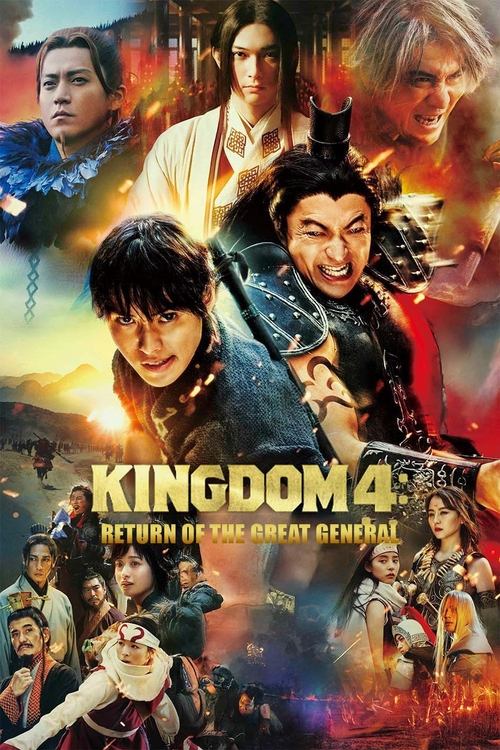
Kingdom: Return of the Great General
Depicts a continuation of the "Battle of Mayang", an all-out war against the neighboring country Zhao that Shin and Wang Ki fought in in the previous work "Flame of Fate".
The film earned $54.1M at the global box office.


Plot Structure
Story beats plotted across runtime


Narrative Arc
Emotional journey through the story's key moments
Story Circle
Blueprint 15-beat structure
Arcplot Score Breakdown
Weighted: Precision (70%) + Arc (15%) + Theme (15%)
Kingdom: Return of the Great General (2024) reveals carefully calibrated dramatic framework, characteristic of Shinsuke Sato's storytelling approach. This structural analysis examines how the film's 15-point plot structure maps to proven narrative frameworks across 2 hours and 26 minutes. With an Arcplot score of 7.3, the film balances conventional beats with creative variation.
Characters
Cast & narrative archetypes

Shin Li
Ei Sei
Ka Ryo Ten
Ou Ki
Kyou Kai
Heki
Mou Bu
Main Cast & Characters
Shin Li
Played by Kento Yamazaki
An ambitious young warrior who dreams of becoming a Great General of the Heavens, leading troops in battle to unify China
Ei Sei
Played by Ryo Yoshizawa
The young King of Qin who seeks to unify China and end the Warring States period through strategic brilliance
Ka Ryo Ten
Played by Kanna Hashimoto
A brilliant military strategist and Shin's loyal companion who provides tactical guidance to the Hi Shin Unit
Ou Ki
Played by Koichi Sato
A legendary Great General of Qin known for his overwhelming martial prowess and charismatic leadership in battle
Kyou Kai
Played by Kento Kaku
A deadly female assassin from the Shiyuu clan who fights alongside Shin with exceptional swordsmanship
Heki
Played by Takao Osawa
A Qin general who serves as a traditional military officer, often providing contrast to Shin's unconventional tactics
Mou Bu
Played by Shinnosuke Abe
A powerful Qin general known for immense physical strength and direct, forceful combat style
Structural Analysis
The Status Quo at 2 minutes (1% through the runtime) establishes Xin and his unit celebrate recent victories in their campaign, established as rising warriors in the Qin army. The camaraderie shows how far they've come, but hints at the greater challenges ahead.. Notably, this early placement immediately immerses viewers in the story world.
The inciting incident occurs at 18 minutes when News arrives that a massive coalition army is advancing on Qin, threatening to destroy everything they've fought for. The legendary general Ri Boku leads the enemy forces, and Qin faces its greatest existential threat yet.. At 12% through the film, this Disruption aligns precisely with traditional story structure. This beat shifts the emotional landscape, launching the protagonist into the central conflict.
The First Threshold at 37 minutes marks the transition into Act II, occurring at 25% of the runtime. This demonstrates the protagonist's commitment to Xin volunteers his unit for the most dangerous position in the defensive strategy. He actively chooses to step into a leadership role that could cost him everything, committing fully to the battle that will define his path to becoming a great general., moving from reaction to action.
At 73 minutes, the Midpoint arrives at 50% of the runtime—precisely centered, creating perfect narrative symmetry. Notably, this crucial beat A false victory: Xin's forces achieve a major breakthrough against a key enemy position, and it seems the tide is turning. Celebrations ensue, but the audience and perceptive characters sense this success has drawn them into a larger trap. The stakes are raised as Ri Boku's true strategy begins to reveal itself., fundamentally raising what's at risk. The emotional intensity shifts, dividing the narrative into clear before-and-after phases.
The Collapse moment at 110 minutes (75% through) represents the emotional nadir. Here, A beloved mentor or comrade falls in battle, sacrificing themselves to save Xin's unit. The devastating loss represents the "whiff of death" - Xin confronts the true cost of his ambition and the unbearable weight of leadership when those who trust you pay the ultimate price., demonstrates the protagonist at their lowest point. This beat's placement in the final quarter sets up the climactic reversal.
The Second Threshold at 117 minutes initiates the final act resolution at 80% of the runtime. Xin synthesizes everything he's learned: the theme stated at the beginning, the bonds with his comrades, and the sacrifice he witnessed. He realizes that true strength comes not from individual glory but from honoring those who believe in him. With renewed clarity and purpose, he formulates a desperate final strategy., demonstrating the transformation achieved throughout the journey.
Emotional Journey
Kingdom: Return of the Great General's emotional architecture traces a deliberate progression across 15 carefully calibrated beats.
Narrative Framework
This structural analysis employs systematic plot point analysis that identifies crucial turning points. By mapping Kingdom: Return of the Great General against these established plot points, we can identify how Shinsuke Sato utilizes or subverts traditional narrative conventions. The plot point approach reveals not only adherence to structural principles but also creative choices that distinguish Kingdom: Return of the Great General within the action genre.
Shinsuke Sato's Structural Approach
Among the 2 Shinsuke Sato films analyzed on Arcplot, the average structural score is 7.3, reflecting strong command of classical structure. Kingdom: Return of the Great General takes a more unconventional approach compared to the director's typical style. For comparative analysis, explore the complete Shinsuke Sato filmography.
Comparative Analysis
Additional action films include The Bad Guys, Puss in Boots and Venom: The Last Dance. For more Shinsuke Sato analyses, see Kingdom.
Plot Points by Act
Act I
SetupStatus Quo
Xin and his unit celebrate recent victories in their campaign, established as rising warriors in the Qin army. The camaraderie shows how far they've come, but hints at the greater challenges ahead.
Theme
A veteran general speaks about the true meaning of leadership and sacrifice: "A great general doesn't just win battles - they carry the weight of every soldier's dream." This establishes the film's exploration of what it means to bear responsibility for others.
Worldbuilding
Introduction to the current state of the Warring States period, Qin's strategic position, and the political machinations at court. We see Xin's unit dynamics, his relationship with his commanders, and the stakes of the upcoming campaign against the coalition army.
Disruption
News arrives that a massive coalition army is advancing on Qin, threatening to destroy everything they've fought for. The legendary general Ri Boku leads the enemy forces, and Qin faces its greatest existential threat yet.
Resistance
Strategic debates about how to face the coalition. Xin and his allies wrestle with whether their current strength is sufficient. Mentors and commanders discuss tactics, and Xin must decide if he's ready to take on greater responsibility in this desperate situation.
Act II
ConfrontationFirst Threshold
Xin volunteers his unit for the most dangerous position in the defensive strategy. He actively chooses to step into a leadership role that could cost him everything, committing fully to the battle that will define his path to becoming a great general.
Mirror World
A quiet moment with Xin's closest comrades, particularly Bi Hei and the core unit members, who remind him why they fight - not for glory, but for each other and their shared dream. This relationship subplot carries the theme of collective responsibility versus individual ambition.
Premise
The coalition war in full swing - epic battle sequences, tactical maneuvers, and Xin proving his worth on the battlefield. This delivers the spectacle audiences expect: massive armies clashing, clever strategies, and Xin's unit executing daring operations against overwhelming odds.
Midpoint
A false victory: Xin's forces achieve a major breakthrough against a key enemy position, and it seems the tide is turning. Celebrations ensue, but the audience and perceptive characters sense this success has drawn them into a larger trap. The stakes are raised as Ri Boku's true strategy begins to reveal itself.
Opposition
Ri Boku's counterattack intensifies. The enemy's superior tactics begin to overwhelm Qin's forces. Xin's unit suffers casualties, resources dwindle, and the weight of command crushes down on him. His decisions lead to losses, and he questions whether he's truly ready to be the general he aspires to become.
Collapse
A beloved mentor or comrade falls in battle, sacrificing themselves to save Xin's unit. The devastating loss represents the "whiff of death" - Xin confronts the true cost of his ambition and the unbearable weight of leadership when those who trust you pay the ultimate price.
Crisis
Xin wrestles with grief and guilt in the aftermath of the collapse. His unit, demoralized and broken, looks to him for direction. In this dark night, he must process what it truly means to carry the dreams and lives of others - the lesson his fallen comrade taught through their sacrifice.
Act III
ResolutionSecond Threshold
Xin synthesizes everything he's learned: the theme stated at the beginning, the bonds with his comrades, and the sacrifice he witnessed. He realizes that true strength comes not from individual glory but from honoring those who believe in him. With renewed clarity and purpose, he formulates a desperate final strategy.
Synthesis
The climactic final battle. Xin leads his unit in a last desperate charge, implementing the strategy born from his transformation. The finale showcases him as a true leader - not fighting for himself, but channeling the collective will of all who serve under him. The confrontation with enemy forces reaches its peak.
Transformation
Victory achieved, Xin stands among his surviving warriors. Unlike the opening celebration, this moment shows a changed man - scarred by loss but elevated by purpose. He's no longer just a soldier dreaming of greatness; he's become a leader who understands the profound responsibility of carrying others' dreams. The path to becoming a great general is clear.