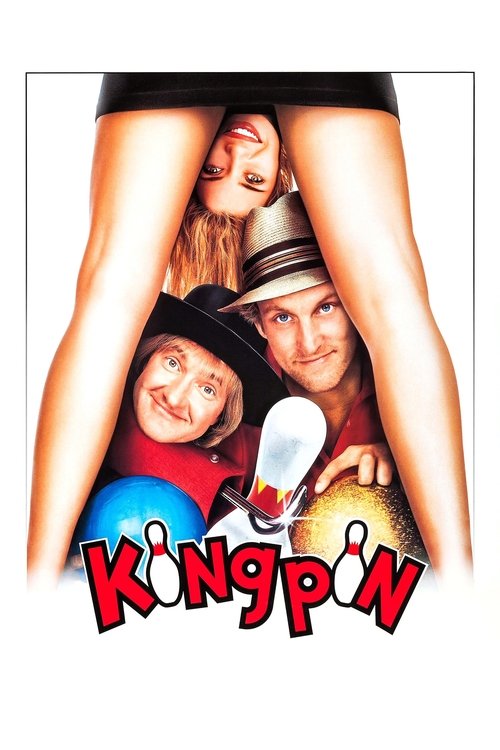
Kingpin
After bowler Roy Munson swindles the wrong crowd and is left with a hook for a hand, he settles into impoverished obscurity. That is, until he uncovers the next big thing: an Amish kid named Ishmael. So, the corrupt and the hopelessly naive hit the circuit intent on settling an old score with Big Ern.
The film underperformed commercially against its moderate budget of $27.0M, earning $25.0M globally (-7% loss).


Plot Structure
Story beats plotted across runtime


Narrative Arc
Emotional journey through the story's key moments
Story Circle
Blueprint 15-beat structure
Arcplot Score Breakdown
Weighted: Precision (70%) + Arc (15%) + Theme (15%)
Kingpin (1996) demonstrates meticulously timed narrative design, characteristic of Bobby Farrelly's storytelling approach. This structural analysis examines how the film's 15-point plot structure maps to proven narrative frameworks across 1 hour and 54 minutes. With an Arcplot score of 7.2, the film balances conventional beats with creative variation.
Characters
Cast & narrative archetypes

Roy Munson
Ishmael Boorg
Ernie McCracken
Claudia
Main Cast & Characters
Roy Munson
Played by Woody Harrelson
A former bowling prodigy whose career was destroyed by Ernie McCracken, now a broken alcoholic seeking redemption through young Amish bowler Ishmael.
Ishmael Boorg
Played by Randy Quaid
A naive and talented Amish bowler recruited by Roy to compete for prize money to save his family's farm.
Ernie McCracken
Played by Bill Murray
The reigning bowling champion and Roy's former partner who betrayed him, a narcissistic showman who represents everything fake in professional sports.
Claudia
Played by Vanessa Angel
A con artist and romantic interest who joins Roy and Ishmael on their journey to the bowling championship.
Structural Analysis
The Status Quo at 1 minutes (1% through the runtime) establishes 1979: Young Roy Munson wins the Iowa state bowling championship, showing natural talent and promise as a rising star in professional bowling.. Of particular interest, this early placement immediately immerses viewers in the story world.
The inciting incident occurs at 13 minutes when Roy's hand gets caught in the ball return machine and destroyed, ending his bowling career. Ernie abandons him to take the blame alone.. At 12% through the film, this Disruption aligns precisely with traditional story structure. This beat shifts the emotional landscape, launching the protagonist into the central conflict.
The First Threshold at 26 minutes marks the transition into Act II, occurring at 23% of the runtime. This reveals the protagonist's commitment to Roy witnesses Ishmael, a young Amish man, bowling perfectly at a county fair and decides to recruit him. He actively chooses to pursue this chance at redemption through mentoring., moving from reaction to action.
At 57 minutes, the Midpoint arrives at 50% of the runtime—precisely centered, creating perfect narrative symmetry. Of particular interest, this crucial beat False victory: The team successfully hustles enough money and makes it to Reno. They qualify for the tournament, and Roy believes his redemption plan is working perfectly., fundamentally raising what's at risk. The emotional intensity shifts, dividing the narrative into clear before-and-after phases.
The Collapse moment at 83 minutes (73% through) represents the emotional nadir. Here, Ishmael leaves to return home to the Amish community, abandoning Roy. Roy's dream of redemption "dies" - he's failed again, just like 17 years ago., illustrates the protagonist at their lowest point. This beat's placement in the final quarter sets up the climactic reversal.
The Second Threshold at 91 minutes initiates the final act resolution at 79% of the runtime. Ishmael returns, having chosen to bowl for himself, not just for Roy. Roy realizes redemption isn't about winning - it's about doing right by others. He enters the tournament himself., demonstrating the transformation achieved throughout the journey.
Emotional Journey
Kingpin's emotional architecture traces a deliberate progression across 15 carefully calibrated beats.
Narrative Framework
This structural analysis employs structural analysis methodology used to understand storytelling architecture. By mapping Kingpin against these established plot points, we can identify how Bobby Farrelly utilizes or subverts traditional narrative conventions. The plot point approach reveals not only adherence to structural principles but also creative choices that distinguish Kingpin within the comedy genre.
Bobby Farrelly's Structural Approach
Among the 9 Bobby Farrelly films analyzed on Arcplot, the average structural score is 7.0, reflecting strong command of classical structure. Kingpin represents one of the director's most structurally precise works. For comparative analysis, explore the complete Bobby Farrelly filmography.
Comparative Analysis
Additional comedy films include The Bad Guys, Ella Enchanted and The Evening Star. For more Bobby Farrelly analyses, see Hall Pass, Champions and Stuck on You.
Plot Points by Act
Act I
SetupStatus Quo
1979: Young Roy Munson wins the Iowa state bowling championship, showing natural talent and promise as a rising star in professional bowling.
Theme
Ernie McCracken tells Roy, "Sometimes you gotta take the bull by the horns" - the theme of seizing opportunity, though Ernie's corrupt version will lead Roy astray.
Worldbuilding
1979 timeline establishes Roy as a naive bowling prodigy mentored by corrupt pro Ernie McCracken. Ernie convinces Roy to participate in a scam, which goes wrong when angry bowlers attack them.
Disruption
Roy's hand gets caught in the ball return machine and destroyed, ending his bowling career. Ernie abandons him to take the blame alone.
Resistance
17 years later (1996): Roy is a broken-down alcoholic landlord with a prosthetic rubber hand, selling bowling supplies and barely surviving. He debates whether he still has anything to offer the sport.
Act II
ConfrontationFirst Threshold
Roy witnesses Ishmael, a young Amish man, bowling perfectly at a county fair and decides to recruit him. He actively chooses to pursue this chance at redemption through mentoring.
Mirror World
Roy meets Claudia, a woman in an abusive relationship, who will become their companion. She represents the thematic mirror - someone else trapped by bad choices seeking redemption.
Premise
The "road trip" premise: Roy, Ishmael, and Claudia travel to bowling tournaments, hustling games to raise money for the Reno million-dollar tournament. Roy teaches Ishmael the game while battling his own demons.
Midpoint
False victory: The team successfully hustles enough money and makes it to Reno. They qualify for the tournament, and Roy believes his redemption plan is working perfectly.
Opposition
Ernie McCracken appears at the tournament as the reigning champion. Roy's old wounds resurface. Ishmael is tempted to return to his simple Amish life. Claudia's ex threatens them. Everything Roy built begins crumbling.
Collapse
Ishmael leaves to return home to the Amish community, abandoning Roy. Roy's dream of redemption "dies" - he's failed again, just like 17 years ago.
Crisis
Roy hits rock bottom, drowning in self-pity and alcohol. He must confront whether he exploited Ishmael for his own redemption or genuinely cared about helping him.
Act III
ResolutionSecond Threshold
Ishmael returns, having chosen to bowl for himself, not just for Roy. Roy realizes redemption isn't about winning - it's about doing right by others. He enters the tournament himself.
Synthesis
The championship finale: Roy bowls against Ernie using both his destroyed hand and his newfound integrity. He combines his old skills with his new wisdom, no longer the naive kid Ernie manipulated.
Transformation
Roy loses the tournament but wins redemption. He's made peace with his past, helped Ishmael, and found Claudia. Unlike the opening image of hollow victory, this shows genuine transformation and peace.