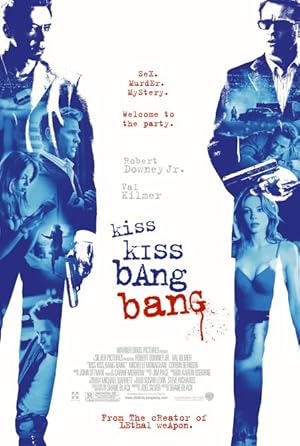
Kiss Kiss Bang Bang
A petty thief posing as an actor is brought to Los Angeles for an unlikely audition and finds himself in the middle of a murder investigation along with his high school dream girl and a detective who's been training him for his upcoming role...
Working with a respectable budget of $15.0M, the film achieved a modest success with $15.8M in global revenue (+5% profit margin).
5 wins & 16 nominations


Plot Structure
Story beats plotted across runtime


Narrative Arc
Emotional journey through the story's key moments
Story Circle
Blueprint 15-beat structure
Arcplot Score Breakdown
Weighted: Precision (70%) + Arc (15%) + Theme (15%)
Kiss Kiss Bang Bang (2005) exemplifies precise narrative design, characteristic of Shane Black's storytelling approach. This structural analysis examines how the film's 15-point plot structure maps to proven narrative frameworks across 1 hour and 42 minutes. With an Arcplot score of 7.7, the film showcases strong structural fundamentals.
Characters
Cast & narrative archetypes

Harry Lockhart
Perry van Shrike
Harmony Faith Lane
Harlan Dexter
Main Cast & Characters
Harry Lockhart
Played by Robert Downey Jr.
A petty thief turned actor who stumbles into a real murder investigation while researching a role in Los Angeles.
Perry van Shrike
Played by Val Kilmer
A tough, sardonic gay private investigator hired to train Harry for his detective role, who becomes embroiled in solving the murder case.
Harmony Faith Lane
Played by Michelle Monaghan
Harry's childhood crush and aspiring actress dealing with her sister's mysterious death while reconnecting with Harry in LA.
Harlan Dexter
Played by Corbin Bernsen
A wealthy, powerful businessman and father figure who becomes the central antagonist in the murder conspiracy.
Structural Analysis
The Status Quo at 1 minutes (1% through the runtime) establishes Harry narrates his pathetic life as a small-time thief in New York, establishing his status as a lying, unsuccessful criminal who hasn't achieved anything meaningful since childhood.. Notably, this early placement immediately immerses viewers in the story world.
The inciting incident occurs at 12 minutes when Harry accidentally stumbles into a movie audition while running from the cops and impresses the casting directors with his "method acting" (real panic), getting invited to Los Angeles.. At 12% through the film, this Disruption aligns precisely with traditional story structure. This beat shifts the emotional landscape, launching the protagonist into the central conflict.
The First Threshold at 26 minutes marks the transition into Act II, occurring at 25% of the runtime. This illustrates the protagonist's commitment to Harry actively chooses to help Perry on a real case involving a missing girl, crossing from fake actor research into genuine detective work and real danger., moving from reaction to action.
At 51 minutes, the Midpoint arrives at 50% of the runtime—precisely centered, creating perfect narrative symmetry. Significantly, this crucial beat False defeat: Harry discovers a dead body in his hotel room and realizes he's in over his head. The stakes raise from pretend detective work to real murder, and his lies begin catching up with him., fundamentally raising what's at risk. The emotional intensity shifts, dividing the narrative into clear before-and-after phases.
The Collapse moment at 77 minutes (75% through) represents the emotional nadir. Here, Harry finds Harmony apparently dead in the lake, containing the "whiff of death." His lies and failures seem to have cost him everything, including the woman he loves and any chance at redemption., reveals the protagonist at their lowest point. This beat's placement in the final quarter sets up the climactic reversal.
The Second Threshold at 82 minutes initiates the final act resolution at 80% of the runtime. Harry discovers Harmony is alive and pieces together the real conspiracy. Armed with truth instead of lies for the first time, he chooses authentic action over performance to save Perry and Harmony., demonstrating the transformation achieved throughout the journey.
Emotional Journey
Kiss Kiss Bang Bang's emotional architecture traces a deliberate progression across 15 carefully calibrated beats.
Narrative Framework
This structural analysis employs proven narrative structure principles that track dramatic progression. By mapping Kiss Kiss Bang Bang against these established plot points, we can identify how Shane Black utilizes or subverts traditional narrative conventions. The plot point approach reveals not only adherence to structural principles but also creative choices that distinguish Kiss Kiss Bang Bang within the comedy genre.
Shane Black's Structural Approach
Among the 4 Shane Black films analyzed on Arcplot, the average structural score is 7.4, reflecting strong command of classical structure. Kiss Kiss Bang Bang represents one of the director's most structurally precise works. For comparative analysis, explore the complete Shane Black filmography.
Comparative Analysis
Additional comedy films include The Bad Guys, Ella Enchanted and The Evening Star. For more Shane Black analyses, see The Predator, The Nice Guys and Iron Man 3.
Plot Points by Act
Act I
SetupStatus Quo
Harry narrates his pathetic life as a small-time thief in New York, establishing his status as a lying, unsuccessful criminal who hasn't achieved anything meaningful since childhood.
Theme
During the botched robbery flashback, the theme of performance vs. reality is introduced - Harry pretending to be something he's not, a pattern that will define his journey.
Worldbuilding
Extended setup showing Harry's childhood with Harmony, his failed criminal career, the botched toy store robbery, and his accidental flight into an acting audition while escaping police.
Disruption
Harry accidentally stumbles into a movie audition while running from the cops and impresses the casting directors with his "method acting" (real panic), getting invited to Los Angeles.
Resistance
Harry arrives in LA, meets his guide Gay Perry (private detective), attends the Hollywood party where he reunites with Harmony, and begins shadowing Perry to prepare for his detective role.
Act II
ConfrontationFirst Threshold
Harry actively chooses to help Perry on a real case involving a missing girl, crossing from fake actor research into genuine detective work and real danger.
Mirror World
Harry reconnects meaningfully with Harmony at her apartment, lying about his success. She represents his past authenticity vs. his current performance, embodying the film's central theme.
Premise
The fun and games of playing detective: Harry and Perry investigate, discover bodies, encounter mysterious figures, and Harry tries to impress Harmony while bungling through actual detective work.
Midpoint
False defeat: Harry discovers a dead body in his hotel room and realizes he's in over his head. The stakes raise from pretend detective work to real murder, and his lies begin catching up with him.
Opposition
The conspiracy deepens, Harry's finger gets shot off, Harmony's sister's death connects to the case, Perry is captured, and all of Harry's deceptions and incompetence make everything worse.
Collapse
Harry finds Harmony apparently dead in the lake, containing the "whiff of death." His lies and failures seem to have cost him everything, including the woman he loves and any chance at redemption.
Crisis
Harry's dark night: grieving Harmony, confronting his failures and lies. He processes the loss and must decide whether to run away again or face the truth for once in his life.
Act III
ResolutionSecond Threshold
Harry discovers Harmony is alive and pieces together the real conspiracy. Armed with truth instead of lies for the first time, he chooses authentic action over performance to save Perry and Harmony.
Synthesis
The finale at Harlan Dexter's mansion: Harry executes the plan using real detective skills learned from Perry, confronts the villains, saves Harmony and Perry, and acts with genuine courage instead of pretense.
Transformation
Harry narrates the resolution: he's now honestly working as a detective with Perry, in a real relationship with Harmony built on truth. The final image shows him transformed from pretender to authentic person.