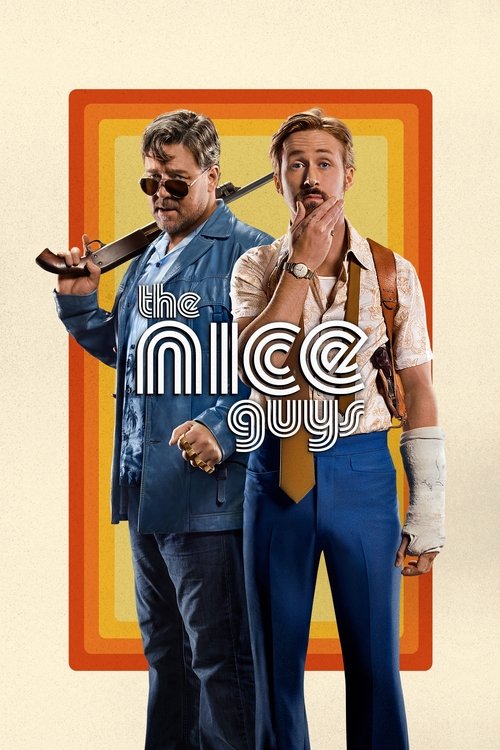
The Nice Guys
A private eye investigates the apparent suicide of a fading porn star in 1970s Los Angeles and uncovers a conspiracy.
Working with a respectable budget of $50.0M, the film achieved a modest success with $71.3M in global revenue (+43% profit margin).
9 wins & 34 nominations


Plot Structure
Story beats plotted across runtime


Narrative Arc
Emotional journey through the story's key moments
Story Circle
Blueprint 15-beat structure
Arcplot Score Breakdown
Weighted: Precision (70%) + Arc (15%) + Theme (15%)
The Nice Guys (2016) exhibits deliberately positioned story structure, characteristic of Shane Black's storytelling approach. This structural analysis examines how the film's 15-point plot structure maps to proven narrative frameworks across 1 hour and 56 minutes. With an Arcplot score of 7.2, the film balances conventional beats with creative variation.
Structural Analysis
The Status Quo at 1 minutes (1% through the runtime) establishes Holland March drunkenly crashes his car through a house, establishing him as a dissolute, incompetent private investigator in 1977 Los Angeles. His status quo is one of alcoholism, failure, and barely functioning as a single father.. Of particular interest, this early placement immediately immerses viewers in the story world.
The inciting incident occurs at 13 minutes when Jackson Healy breaks Holland March's arm and threatens him to stay away from Amelia. This violent encounter disrupts both men's routine work and sets the mystery in motion.. At 12% through the film, this Disruption aligns precisely with traditional story structure. This beat shifts the emotional landscape, launching the protagonist into the central conflict.
The First Threshold at 29 minutes marks the transition into Act II, occurring at 25% of the runtime. This demonstrates the protagonist's commitment to March and Healy definitively partner up and crash a party at the home of a porn producer to find Amelia. This is their active choice to fully commit to the case together, entering the world of conspiracy and corruption., moving from reaction to action.
At 57 minutes, the Midpoint arrives at 50% of the runtime—precisely centered, creating perfect narrative symmetry. Significantly, this crucial beat The trio meets Amelia at her aunt's house. False victory: they've found her, the case seems solved, and she explains the conspiracy (automakers paying off politicians). But immediately, hitmen attack, Amelia's aunt is killed, and Amelia escapes. Stakes raised: this is bigger and deadlier than expected., fundamentally raising what's at risk. The emotional intensity shifts, dividing the narrative into clear before-and-after phases.
The Collapse moment at 85 minutes (73% through) represents the emotional nadir. Here, Amelia is shot and killed by John Boy at the airport right in front of March, Healy, and Holly. The literal death of the idealistic young woman who wanted to expose corruption represents the death of hope. The case is over, the bad guys have won., reveals the protagonist at their lowest point. This beat's placement in the final quarter sets up the climactic reversal.
The Second Threshold at 91 minutes initiates the final act resolution at 79% of the runtime. Holly's moral clarity and Amelia's dying words ("The film, give it to the projectionists") give March and Healy new purpose. They realize they can still show Amelia's experimental film at the Auto Show, exposing the conspiracy. They choose to finish what Amelia started, synthesizing their detective skills with her idealism., demonstrating the transformation achieved throughout the journey.
Emotional Journey
The Nice Guys's emotional architecture traces a deliberate progression across 15 carefully calibrated beats.
Narrative Framework
This structural analysis employs a 15-point narrative structure framework that maps key story moments. By mapping The Nice Guys against these established plot points, we can identify how Shane Black utilizes or subverts traditional narrative conventions. The plot point approach reveals not only adherence to structural principles but also creative choices that distinguish The Nice Guys within the comedy genre.
Shane Black's Structural Approach
Among the 4 Shane Black films analyzed on Arcplot, the average structural score is 7.4, reflecting strong command of classical structure. The Nice Guys takes a more unconventional approach compared to the director's typical style. For comparative analysis, explore the complete Shane Black filmography.
Comparative Analysis
Additional comedy films include The Bad Guys, Ella Enchanted and The Evening Star. For more Shane Black analyses, see The Predator, Kiss Kiss Bang Bang and Iron Man 3.
Plot Points by Act
Act I
SetupStatus Quo
Holland March drunkenly crashes his car through a house, establishing him as a dissolute, incompetent private investigator in 1977 Los Angeles. His status quo is one of alcoholism, failure, and barely functioning as a single father.
Theme
Holly March asks her father, "How do you think a person should be?" March deflects, but the question establishes the film's central theme: moral compromise versus doing what's right in a corrupt world.
Worldbuilding
We meet Holland March (inept PI and drunk), Jackson Healy (enforcer for hire), and the 1970s LA smog crisis backdrop. March is hired by Mrs. Glenn to find Amelia, who she believes is her dead niece Misty Mountains (a porn star). Healy is hired by Amelia to beat up March and scare him off the case.
Disruption
Jackson Healy breaks Holland March's arm and threatens him to stay away from Amelia. This violent encounter disrupts both men's routine work and sets the mystery in motion.
Resistance
Healy realizes Amelia is in real danger when thugs come looking for her and nearly kill him. He reluctantly seeks out March to form a partnership. March debates working with the man who broke his arm, but the money and mystery convince him. They begin investigating together, learning about Amelia's connection to experimental pornographic film and the Detroit automakers.
Act II
ConfrontationFirst Threshold
March and Healy definitively partner up and crash a party at the home of a porn producer to find Amelia. This is their active choice to fully commit to the case together, entering the world of conspiracy and corruption.
Mirror World
Holly March (Holland's 13-year-old daughter) inserts herself into the investigation. She represents innocence, moral clarity, and belief in doing the right thing—the thematic mirror to her father's cynicism and the partnership's mercenary motives.
Premise
The "fun and games" of buddy detective comedy: March and Healy investigate the pornography angle, crash parties, interrogate witnesses, discover dead bodies, and bumble through action sequences. Holly tags along providing unexpected help. They uncover that Amelia made an experimental film exposing Detroit automakers' role in blocking smog regulations.
Midpoint
The trio meets Amelia at her aunt's house. False victory: they've found her, the case seems solved, and she explains the conspiracy (automakers paying off politicians). But immediately, hitmen attack, Amelia's aunt is killed, and Amelia escapes. Stakes raised: this is bigger and deadlier than expected.
Opposition
The bad guys close in: John Boy (hitman) pursues them relentlessly. March and Healy discover the conspiracy goes to the highest levels—Amelia's own mother, Judith Kuttner (head of the Justice Department), is the one who ordered her daughter killed to protect the automakers. The detectives are out of their depth, cornered, and realize stopping the conspiracy may be impossible.
Collapse
Amelia is shot and killed by John Boy at the airport right in front of March, Healy, and Holly. The literal death of the idealistic young woman who wanted to expose corruption represents the death of hope. The case is over, the bad guys have won.
Crisis
March and Healy sit in the dark aftermath of Amelia's death. March wants to quit and go home. They debate whether anything they do matters in such a corrupt system. Holly challenges them, asking how they can live with themselves if they give up now.
Act III
ResolutionSecond Threshold
Holly's moral clarity and Amelia's dying words ("The film, give it to the projectionists") give March and Healy new purpose. They realize they can still show Amelia's experimental film at the Auto Show, exposing the conspiracy. They choose to finish what Amelia started, synthesizing their detective skills with her idealism.
Synthesis
The finale at the Auto Show: March and Healy infiltrate the event, fight off John Boy and other thugs, and successfully project Amelia's film exposing the conspiracy to a crowd of media and politicians. Judith Kuttner is arrested. The case is resolved through action, wit, and unexpected competence.
Transformation
March and Healy form a permanent detective agency, "The Nice Guys," with Holly as their partner. March is sober, competent, and working with purpose. The final image mirrors the opening dysfunction but shows transformation: they're still imperfect, but now they're trying to do the right thing.