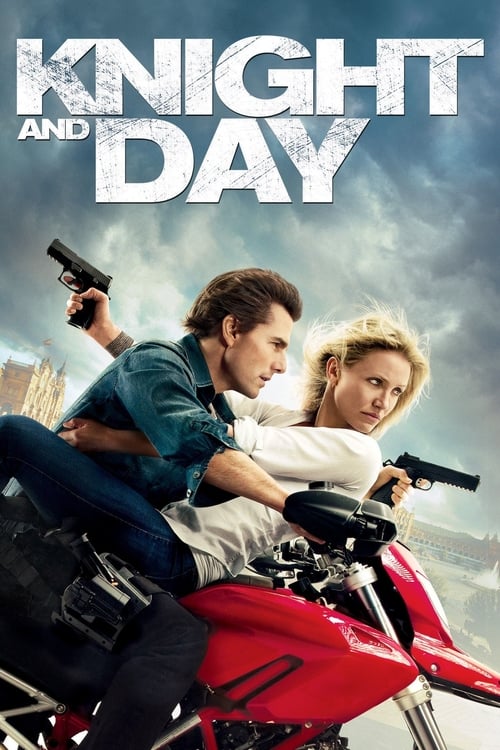
Knight and Day
A fugitive couple goes on a glamorous and sometimes deadly adventure where nothing and no one – even themselves – are what they seem. Amid shifting alliances and unexpected betrayals, they race across the globe, with their survival ultimately hinging on the battle of truth vs. trust.
Despite a significant budget of $117.0M, Knight and Day became a financial success, earning $262.0M worldwide—a 124% return.


Plot Structure
Story beats plotted across runtime


Narrative Arc
Emotional journey through the story's key moments
Story Circle
Blueprint 15-beat structure
Arcplot Score Breakdown
Weighted: Precision (70%) + Arc (15%) + Theme (15%)
Knight and Day (2010) exemplifies deliberately positioned dramatic framework, characteristic of James Mangold's storytelling approach. This structural analysis examines how the film's 15-point plot structure maps to proven narrative frameworks across 1 hour and 49 minutes. With an Arcplot score of 6.1, the film takes an unconventional approach to traditional narrative frameworks.
Characters
Cast & narrative archetypes

Roy Miller
June Havens
Antonio
Director George
Fitzgerald
Simon Feck
Main Cast & Characters
Roy Miller
Played by Tom Cruise
A rogue CIA agent with extraordinary combat skills who drags June into a globe-trotting adventure while protecting a revolutionary energy source.
June Havens
Played by Cameron Diaz
An ordinary woman and classic car restorer who gets swept into international espionage when she meets Roy on a flight to Boston.
Antonio
Played by Jordi Mollà
A Spanish arms dealer and main antagonist who wants to steal the Zephyr battery for profit and power.
Director George
Played by Viola Davis
The CIA director who brands Roy as a traitor and leads the manhunt to capture him and recover the Zephyr.
Fitzgerald
Played by Peter Sarsgaard
A CIA agent tasked with tracking down Roy Miller and recovering the stolen battery technology.
Simon Feck
Played by Paul Dano
A brilliant young inventor who created the perpetual energy battery called the Zephyr that everyone is chasing.
Structural Analysis
The Status Quo at 1 minutes (1% through the runtime) establishes June Havens rushes through Wichita airport, late and frazzled, trying to get to Boston for her sister's wedding. She's the responsible, predictable one—restoring classic cars, living a safe, ordinary life.. Significantly, this early placement immediately immerses viewers in the story world.
The inciting incident occurs at 14 minutes when Roy kills everyone on the plane—passengers and crew were all agents sent to kill him. June wakes from being drugged to find Roy casually piloting the plane while bodies lie around her. Her safe world is shattered.. At 12% through the film, this Disruption aligns precisely with traditional story structure. This beat shifts the emotional landscape, launching the protagonist into the central conflict.
The First Threshold at 27 minutes marks the transition into Act II, occurring at 25% of the runtime. This illustrates the protagonist's commitment to June actively chooses to go with Roy after he rescues her from agents in her own home. She willingly gets on his motorcycle and enters the world of espionage and danger, leaving her safe life behind., moving from reaction to action.
At 55 minutes, the Midpoint arrives at 51% of the runtime—precisely centered, creating perfect narrative symmetry. Notably, this crucial beat False defeat: June believes she's been manipulated and that Roy might actually be the rogue agent everyone claims. She sides with FBI handler Fitzgerald, thinking she's making the safe choice. Roy is captured., fundamentally raising what's at risk. The emotional intensity shifts, dividing the narrative into clear before-and-after phases.
The Collapse moment at 82 minutes (76% through) represents the emotional nadir. Here, Roy is shot and captured by Antonio, the arms dealer. June watches helplessly as Roy is taken away, apparently dying. She's alone, her protective partner seemingly lost forever. The mission appears hopeless., illustrates the protagonist at their lowest point. This beat's placement in the final quarter sets up the climactic reversal.
The Second Threshold at 87 minutes initiates the final act resolution at 80% of the runtime. June synthesizes everything Roy taught her with her own skills (mechanics, resourcefulness). She chooses to actively rescue Roy rather than wait to be saved. She becomes a participant, not a victim—taking control of her own adventure., demonstrating the transformation achieved throughout the journey.
Emotional Journey
Knight and Day's emotional architecture traces a deliberate progression across 15 carefully calibrated beats.
Narrative Framework
This structural analysis employs proven narrative structure principles that track dramatic progression. By mapping Knight and Day against these established plot points, we can identify how James Mangold utilizes or subverts traditional narrative conventions. The plot point approach reveals not only adherence to structural principles but also creative choices that distinguish Knight and Day within the action genre.
James Mangold's Structural Approach
Among the 11 James Mangold films analyzed on Arcplot, the average structural score is 6.5, demonstrating varied approaches to story architecture. Knight and Day takes a more unconventional approach compared to the director's typical style. For comparative analysis, explore the complete James Mangold filmography.
Comparative Analysis
Additional action films include The Bad Guys, Puss in Boots and Venom: The Last Dance. For more James Mangold analyses, see 3:10 to Yuma, Logan and Identity.
Plot Points by Act
Act I
SetupStatus Quo
June Havens rushes through Wichita airport, late and frazzled, trying to get to Boston for her sister's wedding. She's the responsible, predictable one—restoring classic cars, living a safe, ordinary life.
Theme
At the gate, another passenger comments about fate and unexpected connections: "Sometimes things happen for a reason." The film's theme: surrendering control and trusting in the unexpected journey.
Worldbuilding
June's ordinary world is established—she's risk-averse, scheduled, proper. She meets charming Roy Miller at the airport. Their chemistry is immediate. The flight boards, and she ends up on a nearly empty plane with Roy.
Disruption
Roy kills everyone on the plane—passengers and crew were all agents sent to kill him. June wakes from being drugged to find Roy casually piloting the plane while bodies lie around her. Her safe world is shattered.
Resistance
Roy crash-lands the plane in a cornfield, tells June she'll be questioned but should act normal. June tries to return to her ordinary life, but government agents claim Roy is a rogue operative. She doesn't know who to trust.
Act II
ConfrontationFirst Threshold
June actively chooses to go with Roy after he rescues her from agents in her own home. She willingly gets on his motorcycle and enters the world of espionage and danger, leaving her safe life behind.
Mirror World
Roy and June share genuine moments between action sequences. She begins to see beyond the chaos—he represents freedom, spontaneity, and trust. Their relationship becomes the emotional core that teaches June to embrace uncertainty.
Premise
The "fun and games" of action-comedy espionage. Exotic locations, car chases, shootouts, Roy's impossible competence. June is drugged and wakes in new places, running bulls in Spain, escaping assassins. The zephyr battery MacGuffin drives the plot.
Midpoint
False defeat: June believes she's been manipulated and that Roy might actually be the rogue agent everyone claims. She sides with FBI handler Fitzgerald, thinking she's making the safe choice. Roy is captured.
Opposition
June discovers Fitzgerald is the actual traitor. The people she trusted are villains; the "dangerous" Roy was telling the truth. Stakes escalate as multiple factions pursue the zephyr battery. Simon Feck, the inventor, is kidnapped.
Collapse
Roy is shot and captured by Antonio, the arms dealer. June watches helplessly as Roy is taken away, apparently dying. She's alone, her protective partner seemingly lost forever. The mission appears hopeless.
Crisis
June faces her dark night alone on the island. She must decide who she's become—will she retreat to safety or step fully into this dangerous world? She processes that her feelings for Roy are real.
Act III
ResolutionSecond Threshold
June synthesizes everything Roy taught her with her own skills (mechanics, resourcefulness). She chooses to actively rescue Roy rather than wait to be saved. She becomes a participant, not a victim—taking control of her own adventure.
Synthesis
June executes the rescue and finale. She and Roy work as true partners, infiltrating the arms deal. They recover the zephyr, save Simon Feck, defeat Antonio and Fitzgerald. June is now fully capable in this world.
Transformation
June and Roy are together on a tropical beach, finally safe. Mirror of opening: she was rushing to a wedding alone; now she's relaxed with Roy, wearing a ring. She's transformed from controlled and fearful to spontaneous and trusting.