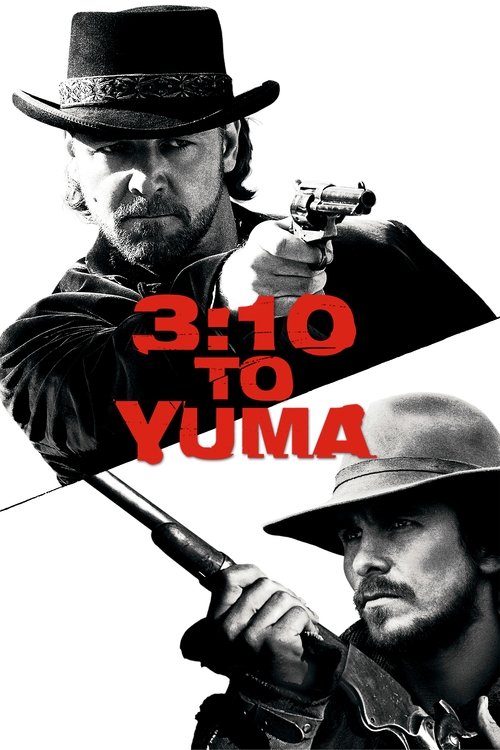
3:10 to Yuma
In Arizona in the late 1800s, infamous outlaw Ben Wade and his vicious gang of thieves and murderers have plagued the Southern Railroad. When Wade is captured, Civil War veteran Dan Evans, struggling to survive on his drought-plagued ranch, volunteers to deliver him alive to the "3:10 to Yuma", a train that will take the killer to trial.
Working with a moderate budget of $55.0M, the film achieved a modest success with $70.0M in global revenue (+27% profit margin).
Nominated for 2 Oscars. 3 wins & 32 nominations


Plot Structure
Story beats plotted across runtime


Narrative Arc
Emotional journey through the story's key moments
Story Circle
Blueprint 15-beat structure
Arcplot Score Breakdown
Weighted: Precision (70%) + Arc (15%) + Theme (15%)
3:10 to Yuma (2007) exemplifies deliberately positioned plot construction, characteristic of James Mangold's storytelling approach. This structural analysis examines how the film's 15-point plot structure maps to proven narrative frameworks across 2 hours and 2 minutes. With an Arcplot score of 6.3, the film takes an unconventional approach to traditional narrative frameworks.
Characters
Cast & narrative archetypes

Dan Evans
Ben Wade
William Evans
Charlie Prince
Alice Evans
Byron McElroy
Doc Potter
Main Cast & Characters
Dan Evans
Played by Christian Bale
A struggling rancher and Civil War veteran who volunteers to escort outlaw Ben Wade to the train to Yuma prison.
Ben Wade
Played by Russell Crowe
A charming, intelligent, and ruthless outlaw leader with a moral complexity beneath his criminal exterior.
William Evans
Played by Logan Lerman
Dan's teenage son who witnesses his father's struggle and transformation throughout the journey.
Charlie Prince
Played by Ben Foster
Ben Wade's fiercely loyal and violent second-in-command who will stop at nothing to free his boss.
Alice Evans
Played by Gretchen Mol
Dan's wife who struggles with their failing ranch and worries about her husband's dangerous mission.
Byron McElroy
Played by Peter Fonda
A Pinkerton agent and railroad security officer who has a personal vendetta against Ben Wade.
Doc Potter
Played by Alan Tudyk
A veterinarian and alcoholic who joins the escort party, providing medical knowledge and moral support.
Structural Analysis
The Status Quo at 1 minutes (1% through the runtime) establishes Dan Evans, a struggling rancher with a crippled leg, watches helplessly as his barn burns. He's broke, indebted, and losing his land to the railroad. His son William witnesses his father's weakness and shame.. The analysis reveals that this early placement immediately immerses viewers in the story world.
The inciting incident occurs at 15 minutes when Ben Wade and his gang arrive in Bisbee. Dan witnesses Wade's brutal gang murder the stagecoach guards and escort in town. Wade is captured when he lingers too long at the saloon with barmaid Emmy, drawn by his own arrogance and desire.. At 13% through the film, this Disruption is delayed, allowing extended setup of the story world. This beat shifts the emotional landscape, launching the protagonist into the central conflict.
The First Threshold at 31 minutes marks the transition into Act II, occurring at 25% of the runtime. This demonstrates the protagonist's commitment to Dan makes the irreversible choice to join the escort party to Contention, accepting the $200 job. William secretly follows on horseback. Dan crosses into a world where he must prove himself as more than a broke, crippled rancher—he enters a deadly game with Wade., moving from reaction to action.
At 61 minutes, the Midpoint arrives at 50% of the runtime—precisely centered, creating perfect narrative symmetry. Structural examination shows that this crucial beat The Apache attack decimates the escort party. Multiple members are killed, including the veterinarian and the Pinkerton Byron McElroy is mortally wounded. The survivors barely escape. Stakes raise dramatically—this is now clearly a suicide mission, not just a dangerous job., fundamentally raising what's at risk. The emotional intensity shifts, dividing the narrative into clear before-and-after phases.
The Collapse moment at 92 minutes (75% through) represents the emotional nadir. Here, All is lost: Doc Potter is killed, Butterfield abandons the mission, and the town refuses to help. Dan is alone except for wounded McElroy and his teenage son. Wade's entire gang surrounds the hotel. There's no rational way to get Wade to the station. Dan faces certain death with no support., indicates the protagonist at their lowest point. This beat's placement in the final quarter sets up the climactic reversal.
The Second Threshold at 98 minutes initiates the final act resolution at 80% of the runtime. Dan makes peace with dying for principle. Wade, recognizing genuine honor for the first time in his life, chooses to cooperate with Dan—a strange moment of mutual respect. Together, they prepare for the final walk to the station. Dan has synthesized strength with integrity., demonstrating the transformation achieved throughout the journey.
Emotional Journey
3:10 to Yuma's emotional architecture traces a deliberate progression across 15 carefully calibrated beats.
Narrative Framework
This structural analysis employs systematic plot point analysis that identifies crucial turning points. By mapping 3:10 to Yuma against these established plot points, we can identify how James Mangold utilizes or subverts traditional narrative conventions. The plot point approach reveals not only adherence to structural principles but also creative choices that distinguish 3:10 to Yuma within the western genre.
James Mangold's Structural Approach
Among the 11 James Mangold films analyzed on Arcplot, the average structural score is 6.5, demonstrating varied approaches to story architecture. 3:10 to Yuma takes a more unconventional approach compared to the director's typical style. For comparative analysis, explore the complete James Mangold filmography.
Comparative Analysis
Additional western films include All the Pretty Horses, Shenandoah and Lone Star. For more James Mangold analyses, see Knight and Day, Logan and Identity.
Plot Points by Act
Act I
SetupStatus Quo
Dan Evans, a struggling rancher with a crippled leg, watches helplessly as his barn burns. He's broke, indebted, and losing his land to the railroad. His son William witnesses his father's weakness and shame.
Theme
After the stagecoach robbery, one of Wade's gang members says, "A man ought to do what he thinks is right." This introduces the film's central theme: what defines a man's worth and honor in a lawless world.
Worldbuilding
Establish Dan's desperate situation: drought-stricken ranch, mounting debts to Hollander, disabled from the Civil War, struggling to provide for his wife Alice and two sons. Meanwhile, outlaw Ben Wade and his gang rob a Southern Railroad stagecoach with calculated charm and violence.
Disruption
Ben Wade and his gang arrive in Bisbee. Dan witnesses Wade's brutal gang murder the stagecoach guards and escort in town. Wade is captured when he lingers too long at the saloon with barmaid Emmy, drawn by his own arrogance and desire.
Resistance
Railroad man Butterfield offers $200 to escort Wade to the 3:10 train to Yuma prison. Dan debates whether to accept—it's dangerous, but the money would save his farm. His wife Alice opposes it. Doc Potter and others join the escort party. Dan wrestles with pride versus survival.
Act II
ConfrontationFirst Threshold
Dan makes the irreversible choice to join the escort party to Contention, accepting the $200 job. William secretly follows on horseback. Dan crosses into a world where he must prove himself as more than a broke, crippled rancher—he enters a deadly game with Wade.
Mirror World
The relationship between Dan and Ben Wade begins in earnest. Wade is Dan's dark mirror—charismatic, free, dangerous, everything Dan isn't. Wade will teach Dan about true manhood through their psychological battle, representing the thematic question of honor versus survival.
Premise
The journey to Contention: the escort party travels through Apache territory, faces ambushes, and deals with internal conflicts. Wade continuously manipulates the group, testing Dan's resolve. The promise of the premise—a psychological Western duel between captor and captive—plays out with mounting tension.
Midpoint
The Apache attack decimates the escort party. Multiple members are killed, including the veterinarian and the Pinkerton Byron McElroy is mortally wounded. The survivors barely escape. Stakes raise dramatically—this is now clearly a suicide mission, not just a dangerous job.
Opposition
The remaining party reaches Contention and holes up in a hotel. Wade's gang, led by the vicious Charlie Prince, arrives and takes over the town. Hollander and the townspeople turn coward. Wade intensifies his psychological warfare on Dan, offering him money, questioning his manhood, exploiting his fears about his son's respect.
Collapse
All is lost: Doc Potter is killed, Butterfield abandons the mission, and the town refuses to help. Dan is alone except for wounded McElroy and his teenage son. Wade's entire gang surrounds the hotel. There's no rational way to get Wade to the station. Dan faces certain death with no support.
Crisis
Dan's dark night: he must decide whether to give up or sacrifice himself for principle alone. Wade offers him a way out—just let him go. Dan realizes the money doesn't matter anymore; this is about proving to his son (and himself) that a man stands for something, even unto death.
Act III
ResolutionSecond Threshold
Dan makes peace with dying for principle. Wade, recognizing genuine honor for the first time in his life, chooses to cooperate with Dan—a strange moment of mutual respect. Together, they prepare for the final walk to the station. Dan has synthesized strength with integrity.
Synthesis
The finale: Dan and Wade make the desperate run to the train station through the occupied town. Massive gunfight ensues. Dan uses cunning and determination he didn't know he had. Wade actively helps, respecting Dan's courage. William witnesses his father's true heroism. Dan gets Wade onto the train, completing his mission.
Transformation
Dan is shot down by Charlie Prince just as the train departs. He dies in William's arms, but he dies a hero—transformed from a broken, shameful man into someone who stood for principle. William, forever changed, picks up his father's gun. Wade honors Dan by killing Charlie Prince and his own gang, then willingly boards the prison train, acknowledging that Dan won their battle of souls.