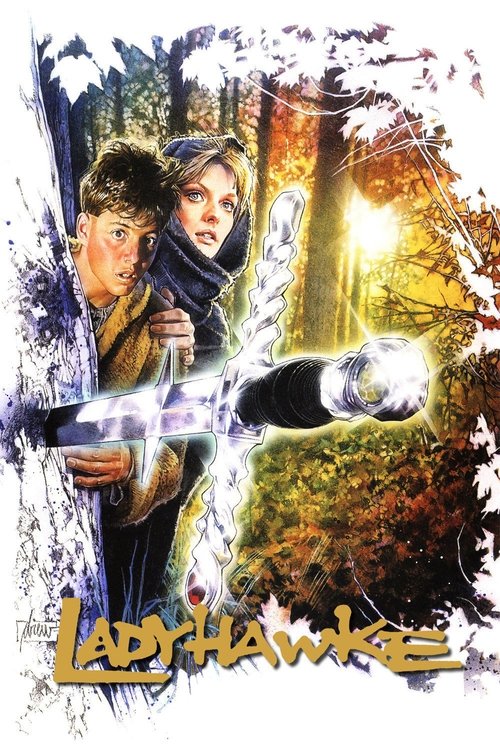
Ladyhawke
Captain Etienne Navarre is a man on whose shoulders lies a cruel curse. Punished for loving each other, Navarre must become a wolf by night whilst his lover, Lady Isabeau, takes the form of a hawk by day. Together, with the thief Philippe Gaston, they must try to overthrow the corrupt Bishop and in doing so break the spell.
The film disappointed at the box office against its moderate budget of $20.0M, earning $18.4M globally (-8% loss).
Nominated for 2 Oscars. 5 wins & 7 nominations


Plot Structure
Story beats plotted across runtime


Narrative Arc
Emotional journey through the story's key moments
Story Circle
Blueprint 15-beat structure
Arcplot Score Breakdown
Weighted: Precision (70%) + Arc (15%) + Theme (15%)
Ladyhawke (1985) showcases deliberately positioned dramatic framework, characteristic of Richard Donner's storytelling approach. This structural analysis examines how the film's 15-point plot structure maps to proven narrative frameworks across 2 hours and 1 minutes. With an Arcplot score of 6.5, the film balances conventional beats with creative variation.
Characters
Cast & narrative archetypes

Phillipe Gaston
Captain Etienne Navarre
Isabeau d'Anjou
Bishop of Aquila
Imperius
Main Cast & Characters
Phillipe Gaston
Played by Matthew Broderick
A cunning young thief who escapes from the Bishop's dungeons and becomes entangled in the cursed lovers' quest for freedom.
Captain Etienne Navarre
Played by Rutger Hauer
A noble knight cursed to become a wolf by night, driven by love and vengeance against the Bishop who destroyed his happiness.
Isabeau d'Anjou
Played by Michelle Pfeiffer
A beautiful noblewoman cursed to transform into a hawk by day, forever separated from her lover except in the brief moments of twilight.
Bishop of Aquila
Played by John Wood
A corrupt and obsessive prelate who cursed the lovers out of jealous rage when Isabeau rejected his advances.
Imperius
Played by Leo McKern
A drunken monk tormented by guilt for revealing the lovers' secret, who seeks redemption by helping break the curse.
Structural Analysis
The Status Quo at 1 minutes (1% through the runtime) establishes Philippe Gaston (Mouse) is a petty thief imprisoned in the dungeons of Aquila, desperately trapped in a hellish existence where escape seems impossible.. Notably, this early placement immediately immerses viewers in the story world.
The inciting incident occurs at 14 minutes when Navarre intercepts Mouse's escape and forces him into service, demanding Mouse guide him back into Aquila—the very fortress Mouse just escaped from.. At 12% through the film, this Disruption aligns precisely with traditional story structure. This beat shifts the emotional landscape, launching the protagonist into the central conflict.
The First Threshold at 30 minutes marks the transition into Act II, occurring at 25% of the runtime. This demonstrates the protagonist's commitment to Mouse actively chooses to help Navarre and Isabeau break the curse rather than flee to safety, committing himself to their dangerous quest against the Bishop., moving from reaction to action.
At 62 minutes, the Midpoint arrives at 51% of the runtime—precisely centered, creating perfect narrative symmetry. Significantly, this crucial beat Imperius reveals the solution: during the solar eclipse, there will be a brief moment when both lovers can be human simultaneously, offering hope that the curse can be broken if they confront the Bishop at that exact moment., fundamentally raising what's at risk. The emotional intensity shifts, dividing the narrative into clear before-and-after phases.
The Collapse moment at 90 minutes (75% through) represents the emotional nadir. Here, Navarre lies dying from his wounds. Isabeau, in hawk form, is shot with an arrow. Both lovers appear to be facing death, and all hope of breaking the curse seems lost., illustrates the protagonist at their lowest point. This beat's placement in the final quarter sets up the climactic reversal.
The Second Threshold at 96 minutes initiates the final act resolution at 80% of the runtime. Navarre awakens and chooses love over vengeance, understanding that breaking the curse with Isabeau is more important than killing the Bishop. He rides for Aquila to be with her during the eclipse., demonstrating the transformation achieved throughout the journey.
Emotional Journey
Ladyhawke's emotional architecture traces a deliberate progression across 15 carefully calibrated beats.
Narrative Framework
This structural analysis employs systematic plot point analysis that identifies crucial turning points. By mapping Ladyhawke against these established plot points, we can identify how Richard Donner utilizes or subverts traditional narrative conventions. The plot point approach reveals not only adherence to structural principles but also creative choices that distinguish Ladyhawke within the adventure genre.
Richard Donner's Structural Approach
Among the 16 Richard Donner films analyzed on Arcplot, the average structural score is 6.9, demonstrating varied approaches to story architecture. Ladyhawke takes a more unconventional approach compared to the director's typical style. For comparative analysis, explore the complete Richard Donner filmography.
Comparative Analysis
Additional adventure films include The Black Stallion, The Bad Guys and Puss in Boots. For more Richard Donner analyses, see Assassins, Superman and Lethal Weapon 2.
Plot Points by Act
Act I
SetupStatus Quo
Philippe Gaston (Mouse) is a petty thief imprisoned in the dungeons of Aquila, desperately trapped in a hellish existence where escape seems impossible.
Theme
The old monk tells Mouse, "Some things are better left alone," hinting at the theme of forbidden love and the consequences of interfering with fate and curses.
Worldbuilding
Establishing the medieval world of Aquila under the tyrannical Bishop's rule, Mouse's impossible escape from the dungeons (the first in history), and the pursuit led by Marquet. Introduction of the mysterious Captain Navarre and his hawk.
Disruption
Navarre intercepts Mouse's escape and forces him into service, demanding Mouse guide him back into Aquila—the very fortress Mouse just escaped from.
Resistance
Mouse reluctantly travels with Navarre, learning about the hawk he protects. At night, the hawk transforms into Lady Isabeau, revealing the curse: she is a hawk by day, he is a wolf by night, forever together but never touching. Imperius, the drunken priest, is introduced as the key to understanding the curse.
Act II
ConfrontationFirst Threshold
Mouse actively chooses to help Navarre and Isabeau break the curse rather than flee to safety, committing himself to their dangerous quest against the Bishop.
Mirror World
Mouse witnesses Isabeau in human form for the first time and sees the depth of the lovers' tragic separation, understanding that true love persists even through impossible circumstances.
Premise
The quest unfolds: evading Marquet's soldiers, seeking Imperius to learn the truth about the curse, discovering the Bishop's jealous curse was cast during an eclipse, and learning there will be "a day without night and a night without day" when the curse can be broken.
Midpoint
Imperius reveals the solution: during the solar eclipse, there will be a brief moment when both lovers can be human simultaneously, offering hope that the curse can be broken if they confront the Bishop at that exact moment.
Opposition
Navarre becomes obsessed with revenge rather than breaking the curse, pushing Isabeau away. Marquet's forces close in. Navarre is severely wounded in combat. The lovers' conflict intensifies as Navarre's rage threatens to doom them all.
Collapse
Navarre lies dying from his wounds. Isabeau, in hawk form, is shot with an arrow. Both lovers appear to be facing death, and all hope of breaking the curse seems lost.
Crisis
Mouse and Imperius desperately tend to the wounded lovers through the night. Mouse prays for their survival, showing his transformation from selfish thief to devoted friend. The eclipse day dawns—their last chance.
Act III
ResolutionSecond Threshold
Navarre awakens and chooses love over vengeance, understanding that breaking the curse with Isabeau is more important than killing the Bishop. He rides for Aquila to be with her during the eclipse.
Synthesis
The assault on Aquila cathedral during the eclipse. Mouse helps them infiltrate. As the eclipse creates "a day without night," both lovers become human simultaneously. They confront the Bishop, and the power of their love in the same moment breaks the curse forever.
Transformation
Navarre and Isabeau stand together in human form in the daylight, finally able to touch and embrace, free of the curse. Mouse watches the lovers united, having found his own redemption through selfless loyalty.