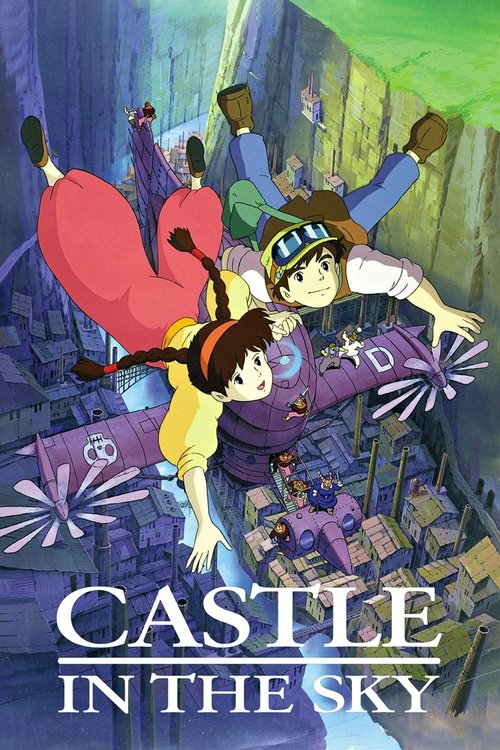
Laputa: Castle in the Sky
ON THE THIRTIETH EPISODE OF THE BOMB SQUAD PODCAST: Ethan, Tim, and special guest Angie Hachiman discuss the 1986 Hayao Miyazaki film Laputa: Castle in the Sky. Does the film hold up against the rest of Miyazaki's filmography? Find out their thoughts on the film tonight.
Working with a tight budget of $3.0M, the film achieved a respectable showing with $5.2M in global revenue (+74% profit margin).


Plot Structure
Story beats plotted across runtime


Narrative Arc
Emotional journey through the story's key moments
Story Circle
Blueprint 15-beat structure
Arcplot Score Breakdown
Weighted: Precision (70%) + Arc (15%) + Theme (15%)
Laputa: Castle in the Sky (1986) showcases carefully calibrated story structure, characteristic of Hayao Miyazaki's storytelling approach. This structural analysis examines how the film's 15-point plot structure maps to proven narrative frameworks across 2 hours and 4 minutes. With an Arcplot score of 5.6, the film takes an unconventional approach to traditional narrative frameworks.
Structural Analysis
The Status Quo at 1 minutes (1% through the runtime) establishes Sheeta, a mysterious girl with a glowing crystal, is held captive aboard an airship by government agent Muska and his men, establishing her as a prisoner in a steampunk world.. Significantly, this early placement immediately immerses viewers in the story world.
The inciting incident occurs at 13 minutes when The government agents and Dola's air pirates converge on Pazu's home, forcing the children to flee. Their peaceful meeting is shattered by the realization that powerful forces are hunting Sheeta and her crystal.. At 11% through the film, this Disruption aligns precisely with traditional story structure. This beat shifts the emotional landscape, launching the protagonist into the central conflict.
The First Threshold at 29 minutes marks the transition into Act II, occurring at 23% of the runtime. This indicates the protagonist's commitment to Pazu actively chooses to join Dola's air pirates to rescue Sheeta from the government fortress, committing fully to the adventure and leaving his old life behind., moving from reaction to action.
At 56 minutes, the Midpoint arrives at 45% of the runtime—arriving early, accelerating into Act IIb complications. Significantly, this crucial beat Sheeta's crystal activates and points the way to Laputa. The group discovers the location of the floating castle. This false victory raises the stakes as they approach their goal, but Muska's forces are also closing in., fundamentally raising what's at risk. The emotional intensity shifts, dividing the narrative into clear before-and-after phases.
The Collapse moment at 83 minutes (67% through) represents the emotional nadir. Here, Muska takes complete control of Laputa and Sheeta, forcing her to help him access the castle's power. He demonstrates the destructive weapons of Laputa by obliterating the fortress and army below. The ancient power has fallen into evil hands, and all seems lost., reveals the protagonist at their lowest point. This beat's placement in the final quarter sets up the climactic reversal.
The Second Threshold at 89 minutes initiates the final act resolution at 71% of the runtime. Pazu reaches Sheeta and returns her crystal. Together they realize they must use the Spell of Destruction to prevent Muska from using Laputa's power to dominate the world, even though it means destroying the castle their families built., demonstrating the transformation achieved throughout the journey.
Emotional Journey
Laputa: Castle in the Sky's emotional architecture traces a deliberate progression across 15 carefully calibrated beats.
Narrative Framework
This structural analysis employs a 15-point narrative structure framework that maps key story moments. By mapping Laputa: Castle in the Sky against these established plot points, we can identify how Hayao Miyazaki utilizes or subverts traditional narrative conventions. The plot point approach reveals not only adherence to structural principles but also creative choices that distinguish Laputa: Castle in the Sky within the comedy genre.
Hayao Miyazaki's Structural Approach
Among the 13 Hayao Miyazaki films analyzed on Arcplot, the average structural score is 5.6, showcasing experimental approaches to narrative form. Laputa: Castle in the Sky represents one of the director's most structurally precise works. For comparative analysis, explore the complete Hayao Miyazaki filmography.
Comparative Analysis
Additional comedy films include The Bad Guys, Ella Enchanted and The Evening Star. For more Hayao Miyazaki analyses, see Kiki's Delivery Service, My Neighbor Totoro and Howl's Moving Castle.
Plot Points by Act
Act I
SetupStatus Quo
Sheeta, a mysterious girl with a glowing crystal, is held captive aboard an airship by government agent Muska and his men, establishing her as a prisoner in a steampunk world.
Theme
Dola tells her sons that the crystal is the key to Laputa, hinting at the film's central theme: the tension between technological power and the natural world, and whether humanity can be trusted with ancient power.
Worldbuilding
Introduction to the world of mining towns, airships, and sky pirates. Pazu works in the mines dreaming of finding Laputa to clear his father's name. Sheeta falls from the airship but is saved by her crystal. They meet and form an alliance while being pursued by both Dola's pirates and the government.
Disruption
The government agents and Dola's air pirates converge on Pazu's home, forcing the children to flee. Their peaceful meeting is shattered by the realization that powerful forces are hunting Sheeta and her crystal.
Resistance
Pazu and Sheeta flee through the mines and are eventually captured by the army. They're taken to the fortress where Muska reveals Sheeta's true identity as a descendant of Laputa's royal family. Pazu is released and reluctantly accepts Dola's offer to join her crew.
Act II
ConfrontationFirst Threshold
Pazu actively chooses to join Dola's air pirates to rescue Sheeta from the government fortress, committing fully to the adventure and leaving his old life behind.
Mirror World
Pazu successfully rescues Sheeta from the fortress. Their partnership deepens as they join Dola's crew together, representing the film's heart: the relationship between two innocent children in contrast to the adults who seek power.
Premise
The promise of the premise: the search for Laputa. Pazu and Sheeta integrate with Dola's pirate crew, learning to fly and navigate. They work together to decode clues about Laputa's location while bonding with each other and earning the pirates' respect.
Midpoint
Sheeta's crystal activates and points the way to Laputa. The group discovers the location of the floating castle. This false victory raises the stakes as they approach their goal, but Muska's forces are also closing in.
Opposition
The race to Laputa intensifies. They encounter a massive storm and navigate through dangerous obstacles. Upon reaching Laputa, they discover the ancient garden and robot guardian, but Muska's forces attack. Sheeta is captured again and Pazu is separated from her.
Collapse
Muska takes complete control of Laputa and Sheeta, forcing her to help him access the castle's power. He demonstrates the destructive weapons of Laputa by obliterating the fortress and army below. The ancient power has fallen into evil hands, and all seems lost.
Crisis
Pazu must infiltrate Laputa alone while Dola and her crew are imprisoned. He witnesses the destruction Muska has unleashed and grapples with the seemingly impossible task of stopping him and saving Sheeta.
Act III
ResolutionSecond Threshold
Pazu reaches Sheeta and returns her crystal. Together they realize they must use the Spell of Destruction to prevent Muska from using Laputa's power to dominate the world, even though it means destroying the castle their families built.
Synthesis
Pazu and Sheeta confront Muska together. They speak the Spell of Destruction, which causes Laputa's core to collapse. Muska falls to his death, and the military portions of Laputa crumble while the ancient tree and garden float upward into space. The children escape with Dola's crew.
Transformation
Pazu and Sheeta wave goodbye to Dola's crew and return to their simple lives, transformed by their adventure. They have chosen humanity and nature over technological power, embodying the film's message about the proper relationship between civilization and the natural world.