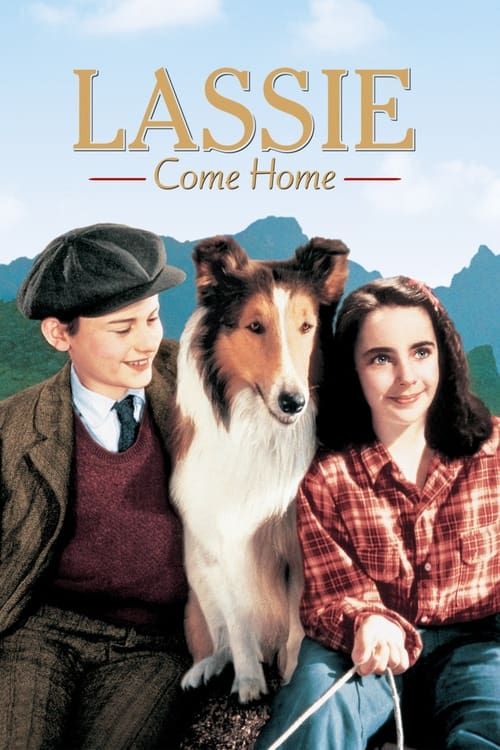
Lassie Come Home
Hard times come for the Carraclough family and they are forced to sell their dog, Lassie, to the rich Duke of Rudling. Lassie, however, is unwilling to remain apart from young Carraclough son Joe and sets out on a long and dangerous journey to rejoin him.
Despite its shoestring budget of $666K, Lassie Come Home became a runaway success, earning $4.5M worldwide—a remarkable 578% return. The film's distinctive approach connected with viewers, proving that strong storytelling can transcend budget limitations.
Nominated for 1 Oscar. 6 wins & 2 nominations


Plot Structure
Story beats plotted across runtime


Narrative Arc
Emotional journey through the story's key moments
Story Circle
Blueprint 15-beat structure
Arcplot Score Breakdown
Weighted: Precision (70%) + Arc (15%) + Theme (15%)
Lassie Come Home (1943) exhibits strategically placed narrative architecture, characteristic of Fred M. Wilcox's storytelling approach. This structural analysis examines how the film's 15-point plot structure maps to proven narrative frameworks across 1 hour and 28 minutes. With an Arcplot score of 7.4, the film balances conventional beats with creative variation.
Characters
Cast & narrative archetypes

Joe Carraclough
Lassie
Priscilla
Sam Carraclough
Mrs. Carraclough
Duke of Rudling
Hynes
Rowlie
Main Cast & Characters
Joe Carraclough
Played by Roddy McDowall
A young Yorkshire boy who shares a deep bond with his beloved collie Lassie, devastated when his family must sell her due to financial hardship.
Lassie
Played by Pal
A loyal and intelligent rough collie who undertakes an epic journey across Scotland to return to her beloved young master.
Priscilla
Played by Elizabeth Taylor
The Duke's kind-hearted granddaughter who befriends Lassie and helps her escape to return home.
Sam Carraclough
Played by Donald Crisp
Joe's father, an out-of-work miner forced to sell Lassie to provide for his family despite knowing the heartbreak it will cause.
Mrs. Carraclough
Played by Elsa Lanchester
Joe's mother, a compassionate woman who supports her husband's difficult decision while comforting her son.
Duke of Rudling
Played by Nigel Bruce
A wealthy aristocrat who purchases Lassie and takes her to Scotland, though he comes to respect the dog's loyalty.
Hynes
Played by J. Pat O'Malley
The Duke's cruel and harsh kennel master who mistreats Lassie and attempts to keep her imprisoned.
Rowlie
Played by Edmund Gwenn
A traveling peddler who befriends Lassie during her journey and helps her along the way.
Structural Analysis
The Status Quo at 1 minutes (1% through the runtime) establishes Young Joe Carraclough waits at the school gate for Lassie, who faithfully meets him every day at four o'clock. Their loving bond and daily routine establish the idyllic world that will soon be shattered.. Significantly, this early placement immediately immerses viewers in the story world.
The inciting incident occurs at 10 minutes when Sam Carraclough, desperate and unemployed, reluctantly agrees to sell Lassie to the Duke of Rudling. The family's poverty forces them to give up what they love most, devastating young Joe.. At 11% through the film, this Disruption aligns precisely with traditional story structure. This beat shifts the emotional landscape, launching the protagonist into the central conflict.
The First Threshold at 22 minutes marks the transition into Act II, occurring at 25% of the runtime. This indicates the protagonist's commitment to The Duke takes Lassie to his remote estate in Scotland, hundreds of miles away, making reunion seemingly impossible. This geographic separation marks the point of no return—Joe must accept his loss, and Lassie faces an impossible journey., moving from reaction to action.
At 44 minutes, the Midpoint arrives at 49% of the runtime—precisely centered, creating perfect narrative symmetry. Of particular interest, this crucial beat Lassie is rescued and cared for by a kind traveling couple (Rowlie and his wife) who nurse her back to health. This false victory gives hope—she's safe and loved—but she's still far from home, and the couple cannot keep her permanently., fundamentally raising what's at risk. The emotional intensity shifts, dividing the narrative into clear before-and-after phases.
The Collapse moment at 65 minutes (74% through) represents the emotional nadir. Here, Lassie collapses from exhaustion, starvation, and her injuries. She appears to be dying, unable to continue. The dream of reunion seems dead—she's come so far but may perish miles from home, her journey ending in tragedy., reveals the protagonist at their lowest point. This beat's placement in the final quarter sets up the climactic reversal.
The Second Threshold at 70 minutes initiates the final act resolution at 80% of the runtime. Drawing on her last reserves of strength and driven by pure love and loyalty, Lassie rises and continues toward home. She has synthesized survival instinct with devotion—she will make it home or die trying. This is her final push., demonstrating the transformation achieved throughout the journey.
Emotional Journey
Lassie Come Home's emotional architecture traces a deliberate progression across 15 carefully calibrated beats.
Narrative Framework
This structural analysis employs a 15-point narrative structure framework that maps key story moments. By mapping Lassie Come Home against these established plot points, we can identify how Fred M. Wilcox utilizes or subverts traditional narrative conventions. The plot point approach reveals not only adherence to structural principles but also creative choices that distinguish Lassie Come Home within the family genre.
Comparative Analysis
Additional family films include The Black Stallion, The Bad Guys and Ella Enchanted.
Plot Points by Act
Act I
SetupStatus Quo
Young Joe Carraclough waits at the school gate for Lassie, who faithfully meets him every day at four o'clock. Their loving bond and daily routine establish the idyllic world that will soon be shattered.
Theme
Joe's father Sam speaks about loyalty, devotion, and what truly matters in life—not money or status, but the bonds of love and faithfulness. "There's them that counts and them that doesn't" foreshadows the class conflict ahead.
Worldbuilding
Establishment of the Carraclough family's working-class life in Yorkshire, the coal mine closure putting them in financial distress, the Duke of Rudling's wealth and desire to own Lassie, and Joe's deep emotional attachment to his dog.
Disruption
Sam Carraclough, desperate and unemployed, reluctantly agrees to sell Lassie to the Duke of Rudling. The family's poverty forces them to give up what they love most, devastating young Joe.
Resistance
Joe refuses to accept that Lassie is gone. Lassie repeatedly escapes from the Duke's kennel and returns to Joe, demonstrating her unwavering loyalty. Each return gives Joe hope, but his parents explain that honor demands they keep their word to the Duke.
Act II
ConfrontationFirst Threshold
The Duke takes Lassie to his remote estate in Scotland, hundreds of miles away, making reunion seemingly impossible. This geographic separation marks the point of no return—Joe must accept his loss, and Lassie faces an impossible journey.
Mirror World
Lassie meets the Duke's granddaughter Priscilla, a kind-hearted girl who recognizes Lassie's longing for home. Priscilla represents compassion across class lines and becomes Lassie's advocate, embodying the theme that love transcends social boundaries.
Premise
Lassie's epic journey begins. She escapes from Scotland and travels through the Scottish Highlands and northern England, facing starvation, injury, hostile humans, and dangerous terrain. The "promise of the premise"—will Lassie make it home?—drives this section.
Midpoint
Lassie is rescued and cared for by a kind traveling couple (Rowlie and his wife) who nurse her back to health. This false victory gives hope—she's safe and loved—but she's still far from home, and the couple cannot keep her permanently.
Opposition
Lassie's journey becomes more perilous. She faces a brutal dog-catcher, crosses dangerous rivers, survives near-starvation, and sustains serious injuries. The distance and obstacles seem insurmountable. Meanwhile, Joe has lost hope of ever seeing Lassie again.
Collapse
Lassie collapses from exhaustion, starvation, and her injuries. She appears to be dying, unable to continue. The dream of reunion seems dead—she's come so far but may perish miles from home, her journey ending in tragedy.
Crisis
Lassie lies weakened and barely alive. Joe, unaware of her proximity, has abandoned hope. The emotional darkness of separation and apparent defeat pervades both dog and boy. This is the dark night before the dawn.
Act III
ResolutionSecond Threshold
Drawing on her last reserves of strength and driven by pure love and loyalty, Lassie rises and continues toward home. She has synthesized survival instinct with devotion—she will make it home or die trying. This is her final push.
Synthesis
Lassie staggers into Yorkshire and makes her way to the school. At four o'clock, battered and barely recognizable, she arrives at the gate. Joe, who has stopped waiting, is called by his classmates. The reunion unfolds as the Duke arrives, and honor gives way to love.
Transformation
Joe walks home with Lassie, mirroring the opening image but transformed. The Duke, moved by Lassie's loyalty, allows her to stay with Joe. What began as separation ends in reunion—loyalty and love have triumphed over economic hardship and class division.