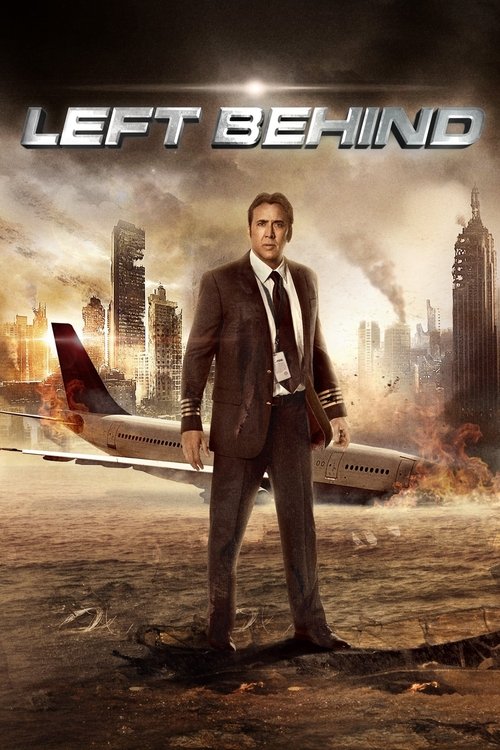
Left Behind
A small group of survivors are left behind after millions of people suddenly vanish during the rapture and the world is plunged into chaos and destruction.
Working with a respectable budget of $16.0M, the film achieved a steady performer with $19.7M in global revenue (+23% profit margin).


Plot Structure
Story beats plotted across runtime


Narrative Arc
Emotional journey through the story's key moments
Story Circle
Blueprint 15-beat structure
Arcplot Score Breakdown
Weighted: Precision (70%) + Arc (15%) + Theme (15%)
Left Behind (2014) showcases carefully calibrated plot construction, characteristic of Vic Armstrong's storytelling approach. This structural analysis examines how the film's 15-point plot structure maps to proven narrative frameworks across 1 hour and 50 minutes. With an Arcplot score of 7.4, the film balances conventional beats with creative variation.
Characters
Cast & narrative archetypes

Rayford Steele
Chloe Steele
Cameron "Buck" Williams
Hattie Durham
Irene Steele
Main Cast & Characters
Rayford Steele
Played by Nicolas Cage
Airline pilot struggling with marital issues who must lead survivors after the Rapture leaves millions missing.
Chloe Steele
Played by Cassi Thomson
College student and Rayford's daughter who finds herself on the ground trying to understand the mass disappearances.
Cameron "Buck" Williams
Played by Chad Michael Murray
Investigative journalist on Rayford's flight who helps piece together what happened during the Rapture.
Hattie Durham
Played by Nicky Whelan
Flight attendant who harbors feelings for Rayford and must cope with the crisis aboard the plane.
Irene Steele
Played by Lea Thompson
Rayford's devout Christian wife who has been trying to save her family before disappearing in the Rapture.
Structural Analysis
The Status Quo at 1 minutes (1% through the runtime) establishes Captain Rayford Steele prepares for a transatlantic flight while dealing with a strained marriage. His daughter Chloe returns home from college, revealing a fractured family dynamic centered around faith differences.. Structural examination shows that this early placement immediately immerses viewers in the story world.
The inciting incident occurs at 13 minutes when The Rapture occurs mid-flight. Passengers suddenly vanish from their seats, leaving only their clothes and belongings. Chaos erupts on the plane and around the world as millions disappear simultaneously.. At 12% through the film, this Disruption aligns precisely with traditional story structure. This beat shifts the emotional landscape, launching the protagonist into the central conflict.
The First Threshold at 27 minutes marks the transition into Act II, occurring at 25% of the runtime. This indicates the protagonist's commitment to Rayford makes the active decision to attempt landing the damaged plane despite impossible odds and global infrastructure collapse. Chloe chooses to go to the airport to help and find her father, entering the chaos willingly., moving from reaction to action.
At 54 minutes, the Midpoint arrives at 50% of the runtime—precisely centered, creating perfect narrative symmetry. Notably, this crucial beat False defeat: Rayford receives news that all major airports are destroyed or inaccessible. The plane is running out of fuel with nowhere to land. What seemed like a survivable crisis becomes seemingly impossible., fundamentally raising what's at risk. The emotional intensity shifts, dividing the narrative into clear before-and-after phases.
The Collapse moment at 82 minutes (74% through) represents the emotional nadir. Here, Rayford learns that even if he lands, there may be no rescue and Chloe may already be dead. A passenger attempts suicide. The "whiff of death" is literal - hope dies as the situation appears unwinnable., reveals the protagonist at their lowest point. This beat's placement in the final quarter sets up the climactic reversal.
The Second Threshold at 88 minutes initiates the final act resolution at 80% of the runtime. Chloe provides critical information about a possible landing site. Rayford synthesizes his technical skills with newfound faith/humility, choosing to trust rather than control. He commits to an unprecedented emergency landing attempt., demonstrating the transformation achieved throughout the journey.
Emotional Journey
Left Behind's emotional architecture traces a deliberate progression across 15 carefully calibrated beats.
Narrative Framework
This structural analysis employs systematic plot point analysis that identifies crucial turning points. By mapping Left Behind against these established plot points, we can identify how Vic Armstrong utilizes or subverts traditional narrative conventions. The plot point approach reveals not only adherence to structural principles but also creative choices that distinguish Left Behind within the thriller genre.
Comparative Analysis
Additional thriller films include The Warriors, Thunderball and Rustom.
Plot Points by Act
Act I
SetupStatus Quo
Captain Rayford Steele prepares for a transatlantic flight while dealing with a strained marriage. His daughter Chloe returns home from college, revealing a fractured family dynamic centered around faith differences.
Theme
Chloe's mother Irene tells her, "Faith isn't about proof, it's about trust." This statement of faith versus evidence becomes the central thematic question that drives the narrative.
Worldbuilding
Establishment of the Steele family tensions, Rayford's potential affair with flight attendant Hattie Durham, Irene's newfound Christianity causing family friction, and global news reports of unexplained disappearances and unrest.
Disruption
The Rapture occurs mid-flight. Passengers suddenly vanish from their seats, leaving only their clothes and belongings. Chaos erupts on the plane and around the world as millions disappear simultaneously.
Resistance
Rayford and crew struggle to understand what happened while managing panicking passengers. Chloe on the ground discovers her mother and brother have vanished. Both father and daughter debate whether this is the biblical Rapture Irene warned about.
Act II
ConfrontationFirst Threshold
Rayford makes the active decision to attempt landing the damaged plane despite impossible odds and global infrastructure collapse. Chloe chooses to go to the airport to help and find her father, entering the chaos willingly.
Mirror World
Buck Williams, an investigative journalist passenger, becomes Rayford's ally and voice of reason. Their developing partnership represents the thematic journey from skepticism to faith-based action under crisis.
Premise
The "promise of the premise" - a disaster/survival thriller where Rayford must pilot a crippled plane through apocalyptic conditions while Chloe navigates ground-level chaos. Communication between father and daughter provides emotional stakes.
Midpoint
False defeat: Rayford receives news that all major airports are destroyed or inaccessible. The plane is running out of fuel with nowhere to land. What seemed like a survivable crisis becomes seemingly impossible.
Opposition
Mounting obstacles: fuel depleting, passengers becoming violent, systems failing, Chloe trapped in dangerous situations at the airport, communication breaking down. Rayford's piloting skills alone are insufficient.
Collapse
Rayford learns that even if he lands, there may be no rescue and Chloe may already be dead. A passenger attempts suicide. The "whiff of death" is literal - hope dies as the situation appears unwinnable.
Crisis
Rayford's dark night of the soul. He confronts his failures as a husband and father, his arrogance in dismissing his wife's faith, and the possibility that she was right all along. He processes his loss and finds resolve.
Act III
ResolutionSecond Threshold
Chloe provides critical information about a possible landing site. Rayford synthesizes his technical skills with newfound faith/humility, choosing to trust rather than control. He commits to an unprecedented emergency landing attempt.
Synthesis
The finale: Rayford executes a dangerous highway landing with guidance from Chloe and Buck. Passengers work together. The technical skill combined with faith-driven courage results in a crash landing with survivors.
Transformation
Rayford and Chloe reunite on the ground. The once-skeptical pilot acknowledges his wife's faith was real. Father and daughter, previously distant, embrace in shared understanding. They face an uncertain new world together, transformed.