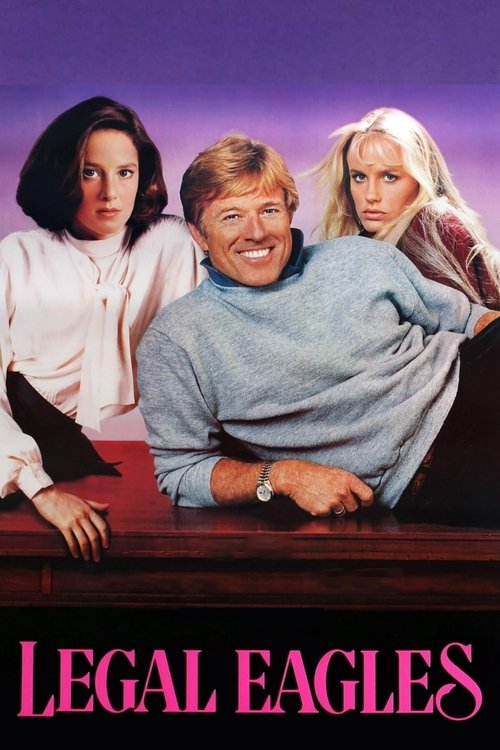
Legal Eagles
District Attorney Tom Logan is set for higher office, at least until he becomes involved with defence lawyer Laura Kelly and her unpredictable client Chelsea Deardon. It seems the least of Chelsea's crimes is the theft of a very valuable painting, but as the women persuade Logan to investigate further and to cut some official corners, a much more sinister scenario starts to emerge.
Despite a moderate budget of $40.0M, Legal Eagles became a solid performer, earning $93.2M worldwide—a 133% return.
1 win & 1 nomination


Plot Structure
Story beats plotted across runtime


Narrative Arc
Emotional journey through the story's key moments
Story Circle
Blueprint 15-beat structure
Arcplot Score Breakdown
Weighted: Precision (70%) + Arc (15%) + Theme (15%)
Legal Eagles (1986) showcases strategically placed narrative architecture, characteristic of Ivan Reitman's storytelling approach. This structural analysis examines how the film's 15-point plot structure maps to proven narrative frameworks across 1 hour and 56 minutes. With an Arcplot score of 7.3, the film balances conventional beats with creative variation.
Characters
Cast & narrative archetypes

Tom Logan
Laura Kelly
Chelsea Deardon
Cavanaugh
Main Cast & Characters
Tom Logan
Played by Robert Redford
An ambitious Manhattan assistant district attorney who becomes entangled in an art fraud case while navigating romance and ethics.
Laura Kelly
Played by Debra Winger
A passionate defense attorney and Tom's former colleague who defends Chelsea Deardon, challenging Tom both professionally and romantically.
Chelsea Deardon
Played by Daryl Hannah
An eccentric performance artist accused of murder and art theft, whose case becomes the center of the legal battle.
Cavanaugh
Played by Brian Dennehy
Tom Logan's colleague and fellow assistant district attorney who provides support and perspective.
Structural Analysis
The Status Quo at 1 minutes (1% through the runtime) establishes Tom Logan, a successful Manhattan Assistant DA, prosecutes a case with confidence and charm, establishing his world of legal victories and romantic conquest.. Structural examination shows that this early placement immediately immerses viewers in the story world.
The inciting incident occurs at 13 minutes when Laura Kelly quits the DA's office to defend Chelsea Deardon, putting her in direct opposition to Tom and disrupting both his professional strategy and personal relationship.. At 11% through the film, this Disruption aligns precisely with traditional story structure. This beat shifts the emotional landscape, launching the protagonist into the central conflict.
The First Threshold at 29 minutes marks the transition into Act II, occurring at 25% of the runtime. This shows the protagonist's commitment to Tom makes the active choice to work with Laura rather than against her when evidence suggests Chelsea may actually be innocent, crossing into a partnership that changes everything., moving from reaction to action.
At 57 minutes, the Midpoint arrives at 50% of the runtime—precisely centered, creating perfect narrative symmetry. Structural examination shows that this crucial beat False victory: Tom and Laura discover key evidence that seems to prove Chelsea's innocence and expose the real criminals. They celebrate their breakthrough, but the conspiracy goes deeper than they realize., fundamentally raising what's at risk. The emotional intensity shifts, dividing the narrative into clear before-and-after phases.
The Collapse moment at 86 minutes (74% through) represents the emotional nadir. Here, The case falls apart in court; Chelsea appears guilty, Tom faces professional ruin for abandoning the prosecution, and his partnership with Laura seems to have cost him everything. His belief in justice dies., reveals the protagonist at their lowest point. This beat's placement in the final quarter sets up the climactic reversal.
The Second Threshold at 93 minutes initiates the final act resolution at 80% of the runtime. New evidence emerges revealing the true conspiracy. Tom synthesizes his prosecutorial skills with his newfound commitment to truth over victory, seeing the path to expose the real criminals., demonstrating the transformation achieved throughout the journey.
Emotional Journey
Legal Eagles's emotional architecture traces a deliberate progression across 15 carefully calibrated beats.
Narrative Framework
This structural analysis employs systematic plot point analysis that identifies crucial turning points. By mapping Legal Eagles against these established plot points, we can identify how Ivan Reitman utilizes or subverts traditional narrative conventions. The plot point approach reveals not only adherence to structural principles but also creative choices that distinguish Legal Eagles within the comedy genre.
Ivan Reitman's Structural Approach
Among the 15 Ivan Reitman films analyzed on Arcplot, the average structural score is 7.1, reflecting strong command of classical structure. Legal Eagles represents one of the director's most structurally precise works. For comparative analysis, explore the complete Ivan Reitman filmography.
Comparative Analysis
Additional comedy films include The Bad Guys, Ella Enchanted and The Evening Star. For more Ivan Reitman analyses, see Twins, Kindergarten Cop and No Strings Attached.
Plot Points by Act
Act I
SetupStatus Quo
Tom Logan, a successful Manhattan Assistant DA, prosecutes a case with confidence and charm, establishing his world of legal victories and romantic conquest.
Theme
Discussion about the difference between legal truth and actual truth, and whether justice serves the law or the people - the core thematic question of the film.
Worldbuilding
Introduction to Tom's professional life, his relationship with Laura Kelly (another DA and former lover), and the high-stakes world of New York prosecution. Chelsea Deardon's arrest for theft sets the initial conflict.
Disruption
Laura Kelly quits the DA's office to defend Chelsea Deardon, putting her in direct opposition to Tom and disrupting both his professional strategy and personal relationship.
Resistance
Tom debates how to handle prosecuting against Laura. He investigates Chelsea's case, discovering connections to valuable paintings and her deceased artist father. Laura prepares her defense strategy.
Act II
ConfrontationFirst Threshold
Tom makes the active choice to work with Laura rather than against her when evidence suggests Chelsea may actually be innocent, crossing into a partnership that changes everything.
Mirror World
Tom and Laura's rekindled partnership (and romance) represents the thematic mirror - two people who must choose between winning and discovering truth, ambition and integrity.
Premise
The fun of watching two legal eagles investigate together: uncovering the conspiracy around the stolen paintings, navigating their romantic chemistry, and building Chelsea's defense while exposing corruption.
Midpoint
False victory: Tom and Laura discover key evidence that seems to prove Chelsea's innocence and expose the real criminals. They celebrate their breakthrough, but the conspiracy goes deeper than they realize.
Opposition
The antagonists strike back: evidence is destroyed, witnesses recant, Tom's career is threatened, and the powerful forces behind the art fraud scheme close in. Tom and Laura's relationship strains under pressure.
Collapse
The case falls apart in court; Chelsea appears guilty, Tom faces professional ruin for abandoning the prosecution, and his partnership with Laura seems to have cost him everything. His belief in justice dies.
Crisis
Tom experiences his dark night, questioning whether truth matters in a system designed for winning. Laura confronts her own doubts about whether defending Chelsea was worth destroying Tom's career.
Act III
ResolutionSecond Threshold
New evidence emerges revealing the true conspiracy. Tom synthesizes his prosecutorial skills with his newfound commitment to truth over victory, seeing the path to expose the real criminals.
Synthesis
Tom and Laura execute their finale plan: confronting the true conspirators, dramatic courtroom revelation, vindicating Chelsea, and exposing the corrupt art fraud scheme. Justice through truth prevails.
Transformation
Tom, no longer just a victory-seeking prosecutor, has transformed into someone who values truth and partnership over winning. He and Laura together, having chosen integrity over ambition.