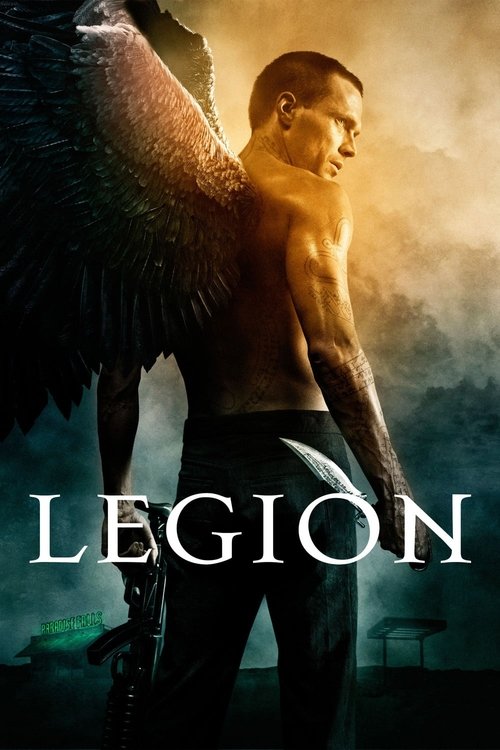
Legion
When God loses faith in humankind, he sends his legion of angels to bring on the Apocalypse. Humanity's only hope for survival lies in a group of strangers trapped in an out-of-the-way, desert diner with the Archangel Michael.
Despite a mid-range budget of $26.0M, Legion became a commercial success, earning $67.9M worldwide—a 161% return.


Plot Structure
Story beats plotted across runtime


Narrative Arc
Emotional journey through the story's key moments
Story Circle
Blueprint 15-beat structure
Arcplot Score Breakdown
Weighted: Precision (70%) + Arc (15%) + Theme (15%)
Legion (2010) exhibits strategically placed dramatic framework, characteristic of Scott Stewart's storytelling approach. This structural analysis examines how the film's 15-point plot structure maps to proven narrative frameworks across 1 hour and 40 minutes. With an Arcplot score of 6.8, the film balances conventional beats with creative variation.
Characters
Cast & narrative archetypes

Michael
Charlie
Jeep Hanson
Gabriel
Bob Hanson
Percy Walker
Kyle Williams
Sandra Anderson
Main Cast & Characters
Michael
Played by Paul Bettany
Archangel who defies God's orders to protect humanity from angelic extermination.
Charlie
Played by Adrianne Palicki
Pregnant waitress carrying humanity's prophesied savior.
Jeep Hanson
Played by Lucas Black
Young mechanic in love with Charlie who becomes her protector.
Gabriel
Played by Kevin Durand
Archangel loyal to God who seeks to execute divine judgment against humanity.
Bob Hanson
Played by Dennis Quaid
Cynical diner owner and Jeep's father who lost faith after his wife's death.
Percy Walker
Played by Charles S. Dutton
Ice cream truck driver stranded at the diner with his family.
Kyle Williams
Played by Tyrese Gibson
Troubled young man with criminal background traveling to Los Angeles.
Sandra Anderson
Played by Kate Walsh
Wealthy woman traveling with her husband Howard, dismissive of lower classes.
Structural Analysis
The Status Quo at 1 minutes (1% through the runtime) establishes The Paradise Falls diner sits isolated in the Mojave Desert. Charlie, heavily pregnant and emotionally detached, serves customers while Jeep watches her with quiet devotion. The mundane desperation of these trapped lives establishes a world already spiritually dying.. The analysis reveals that this early placement immediately immerses viewers in the story world.
The inciting incident occurs at 13 minutes when An elderly woman named Gladys arrives at the diner, initially sweet before transforming into something inhuman. She bites a chunk from a man's neck, crawls on the ceiling, and delivers a chilling prophecy that Charlie's baby will die before being shot. The apocalypse has begun.. At 13% through the film, this Disruption is delayed, allowing extended setup of the story world. This beat shifts the emotional landscape, launching the protagonist into the central conflict.
The First Threshold at 26 minutes marks the transition into Act II, occurring at 26% of the runtime. This indicates the protagonist's commitment to The survivors witness the horizon filling with approaching possessed humans - an army of angels wearing human flesh. They make the collective choice to barricade the diner and fight alongside Michael rather than flee into certain death. There is no going back to normal life., moving from reaction to action.
At 51 minutes, the Midpoint arrives at 51% of the runtime—precisely centered, creating perfect narrative symmetry. The analysis reveals that this crucial beat Charlie goes into labor as the attacks intensify. Michael reveals the full prophecy: the baby isn't just a target but the key to humanity's survival. The stakes transform from mere survival to the fate of the entire human race. This is no longer about escaping - it's about protecting mankind's last hope., fundamentally raising what's at risk. The emotional intensity shifts, dividing the narrative into clear before-and-after phases.
The Collapse moment at 75 minutes (75% through) represents the emotional nadir. Here, The archangel Gabriel arrives in his true terrible form. Michael confronts his brother in single combat to buy time, but Gabriel impales Michael with his own angelic mace. Michael dies in Jeep's arms, his sacrifice seemingly in vain as Gabriel advances on the newborn child., reveals the protagonist at their lowest point. This beat's placement in the final quarter sets up the climactic reversal.
The Second Threshold at 81 minutes initiates the final act resolution at 81% of the runtime. Jeep discovers Michael's angel tattoos have transferred to his skin - a divine mark of protection and purpose. Michael's faith wasn't misplaced; by dying for humanity, he passed his mission to Jeep. The ordinary man realizes he has been chosen to continue Michael's rebellion against Heaven., demonstrating the transformation achieved throughout the journey.
Emotional Journey
Legion's emotional architecture traces a deliberate progression across 15 carefully calibrated beats.
Narrative Framework
This structural analysis employs proven narrative structure principles that track dramatic progression. By mapping Legion against these established plot points, we can identify how Scott Stewart utilizes or subverts traditional narrative conventions. The plot point approach reveals not only adherence to structural principles but also creative choices that distinguish Legion within the action genre.
Scott Stewart's Structural Approach
Among the 3 Scott Stewart films analyzed on Arcplot, the average structural score is 6.8, demonstrating varied approaches to story architecture. Legion takes a more unconventional approach compared to the director's typical style. For comparative analysis, explore the complete Scott Stewart filmography.
Comparative Analysis
Additional action films include The Bad Guys, Puss in Boots and Venom: The Last Dance. For more Scott Stewart analyses, see Dark Skies, Priest.
Plot Points by Act
Act I
SetupStatus Quo
The Paradise Falls diner sits isolated in the Mojave Desert. Charlie, heavily pregnant and emotionally detached, serves customers while Jeep watches her with quiet devotion. The mundane desperation of these trapped lives establishes a world already spiritually dying.
Theme
Jeep tells Charlie that he believes in her and the baby, even when she doesn't believe in herself. "You just gotta have a little faith" - establishing the film's core thesis that faith in humanity persists even when God's does not.
Worldbuilding
We meet the inhabitants of Paradise Falls: Bob the owner and Jeep's father, Percy the one-handed cook, and various travelers stranded by circumstance. Charlie's resentment toward her unborn child and Jeep's unrequited love paint a portrait of broken people in a broken place.
Disruption
An elderly woman named Gladys arrives at the diner, initially sweet before transforming into something inhuman. She bites a chunk from a man's neck, crawls on the ceiling, and delivers a chilling prophecy that Charlie's baby will die before being shot. The apocalypse has begun.
Resistance
Michael arrives at the diner with a car full of weapons, revealing that God has lost faith in humanity and sent angels to destroy them - starting with Charlie's baby. The survivors debate whether to trust this stranger claiming to be an archangel who cut off his own wings to defy Heaven.
Act II
ConfrontationFirst Threshold
The survivors witness the horizon filling with approaching possessed humans - an army of angels wearing human flesh. They make the collective choice to barricade the diner and fight alongside Michael rather than flee into certain death. There is no going back to normal life.
Mirror World
As they fortify the diner, Jeep and Charlie share a moment where Jeep confesses his deeper feelings. Charlie begins to reconsider her rejection of both Jeep and her baby. This relationship becomes the emotional heart - human love as the answer to divine abandonment.
Premise
The siege of Paradise Falls delivers the film's apocalyptic action promise. Waves of possessed attackers assault the diner while Michael trains the survivors to fight. The ice cream truck of possessed children, the swarm attack, and the desperate gunfights showcase humanity's defiant stand against Heaven's wrath.
Midpoint
Charlie goes into labor as the attacks intensify. Michael reveals the full prophecy: the baby isn't just a target but the key to humanity's survival. The stakes transform from mere survival to the fate of the entire human race. This is no longer about escaping - it's about protecting mankind's last hope.
Opposition
The possessed breach the defenses. Survivors die one by one - Sandra is taken, Howard sacrifices himself, Percy falls defending the others. The group splinters under pressure as Kyle reveals his true cowardly nature. Each death tightens the noose around the remaining survivors as they protect the laboring Charlie.
Collapse
The archangel Gabriel arrives in his true terrible form. Michael confronts his brother in single combat to buy time, but Gabriel impales Michael with his own angelic mace. Michael dies in Jeep's arms, his sacrifice seemingly in vain as Gabriel advances on the newborn child.
Crisis
With Michael dead and Gabriel unstoppable, all seems lost. Charlie clutches her newborn as the remaining survivors - just Jeep, Charlie, and Audrey - flee into the desert. They have no weapons capable of harming an archangel, no divine protector, only their desperate will to survive.
Act III
ResolutionSecond Threshold
Jeep discovers Michael's angel tattoos have transferred to his skin - a divine mark of protection and purpose. Michael's faith wasn't misplaced; by dying for humanity, he passed his mission to Jeep. The ordinary man realizes he has been chosen to continue Michael's rebellion against Heaven.
Synthesis
Gabriel catches them in a mountain roadside confrontation. As Gabriel moves to kill the baby, Jeep stands between them, his new angelic markings glowing with power. Before Gabriel can strike, Michael returns - resurrected by God, wings restored. God saw Michael's faith in humanity and changed His mind. Gabriel is forced to relent.
Transformation
Charlie drives into an uncertain future with her baby and Jeep, now armed and prepared. She has transformed from a woman who rejected her child into a fierce mother-protector. The voiceover reveals she will raise her son to lead humanity's survival. Faith - in each other, in humanity's worth - has won.