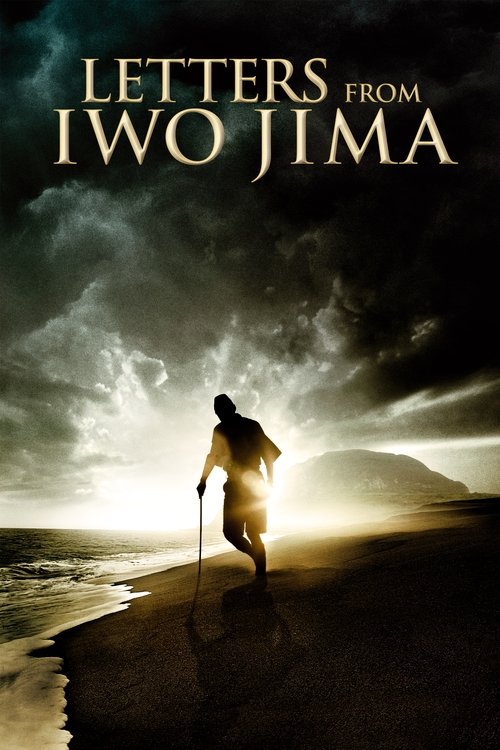
Letters from Iwo Jima
The story of the battle of Iwo Jima between the United States and Imperial Japan during World War II, as told from the perspective of the Japanese who fought it.
Despite a respectable budget of $19.0M, Letters from Iwo Jima became a solid performer, earning $68.7M worldwide—a 261% return.
1 Oscar. 25 wins & 39 nominations


Plot Structure
Story beats plotted across runtime


Narrative Arc
Emotional journey through the story's key moments
Story Circle
Blueprint 15-beat structure
Arcplot Score Breakdown
Weighted: Precision (70%) + Arc (15%) + Theme (15%)
Letters from Iwo Jima (2006) showcases carefully calibrated narrative architecture, characteristic of Clint Eastwood's storytelling approach. This structural analysis examines how the film's 15-point plot structure maps to proven narrative frameworks across 2 hours and 21 minutes. With an Arcplot score of 6.9, the film balances conventional beats with creative variation.
Characters
Cast & narrative archetypes

General Tadamichi Kuribayashi
Saigo
Baron Nishi
Lieutenant Fujita
Lieutenant Colonel Nishi (Takeichi Nishi)
Shimizu
Captain Tanida
Main Cast & Characters
General Tadamichi Kuribayashi
Played by Ken Watanabe
Commanding general of Japanese forces on Iwo Jima who leads with honor and compassion while facing certain death.
Saigo
Played by Kazunari Ninomiya
A baker conscripted into service who represents the common soldier longing to return home to his wife and unborn child.
Baron Nishi
Played by Tsuyoshi Ihara
Olympic equestrian and tank commander who bridges Japanese and Western cultures with grace and humanity.
Lieutenant Fujita
Played by Takumi Bando
Young officer torn between traditional military honor and the reality of hopeless battle.
Lieutenant Colonel Nishi (Takeichi Nishi)
Played by Tsuyoshi Ihara
Charismatic nobleman and former Olympian who commands with compassion and cross-cultural understanding.
Shimizu
Played by Ryo Kase
Former Kempeitai (military police) who joins the common soldiers, hiding his past while seeking redemption.
Captain Tanida
Played by Takashi Yamaguchi
Hardline officer who embodies traditional bushido values and rigid military discipline.
Structural Analysis
The Status Quo at 1 minutes (1% through the runtime) establishes Modern-day archaeologists discover letters buried in Iwo Jima caves, establishing the framing device. The film then flashes back to 1944, showing Japanese soldiers digging futile beach fortifications under brutal conditions, establishing their doomed situation.. Notably, this early placement immediately immerses viewers in the story world.
The inciting incident occurs at 16 minutes when General Kuribayashi arrives on Iwo Jima to take command. His presence immediately disrupts the status quo—he countermands existing orders, samples the undrinkable water, and walks the entire island to assess defenses personally, showing he is a different kind of commander.. At 12% through the film, this Disruption aligns precisely with traditional story structure. This beat shifts the emotional landscape, launching the protagonist into the central conflict.
The First Threshold at 34 minutes marks the transition into Act II, occurring at 24% of the runtime. This demonstrates the protagonist's commitment to The American invasion begins. Massive naval bombardment destroys the island. This is the irreversible commitment to battle—there is no turning back. The soldiers enter the tunnels and caves that will become their tombs, leaving behind the world above., moving from reaction to action.
At 71 minutes, the Midpoint arrives at 50% of the runtime—precisely centered, creating perfect narrative symmetry. Significantly, this crucial beat American forces raise the flag on Mount Suribachi (the iconic photograph moment, shown from the Japanese perspective). This is a false defeat for the Japanese—while symbolically devastating, Kuribayashi's main forces remain intact in the northern caves. However, it marks the point where hope of victory dies and the battle becomes purely about honor and resistance. Stakes intensify., fundamentally raising what's at risk. The emotional intensity shifts, dividing the narrative into clear before-and-after phases.
The Collapse moment at 106 minutes (75% through) represents the emotional nadir. Here, Baron Nishi dies in his cave surrounded by his men, choosing to remain with the wounded rather than retreat. This represents the literal death of the film's most humane character and symbolizes the death of the possibility that humanity can survive this war. Saigo witnesses officers forcing wounded men to commit suicide rather than be captured., shows the protagonist at their lowest point. This beat's placement in the final quarter sets up the climactic reversal.
The Second Threshold at 114 minutes initiates the final act resolution at 81% of the runtime. Kuribayashi makes his final decision: to lead one last nighttime assault not as a banzai charge but as a tactical final strike, giving his men the honorable death they seek while staying true to his principles. He orders Saigo to burn his papers and tells him "I may not return." This synthesis of honor and strategy represents his final evolution as a leader., demonstrating the transformation achieved throughout the journey.
Emotional Journey
Letters from Iwo Jima's emotional architecture traces a deliberate progression across 15 carefully calibrated beats.
Narrative Framework
This structural analysis employs systematic plot point analysis that identifies crucial turning points. By mapping Letters from Iwo Jima against these established plot points, we can identify how Clint Eastwood utilizes or subverts traditional narrative conventions. The plot point approach reveals not only adherence to structural principles but also creative choices that distinguish Letters from Iwo Jima within the action genre.
Clint Eastwood's Structural Approach
Among the 32 Clint Eastwood films analyzed on Arcplot, the average structural score is 6.5, demonstrating varied approaches to story architecture. Letters from Iwo Jima represents one of the director's most structurally precise works. For comparative analysis, explore the complete Clint Eastwood filmography.
Comparative Analysis
Additional action films include The Bad Guys, Puss in Boots and Venom: The Last Dance. For more Clint Eastwood analyses, see True Crime, Million Dollar Baby and The Gauntlet.
Plot Points by Act
Act I
SetupStatus Quo
Modern-day archaeologists discover letters buried in Iwo Jima caves, establishing the framing device. The film then flashes back to 1944, showing Japanese soldiers digging futile beach fortifications under brutal conditions, establishing their doomed situation.
Theme
Saigo (the baker-turned-soldier) tells his friend he wants to survive and return home, rejecting the glorification of death. His companion warns him not to say such things. This establishes the central tension: the will to live vs. the code demanding death before dishonor.
Worldbuilding
Establishes the brutal conditions on Iwo Jima, the rigid military hierarchy, the abuse of lower-ranking soldiers, and the soldiers' resignation to death. Introduces Saigo, Baron Nishi, and other key characters. Shows the inadequate defenses and low morale before Kuribayashi arrives.
Disruption
General Kuribayashi arrives on Iwo Jima to take command. His presence immediately disrupts the status quo—he countermands existing orders, samples the undrinkable water, and walks the entire island to assess defenses personally, showing he is a different kind of commander.
Resistance
Kuribayashi revolutionizes the defense strategy, ordering fortifications moved from beaches to Mount Suribachi and inland caves. He faces resistance from traditional officers who see his American-influenced ideas as dishonorable. Flashbacks reveal his time in America, humanizing the "enemy." Soldiers debate whether to follow his unconventional orders.
Act II
ConfrontationFirst Threshold
The American invasion begins. Massive naval bombardment destroys the island. This is the irreversible commitment to battle—there is no turning back. The soldiers enter the tunnels and caves that will become their tombs, leaving behind the world above.
Mirror World
Baron Nishi, the Olympic equestrian champion, emerges as the thematic mirror character. He treats a captured wounded American Marine with compassion, reads aloud a letter from the soldier's mother, and insists "this is what they've been told about us" when his men want to kill the prisoner. He embodies the film's theme of shared humanity.
Premise
The battle of Iwo Jima unfolds. Japanese forces use Kuribayashi's tunnel strategy to devastating effect, inflicting heavy casualties on advancing Americans. The film delivers on its premise: showing the Pacific War from the Japanese perspective, humanizing the soldiers, depicting their tactical ingenuity and desperate courage while showing the grinding brutality of the battle.
Midpoint
American forces raise the flag on Mount Suribachi (the iconic photograph moment, shown from the Japanese perspective). This is a false defeat for the Japanese—while symbolically devastating, Kuribayashi's main forces remain intact in the northern caves. However, it marks the point where hope of victory dies and the battle becomes purely about honor and resistance. Stakes intensify.
Opposition
Pressure increases on all fronts. Supplies run out, wounded go untreated, soldiers resort to suicide grenades. Traditional officers clash with Kuribayashi over when to die honorably vs. continue fighting. Saigo witnesses increasing horrors. Baron Nishi's forces are surrounded. The American noose tightens. Each day brings more death and the certainty of annihilation.
Collapse
Baron Nishi dies in his cave surrounded by his men, choosing to remain with the wounded rather than retreat. This represents the literal death of the film's most humane character and symbolizes the death of the possibility that humanity can survive this war. Saigo witnesses officers forcing wounded men to commit suicide rather than be captured.
Crisis
In the darkest emotional valley, the remaining soldiers face the end. Kuribayashi burns his letters and prepares for death. Officers debate whether to launch a final suicidal charge or surrender. Saigo is brutalized for suggesting survival. The crisis is both tactical (battle is lost) and existential (what does honor mean when all is lost?).
Act III
ResolutionSecond Threshold
Kuribayashi makes his final decision: to lead one last nighttime assault not as a banzai charge but as a tactical final strike, giving his men the honorable death they seek while staying true to his principles. He orders Saigo to burn his papers and tells him "I may not return." This synthesis of honor and strategy represents his final evolution as a leader.
Synthesis
The final battle sequence. Kuribayashi leads the last assault and is mortally wounded. In his final moments, he chooses ritual suicide over capture, asking his aide to bury him where he won't be found. Saigo, ordered to survive, buries the General and is captured by Americans. The battle ends with all Japanese defenders dead or captured.
Transformation
The film returns to modern day. The letters buried 60+ years ago are unearthed, ensuring these men's humanity and stories survive even though they did not. Saigo, who wanted only to survive and return to his wife, represents the continuation of life beyond honor-death. The transformation: from enemies to humans, from propaganda to truth, from forgotten to remembered.