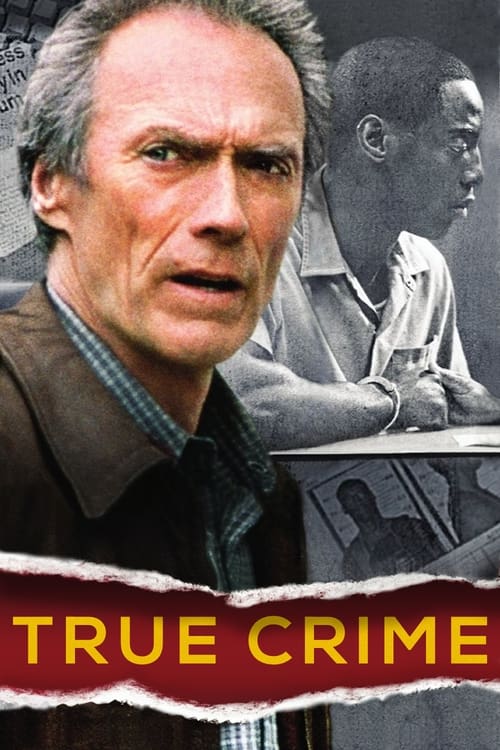
True Crime
Boozer, skirt chaser, careless father. You could create your own list of reporter Steve Everett's faults but there's no time. A San Quentin Death Row prisoner is slated to die at midnight – a man Everett has suddenly realized is innocent.
The film commercial failure against its respectable budget of $55.0M, earning $16.7M globally (-70% loss). While initial box office returns were modest, the film has gained appreciation for its unique voice within the drama genre.


Plot Structure
Story beats plotted across runtime


Narrative Arc
Emotional journey through the story's key moments
Story Circle
Blueprint 15-beat structure
Arcplot Score Breakdown
Weighted: Precision (70%) + Arc (15%) + Theme (15%)
True Crime (1999) exhibits deliberately positioned dramatic framework, characteristic of Clint Eastwood's storytelling approach. This structural analysis examines how the film's 15-point plot structure maps to proven narrative frameworks across 2 hours and 7 minutes. With an Arcplot score of 6.8, the film balances conventional beats with creative variation.
Characters
Cast & narrative archetypes

Steve Everett
Frank Beechum
Barbara Everett
Bob Findley
Bonnie Beechum
Michelle Ziegler
Alan Mann
Main Cast & Characters
Steve Everett
Played by Clint Eastwood
An aging, womanizing journalist given a last-minute assignment to interview a death row inmate hours before execution. Discovers evidence of innocence.
Frank Beechum
Played by Isaiah Washington
A reformed family man on death row for the murder of a pregnant store clerk, maintaining his innocence as his execution approaches.
Barbara Everett
Played by Diane Venora
Steve's long-suffering wife who struggles with his infidelity and drinking while trying to maintain their family.
Bob Findley
Played by James Woods
Steve's editor at the Oakland Tribune who is skeptical of Steve's last-minute investigation and personally involved with Steve's colleague.
Bonnie Beechum
Played by LisaGay Hamilton
Frank's devoted wife who desperately believes in her husband's innocence and fights to save him.
Michelle Ziegler
Played by Mary McCormack
A young reporter having an affair with Steve, whose death in a car accident triggers the chain of events.
Alan Mann
Played by Michael McKean
The district attorney who prosecuted Frank Beechum and remains convinced of his guilt despite new evidence.
Structural Analysis
The Status Quo at 1 minutes (1% through the runtime) establishes Steve Everett wakes up disheveled, late, and hungover—a portrait of a man whose life is in chaos, juggling an affair, a troubled marriage, and a career on thin ice at the Oakland Tribune.. Significantly, this early placement immediately immerses viewers in the story world.
The inciting incident occurs at 15 minutes when Reporter Michelle Ziegler dies in a car accident, and editor Alan Mann reluctantly assigns Everett to cover Frank Beechum's execution—the story that will consume his entire day and change multiple lives.. At 12% through the film, this Disruption aligns precisely with traditional story structure. This beat shifts the emotional landscape, launching the protagonist into the central conflict.
The First Threshold at 32 minutes marks the transition into Act II, occurring at 25% of the runtime. This demonstrates the protagonist's commitment to During his first interview with Frank Beechum at San Quentin, Everett looks into Beechum's eyes and instinctively believes he's innocent. He makes the choice to pursue the truth rather than write a simple human interest piece., moving from reaction to action.
At 64 minutes, the Midpoint arrives at 50% of the runtime—precisely centered, creating perfect narrative symmetry. Structural examination shows that this crucial beat Everett discovers a key inconsistency—the eyewitness grandmother couldn't have clearly seen what she claimed from her vantage point. The stakes raise as he now knows Beechum may truly be innocent, but the execution clock keeps ticking toward midnight., fundamentally raising what's at risk. The emotional intensity shifts, dividing the narrative into clear before-and-after phases.
The Collapse moment at 95 minutes (75% through) represents the emotional nadir. Here, Everett is fired from the Tribune, his wife leaves with their daughter, and the execution proceeds—Beechum is strapped to the gurney as the lethal injection begins. Everything Everett has worked for seems lost, both personally and professionally., illustrates the protagonist at their lowest point. This beat's placement in the final quarter sets up the climactic reversal.
The Second Threshold at 102 minutes initiates the final act resolution at 80% of the runtime. Everett realizes the killer was the man who left the store just before the murder—and the grandmother's lost locket proves the connection. With concrete evidence, he has one final chance to stop the execution if he can reach the warden in time., demonstrating the transformation achieved throughout the journey.
Emotional Journey
True Crime's emotional architecture traces a deliberate progression across 15 carefully calibrated beats.
Narrative Framework
This structural analysis employs systematic plot point analysis that identifies crucial turning points. By mapping True Crime against these established plot points, we can identify how Clint Eastwood utilizes or subverts traditional narrative conventions. The plot point approach reveals not only adherence to structural principles but also creative choices that distinguish True Crime within the drama genre.
Clint Eastwood's Structural Approach
Among the 32 Clint Eastwood films analyzed on Arcplot, the average structural score is 6.5, demonstrating varied approaches to story architecture. True Crime represents one of the director's most structurally precise works. For comparative analysis, explore the complete Clint Eastwood filmography.
Comparative Analysis
Additional drama films include After Thomas, South Pacific and Dirty Dancing: Havana Nights. For more Clint Eastwood analyses, see Million Dollar Baby, The Gauntlet and Hereafter.
Plot Points by Act
Act I
SetupStatus Quo
Steve Everett wakes up disheveled, late, and hungover—a portrait of a man whose life is in chaos, juggling an affair, a troubled marriage, and a career on thin ice at the Oakland Tribune.
Theme
Editor Bob Findley tells Everett that he has a "nose" for the truth but questions whether he can see what's right in front of him—foreshadowing the theme of recognizing truth and redemption when they appear.
Worldbuilding
We meet Everett's dysfunctional world: his affair with a colleague's wife, strained relationship with his own wife Barbara and daughter Kate, his alcoholism, and the newsroom politics at the Tribune where he's on his last chance.
Disruption
Reporter Michelle Ziegler dies in a car accident, and editor Alan Mann reluctantly assigns Everett to cover Frank Beechum's execution—the story that will consume his entire day and change multiple lives.
Resistance
Everett reviews the case files, learns about Beechum's conviction for the murder of pregnant store clerk Amy Wilson, and debates whether to simply write a routine execution piece or dig deeper into nagging inconsistencies he notices.
Act II
ConfrontationFirst Threshold
During his first interview with Frank Beechum at San Quentin, Everett looks into Beechum's eyes and instinctively believes he's innocent. He makes the choice to pursue the truth rather than write a simple human interest piece.
Mirror World
We see Frank Beechum's relationship with his wife Bonnie and daughter Gail—a loving family man facing death for a crime he didn't commit. Their faith and devotion mirror what Everett lacks and desperately needs in his own broken family.
Premise
Everett investigates the case against the clock—interviewing witnesses, retracing the crime scene, questioning the grandmother who identified Beechum, while simultaneously trying to manage his crumbling marriage and keep his affair secret from his editor.
Midpoint
Everett discovers a key inconsistency—the eyewitness grandmother couldn't have clearly seen what she claimed from her vantage point. The stakes raise as he now knows Beechum may truly be innocent, but the execution clock keeps ticking toward midnight.
Opposition
Everything closes in on Everett: his wife discovers his affair and threatens to leave with their daughter, his editor discovers the affair and fires him, the governor refuses to grant a stay, and time runs out as witnesses refuse to recant their testimony.
Collapse
Everett is fired from the Tribune, his wife leaves with their daughter, and the execution proceeds—Beechum is strapped to the gurney as the lethal injection begins. Everything Everett has worked for seems lost, both personally and professionally.
Crisis
In his darkest hour, Everett races through the night, having finally tracked down the real killer's identity through the green locket that was stolen during the murder. He must reach the prison before the execution is completed.
Act III
ResolutionSecond Threshold
Everett realizes the killer was the man who left the store just before the murder—and the grandmother's lost locket proves the connection. With concrete evidence, he has one final chance to stop the execution if he can reach the warden in time.
Synthesis
In a desperate race against time, Everett crashes through the prison gates as the injection begins. The warden halts the execution at the last possible second. The real killer is identified, and Beechum is saved—vindication for Everett's relentless pursuit of truth.
Transformation
Everett visits the freed Beechum and his family at the Oakland Zoo. His wife Barbara and daughter Kate join him—a tentative reconciliation. The broken journalist has found redemption through saving an innocent life, suggesting hope for his own fractured family.