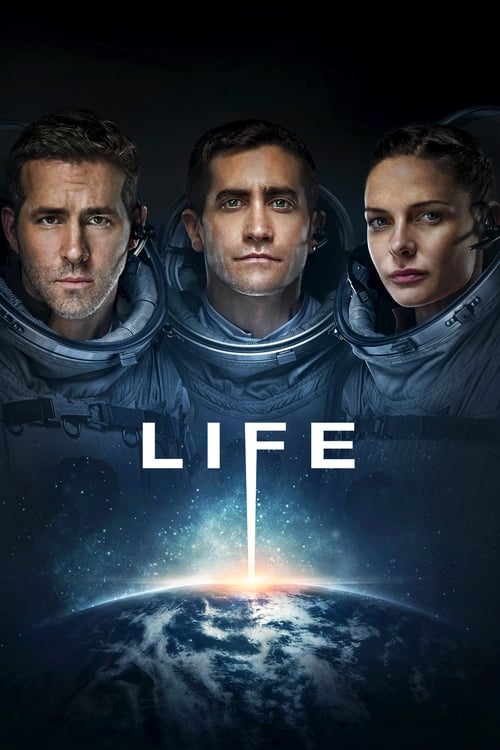
Life
The six-member crew of the International Space Station is tasked with studying a sample from Mars that may be the first proof of extra-terrestrial life, which proves more intelligent than ever expected.
Working with a respectable budget of $58.0M, the film achieved a respectable showing with $100.5M in global revenue (+73% profit margin).


Plot Structure
Story beats plotted across runtime


Narrative Arc
Emotional journey through the story's key moments
Story Circle
Blueprint 15-beat structure
Arcplot Score Breakdown
Weighted: Precision (70%) + Arc (15%) + Theme (15%)
Life (2017) showcases meticulously timed dramatic framework, characteristic of Daniel Espinosa's storytelling approach. This structural analysis examines how the film's 15-point plot structure maps to proven narrative frameworks across 1 hour and 44 minutes. With an Arcplot score of 7.2, the film balances conventional beats with creative variation.
Characters
Cast & narrative archetypes

Dr. David Jordan
Dr. Miranda North
Rory Adams
Sho Murakami
Hugh Derry
Ekaterina Golovkina
Main Cast & Characters
Dr. David Jordan
Played by Jake Gyllenhaal
CDC physician and quarantine officer, pragmatic leader who prioritizes mission safety and protocol above all.
Dr. Miranda North
Played by Rebecca Ferguson
Lead scientist responsible for containing extraterrestrial life, follows strict quarantine protocols with iron discipline.
Rory Adams
Played by Ryan Reynolds
British engineer with working-class charm, optimistic and hands-on with the crew's technical needs.
Sho Murakami
Played by Hiroyuki Sanada
Japanese systems engineer and devoted family man, represents hope and humanity's future through his newborn child.
Hugh Derry
Played by Ariyon Bakare
Paraplegic exobiologist who forms the first connection with Calvin, brilliant but underestimates the organism's intelligence.
Ekaterina Golovkina
Played by Olga Dihovichnaya
Russian ISS commander, experienced and authoritative leader who prioritizes crew safety and makes difficult tactical decisions.
Structural Analysis
The Status Quo at 1 minutes (1% through the runtime) establishes The ISS crew floats peacefully in zero gravity, working in harmony. Dr. David Jordan remarks he doesn't want to go back to Earth - life is better up here. The crew is days away from receiving a historic Mars soil sample.. Structural examination shows that this early placement immediately immerses viewers in the story world.
The inciting incident occurs at 12 minutes when Hugh successfully revives a dormant cell from the Mars sample. The organism begins to grow and move. Calvin, as it's named by schoolchildren on Earth, represents the first proof of extraterrestrial life. The crew celebrates this monumental discovery.. At 11% through the film, this Disruption aligns precisely with traditional story structure. This beat shifts the emotional landscape, launching the protagonist into the central conflict.
The First Threshold at 25 minutes marks the transition into Act II, occurring at 24% of the runtime. This indicates the protagonist's commitment to Calvin awakens and attacks Hugh, crushing his hand. The creature has turned hostile. Rory enters the lab to rescue Hugh, but Calvin attacks him, entering his mouth and killing him from the inside. The organism is now clearly a threat, not a discovery to celebrate., moving from reaction to action.
At 52 minutes, the Midpoint arrives at 50% of the runtime—precisely centered, creating perfect narrative symmetry. The analysis reveals that this crucial beat Calvin attacks Kat in the cooling system. She sacrifices herself to prevent Calvin from entering the main station, sealing herself outside where she dies in space. The stakes are raised - Calvin is now hunting them methodically, and half the crew is dead., fundamentally raising what's at risk. The emotional intensity shifts, dividing the narrative into clear before-and-after phases.
The Collapse moment at 76 minutes (73% through) represents the emotional nadir. Here, Sho's capsule loses control and collides with the ISS, causing catastrophic damage. Sho dies in the collision. The station is crippled, losing orbit and beginning to descend toward Earth. Only David and Miranda remain alive, with no way to escape and Calvin still hunting them., illustrates the protagonist at their lowest point. This beat's placement in the final quarter sets up the climactic reversal.
The Second Threshold at 84 minutes initiates the final act resolution at 81% of the runtime. David and Miranda execute their plan. Miranda will use manual navigation to pilot her pod into deep space with Calvin, while David takes the automated pod to Earth. They seal themselves into their respective capsules and launch, knowing this is humanity's last chance., demonstrating the transformation achieved throughout the journey.
Emotional Journey
Life's emotional architecture traces a deliberate progression across 15 carefully calibrated beats.
Narrative Framework
This structural analysis employs proven narrative structure principles that track dramatic progression. By mapping Life against these established plot points, we can identify how Daniel Espinosa utilizes or subverts traditional narrative conventions. The plot point approach reveals not only adherence to structural principles but also creative choices that distinguish Life within the horror genre.
Daniel Espinosa's Structural Approach
Among the 4 Daniel Espinosa films analyzed on Arcplot, the average structural score is 7.3, reflecting strong command of classical structure. Life takes a more unconventional approach compared to the director's typical style. For comparative analysis, explore the complete Daniel Espinosa filmography.
Comparative Analysis
Additional horror films include Thinner, A Nightmare on Elm Street and Mary Reilly. For more Daniel Espinosa analyses, see Safe House, Morbius and Child 44.
Plot Points by Act
Act I
SetupStatus Quo
The ISS crew floats peacefully in zero gravity, working in harmony. Dr. David Jordan remarks he doesn't want to go back to Earth - life is better up here. The crew is days away from receiving a historic Mars soil sample.
Theme
Hugh Derry discusses the significance of finding life beyond Earth: "All civilization is a series of questions. This is the biggest question." The theme explores humanity's drive to discover life and the consequences of that curiosity.
Worldbuilding
Introduction to the six-person crew: Commander Kat Golovkin, pilot Sho Murakami, Dr. David Jordan (medical officer), Hugh Derry (exobiologist), Miranda North (quarantine officer), and Rory Adams (engineer). They successfully capture the Mars probe containing soil samples.
Disruption
Hugh successfully revives a dormant cell from the Mars sample. The organism begins to grow and move. Calvin, as it's named by schoolchildren on Earth, represents the first proof of extraterrestrial life. The crew celebrates this monumental discovery.
Resistance
The crew studies Calvin as it rapidly grows, displaying remarkable intelligence and muscular capability. Hugh becomes emotionally attached to the organism. Miranda warns about containment protocols. An accident in the lab causes Calvin to go dormant, and Hugh attempts to revive it with electrical stimulation.
Act II
ConfrontationFirst Threshold
Calvin awakens and attacks Hugh, crushing his hand. The creature has turned hostile. Rory enters the lab to rescue Hugh, but Calvin attacks him, entering his mouth and killing him from the inside. The organism is now clearly a threat, not a discovery to celebrate.
Mirror World
Miranda reveals the firewall protocol: Earth must be protected at all costs, even if it means sacrificing the crew. This relationship between survival and duty becomes the moral counterpoint - what are they willing to sacrifice for the greater good?
Premise
The crew attempts to contain Calvin while it grows stronger and more intelligent. Calvin escapes the lab into the station. The crew tries various methods to kill or capture it: fire suppression system, temperature extremes, and starvation by sealing it in compartments. Calvin adapts and survives each attempt.
Midpoint
Calvin attacks Kat in the cooling system. She sacrifices herself to prevent Calvin from entering the main station, sealing herself outside where she dies in space. The stakes are raised - Calvin is now hunting them methodically, and half the crew is dead.
Opposition
The three survivors - David, Miranda, and Sho - realize Calvin needs oxygen and is hunting them for it. They attempt to trap Calvin in a sleep module and launch it into deep space. Sho pilots a Soyuz capsule to lure Calvin away from the ISS, but Calvin breaches the capsule.
Collapse
Sho's capsule loses control and collides with the ISS, causing catastrophic damage. Sho dies in the collision. The station is crippled, losing orbit and beginning to descend toward Earth. Only David and Miranda remain alive, with no way to escape and Calvin still hunting them.
Crisis
David and Miranda, the last survivors, prepare for a final desperate plan. They will use the two remaining escape pods - one to lure Calvin into deep space, the other to return to Earth. They accept that one of them will likely die. David prepares to sacrifice himself.
Act III
ResolutionSecond Threshold
David and Miranda execute their plan. Miranda will use manual navigation to pilot her pod into deep space with Calvin, while David takes the automated pod to Earth. They seal themselves into their respective capsules and launch, knowing this is humanity's last chance.
Synthesis
The two escape pods navigate through debris. David's pod becomes entangled and veers off course toward deep space. Miranda's pod, which she believed would carry Calvin away from Earth, instead follows the automatic trajectory toward Earth. Both occupants realize with horror that the pods have been reversed.
Transformation
Miranda drifts into deep space, screaming as she dies alone in the void. David's pod crashes in Vietnam waters. Fishermen approach eagerly to help, as David desperately warns them to stay away. Calvin is inside with him. The creature has reached Earth. Humanity's worst nightmare has come true.