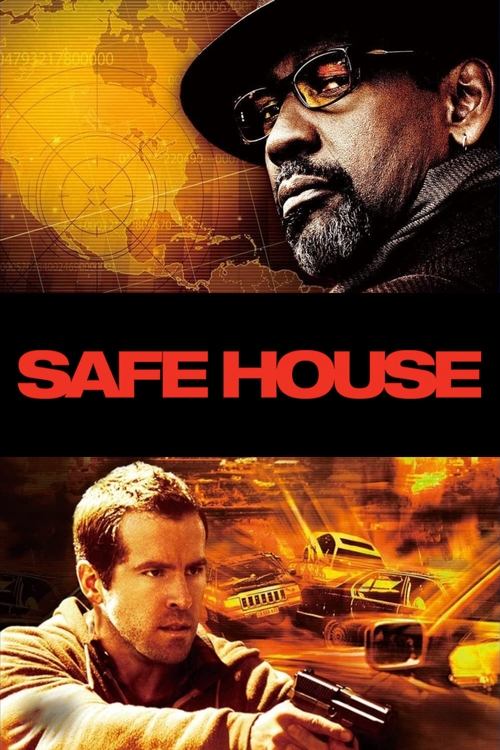
Safe House
A dangerous CIA renegade resurfaces after a decade on the run. When the safe house he's remanded to is attacked by mercenaries, a rookie operative escapes with him. Now, the unlikely allies must stay alive long enough to uncover who wants them dead.
Despite a significant budget of $85.0M, Safe House became a solid performer, earning $208.1M worldwide—a 145% return.
1 win & 7 nominations


Plot Structure
Story beats plotted across runtime


Narrative Arc
Emotional journey through the story's key moments
Story Circle
Blueprint 15-beat structure
Arcplot Score Breakdown
Weighted: Precision (70%) + Arc (15%) + Theme (15%)
Safe House (2012) reveals carefully calibrated plot construction, characteristic of Daniel Espinosa's storytelling approach. This structural analysis examines how the film's 15-point plot structure maps to proven narrative frameworks across 1 hour and 55 minutes. With an Arcplot score of 7.4, the film balances conventional beats with creative variation.
Characters
Cast & narrative archetypes

Matt Weston
Tobin Frost
Catherine Linklater
David Barlow
Harlan Whitford
Ana Moreau
Daniel Kiefer
Main Cast & Characters
Matt Weston
Played by Denzel Washington
A low-level CIA officer managing a safe house in Cape Town who must protect a dangerous fugitive when the house is attacked.
Tobin Frost
Played by Ryan Reynolds
A legendary rogue CIA operative who has gone dark and now possesses dangerous intelligence that makes him a target.
Catherine Linklater
Played by Vera Farmiga
Senior CIA Deputy Director overseeing the operation to secure Frost from Langley headquarters.
David Barlow
Played by Brendan Gleeson
CIA Deputy Operations Officer coordinating the field operation and managing intelligence gathering.
Harlan Whitford
Played by Sam Shepard
Senior CIA official and mentor figure with deep agency connections and institutional knowledge.
Ana Moreau
Played by Nora Arnezeder
Matt Weston's girlfriend, a French medical worker unaware of his real occupation with the CIA.
Daniel Kiefer
Played by Robert Patrick
CIA Director overseeing the entire Tobin Frost operation from Washington.
Structural Analysis
The Status Quo at 2 minutes (1% through the runtime) establishes Matt Weston tends an empty CIA safe house in Cape Town, bored and underutilized, yearning for real field action while his girlfriend Ana wants him to quit.. Significantly, this early placement immediately immerses viewers in the story world.
The inciting incident occurs at 14 minutes when Tobin Frost is captured and brought to Matt's safe house for interrogation - transforming Matt's quiet posting into a high-stakes CIA operation.. At 13% through the film, this Disruption is delayed, allowing extended setup of the story world. This beat shifts the emotional landscape, launching the protagonist into the central conflict.
The First Threshold at 28 minutes marks the transition into Act II, occurring at 24% of the runtime. This illustrates the protagonist's commitment to Matt chooses to flee with Frost during the mercenary attack, taking responsibility for the most dangerous prisoner in CIA custody and entering a world of deadly pursuit., moving from reaction to action.
At 58 minutes, the Midpoint arrives at 50% of the runtime—precisely centered, creating perfect narrative symmetry. Significantly, this crucial beat During interrogation at a stadium safe house, Matt discovers evidence suggesting CIA personnel are compromised. Frost escapes again, and Matt realizes he can't trust his own agency., fundamentally raising what's at risk. The emotional intensity shifts, dividing the narrative into clear before-and-after phases.
The Collapse moment at 86 minutes (75% through) represents the emotional nadir. Here, Frost is fatally shot protecting Matt from the corrupt CIA operative. Matt's mentor figure dies, and with him, any easy answers about right and wrong., illustrates the protagonist at their lowest point. This beat's placement in the final quarter sets up the climactic reversal.
The Second Threshold at 92 minutes initiates the final act resolution at 80% of the runtime. Matt chooses to obtain and secure Frost's intelligence files, deciding to act on his own moral compass rather than blindly follow orders., demonstrating the transformation achieved throughout the journey.
Emotional Journey
Safe House's emotional architecture traces a deliberate progression across 15 carefully calibrated beats.
Narrative Framework
This structural analysis employs structural analysis methodology used to understand storytelling architecture. By mapping Safe House against these established plot points, we can identify how Daniel Espinosa utilizes or subverts traditional narrative conventions. The plot point approach reveals not only adherence to structural principles but also creative choices that distinguish Safe House within the action genre.
Daniel Espinosa's Structural Approach
Among the 4 Daniel Espinosa films analyzed on Arcplot, the average structural score is 7.3, reflecting strong command of classical structure. Safe House represents one of the director's most structurally precise works. For comparative analysis, explore the complete Daniel Espinosa filmography.
Comparative Analysis
Additional action films include The Bad Guys, Puss in Boots and Venom: The Last Dance. For more Daniel Espinosa analyses, see Life, Morbius and Child 44.
Plot Points by Act
Act I
SetupStatus Quo
Matt Weston tends an empty CIA safe house in Cape Town, bored and underutilized, yearning for real field action while his girlfriend Ana wants him to quit.
Theme
Tobin Frost tells his contact "No one is innocent in this" - foreshadowing the film's exploration of institutional corruption and moral compromise.
Worldbuilding
Establishing Matt's mundane safe house routine, his relationship with Ana, and parallel introduction of Tobin Frost - legendary rogue CIA agent who has surfaced in Cape Town with stolen intelligence.
Disruption
Tobin Frost is captured and brought to Matt's safe house for interrogation - transforming Matt's quiet posting into a high-stakes CIA operation.
Resistance
Matt observes the interrogation team waterboard Frost, establishing protocols and hierarchy. Matt is sidelined, watching professionals work, until mercenaries attack the safe house.
Act II
ConfrontationFirst Threshold
Matt chooses to flee with Frost during the mercenary attack, taking responsibility for the most dangerous prisoner in CIA custody and entering a world of deadly pursuit.
Mirror World
On the run together, Frost begins psychologically manipulating Matt, becoming a dark mentor who challenges everything Matt believes about the CIA and loyalty.
Premise
Matt and Frost navigate Cape Town in a deadly cat-and-mouse game - Matt trying to maintain custody while Frost manipulates him, and both evading mercenaries and questioning who in the CIA betrayed the safe house location.
Midpoint
During interrogation at a stadium safe house, Matt discovers evidence suggesting CIA personnel are compromised. Frost escapes again, and Matt realizes he can't trust his own agency.
Opposition
Matt pursues Frost independently while dodging both mercenaries and his own CIA handlers. The conspiracy deepens as Matt uncovers that senior CIA officials are the true antagonists, trying to kill Frost to protect their secrets.
Collapse
Frost is fatally shot protecting Matt from the corrupt CIA operative. Matt's mentor figure dies, and with him, any easy answers about right and wrong.
Crisis
Matt processes Frost's death and the full scope of CIA corruption. He must decide whether to expose the truth or remain complicit in the institutional lie.
Act III
ResolutionSecond Threshold
Matt chooses to obtain and secure Frost's intelligence files, deciding to act on his own moral compass rather than blindly follow orders.
Synthesis
Matt confronts the corrupt CIA deputy director, delivers the files to expose the conspiracy, and eliminates the traitor - combining his training with the survival instincts Frost taught him.
Transformation
Matt reunites with Ana in Paris, now a hardened operative who has learned to navigate moral ambiguity - no longer the naive safe house keeper but someone who chose integrity over institutional loyalty.