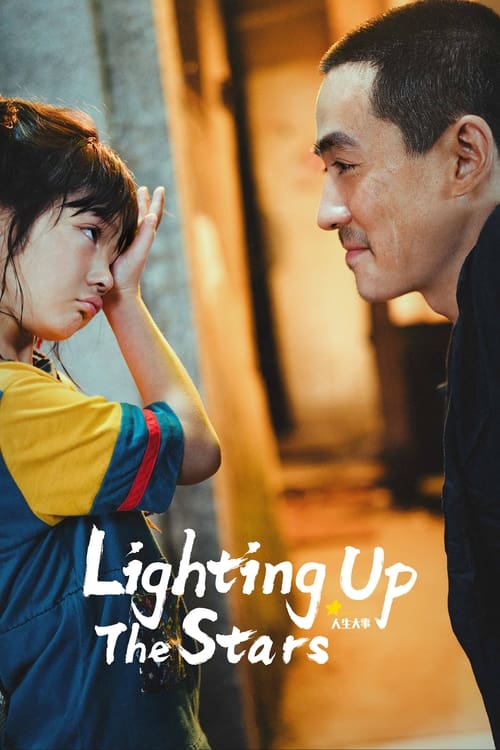
Lighting Up the Stars
Having been released after serving his sentence, a funeral director accidentally crosses paths with a girl which brings about an unexpected change in his attitude towards life.
Despite its modest budget of $8.8M, Lighting Up the Stars became a massive hit, earning $253.8M worldwide—a remarkable 2784% return. The film's unique voice connected with viewers, confirming that strong storytelling can transcend budget limitations.


Plot Structure
Story beats plotted across runtime


Narrative Arc
Emotional journey through the story's key moments
Story Circle
Blueprint 15-beat structure
Arcplot Score Breakdown
Weighted: Precision (70%) + Arc (15%) + Theme (15%)
Lighting Up the Stars (2022) showcases strategically placed story structure, characteristic of Liu Jiangjiang's storytelling approach. This structural analysis examines how the film's 15-point plot structure maps to proven narrative frameworks across 1 hour and 52 minutes. With an Arcplot score of 7.6, the film showcases strong structural fundamentals.
Characters
Cast & narrative archetypes

Mo Sanmei
Wu Xiaowen
Luo Yizhou
Wang Chun
Main Cast & Characters
Mo Sanmei
Played by Zhu Yilong
A funeral services worker who discovers a young girl after her grandmother's death and gradually takes on an unexpected guardian role.
Wu Xiaowen
Played by Yang Enyou
A resilient young girl who loses her grandmother and must navigate grief while forming a bond with Mo Sanmei.
Luo Yizhou
Played by Liu Lu
Mo Sanmei's business partner in the funeral services company, providing comic relief and moral support.
Wang Chun
Played by Wang Ge
Mo Sanmei's ex-wife who represents his past life and unresolved emotional connections.
Structural Analysis
The Status Quo at 1 minutes (1% through the runtime) establishes Mo Sanmei works as a funeral pallbearer, living a rough, isolated life. He's recently released from prison and runs his family's funeral business with little regard for social norms or emotional connection.. Structural examination shows that this early placement immediately immerses viewers in the story world.
The inciting incident occurs at 13 minutes when Mo Sanmei handles the funeral of a young woman and encounters her daughter, Xiaowen, a stubborn orphan who insists her grandmother "went to the stars" and refuses to accept her death. Child services cannot immediately place her.. At 12% through the film, this Disruption aligns precisely with traditional story structure. This beat shifts the emotional landscape, launching the protagonist into the central conflict.
The First Threshold at 27 minutes marks the transition into Act II, occurring at 24% of the runtime. This indicates the protagonist's commitment to Mo Sanmei makes the active choice to become Xiaowen's legal guardian. Despite his rough exterior and unsuitability, he commits to raising her, fundamentally changing the trajectory of both their lives., moving from reaction to action.
At 56 minutes, the Midpoint arrives at 50% of the runtime—precisely centered, creating perfect narrative symmetry. Of particular interest, this crucial beat False victory: Mo Sanmei's business thrives and his relationship with Xiaowen deepens. He seems to have found purpose and family. His romance with Yingzi progresses. Everything appears to be falling into place., fundamentally raising what's at risk. The emotional intensity shifts, dividing the narrative into clear before-and-after phases.
The Collapse moment at 83 minutes (74% through) represents the emotional nadir. Here, All is lost: Mo Sanmei loses custody of Xiaowen to her biological father. His greatest fear materializes—losing the child who gave his life meaning. The "whiff of death" is the death of their family unit and his newfound purpose., shows the protagonist at their lowest point. This beat's placement in the final quarter sets up the climactic reversal.
The Second Threshold at 89 minutes initiates the final act resolution at 79% of the runtime. Realization and synthesis: Mo Sanmei understands that true love means doing what's best for Xiaowen, not what's easiest for him. He combines his newfound emotional maturity with his determination to fight for their relationship through proper legal channels., demonstrating the transformation achieved throughout the journey.
Emotional Journey
Lighting Up the Stars's emotional architecture traces a deliberate progression across 15 carefully calibrated beats.
Narrative Framework
This structural analysis employs structural analysis methodology used to understand storytelling architecture. By mapping Lighting Up the Stars against these established plot points, we can identify how Liu Jiangjiang utilizes or subverts traditional narrative conventions. The plot point approach reveals not only adherence to structural principles but also creative choices that distinguish Lighting Up the Stars within the drama genre.
Comparative Analysis
Additional drama films include After Thomas, South Pacific and Dirty Dancing: Havana Nights.
Plot Points by Act
Act I
SetupStatus Quo
Mo Sanmei works as a funeral pallbearer, living a rough, isolated life. He's recently released from prison and runs his family's funeral business with little regard for social norms or emotional connection.
Theme
An elder at a funeral states: "Death is not the end, but a journey to another place. What matters is how we're remembered." This establishes the film's core theme about dignity in death and the importance of human connection.
Worldbuilding
Introduction to Mo Sanmei's world: his strained relationship with his father who runs the funeral home, his crass behavior at funerals, his romantic interest in Yingzi, and the cultural stigma surrounding funeral workers in Chinese society.
Disruption
Mo Sanmei handles the funeral of a young woman and encounters her daughter, Xiaowen, a stubborn orphan who insists her grandmother "went to the stars" and refuses to accept her death. Child services cannot immediately place her.
Resistance
Mo Sanmei reluctantly becomes Xiaowen's temporary guardian. He debates whether to keep her or send her away. She's difficult, he's unprepared for parenthood. His father and Yingzi observe this awkward new dynamic.
Act II
ConfrontationFirst Threshold
Mo Sanmei makes the active choice to become Xiaowen's legal guardian. Despite his rough exterior and unsuitability, he commits to raising her, fundamentally changing the trajectory of both their lives.
Mirror World
Xiaowen and Mo Sanmei begin to bond as he teaches her about his work and she begins to soften his hardened heart. Their relationship becomes the emotional core that will teach Mo Sanmei about love, responsibility, and the meaning of life and death.
Premise
The "promise of the premise": a tough funeral worker raising a precocious orphan. Comic and touching moments as they navigate daily life, school, funerals, and their unconventional family dynamic. Mo Sanmei learns patience and tenderness.
Midpoint
False victory: Mo Sanmei's business thrives and his relationship with Xiaowen deepens. He seems to have found purpose and family. His romance with Yingzi progresses. Everything appears to be falling into place.
Opposition
Complications arise: Xiaowen's biological father surfaces, seeking custody. Mo Sanmei's past criminal record threatens his guardianship. The social stigma of his profession creates obstacles. His father's health declines. Pressure mounts from all sides.
Collapse
All is lost: Mo Sanmei loses custody of Xiaowen to her biological father. His greatest fear materializes—losing the child who gave his life meaning. The "whiff of death" is the death of their family unit and his newfound purpose.
Crisis
Mo Sanmei's dark night of the soul. He processes the profound loss, reflecting on how Xiaowen transformed him from a crude, selfish man into someone capable of selfless love. He must decide whether to fight or let go.
Act III
ResolutionSecond Threshold
Realization and synthesis: Mo Sanmei understands that true love means doing what's best for Xiaowen, not what's easiest for him. He combines his newfound emotional maturity with his determination to fight for their relationship through proper legal channels.
Synthesis
The finale: Mo Sanmei demonstrates he's become a worthy father figure. He confronts the biological father, proves his capability as a guardian, and shows the court system that love and commitment matter more than blood. Resolution of the custody battle and his relationship with his own father.
Transformation
Final image mirrors the opening: Mo Sanmei at a funeral, but transformed. He conducts the service with dignity, compassion, and understanding. Xiaowen by his side, their family complete. He's learned that life's greatest purpose is found in how we care for others, even in death.