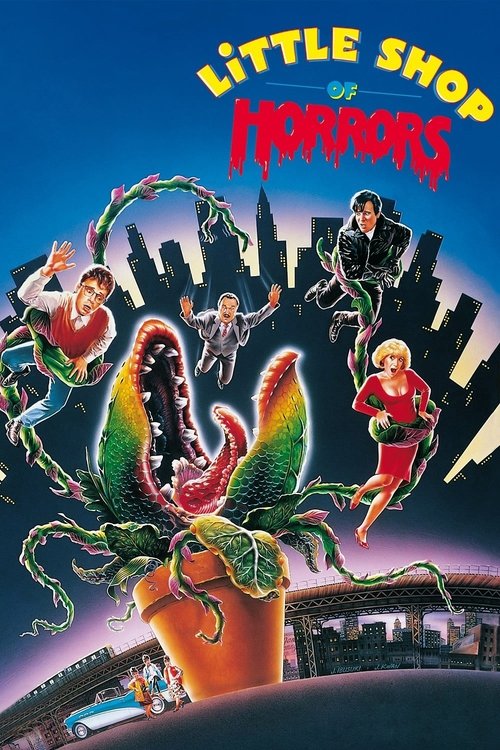
Little Shop of Horrors
Seymour Krelborn is a nerdy orphan working at Mushnik's; a flower shop in urban Skid Row. He harbors a crush on fellow co-worker, Audrey Fulquard, and is berated by Mr. Mushnik daily. One day, Seymour finds a very mysterious unidentified plant which he calls Audrey II. The plant seems to have a craving for blood and soon begins to sing for it’s supper.
Despite a moderate budget of $25.0M, Little Shop of Horrors became a box office success, earning $54.0M worldwide—a 116% return.
Nominated for 2 Oscars. 2 wins & 14 nominations


Plot Structure
Story beats plotted across runtime


Narrative Arc
Emotional journey through the story's key moments
Story Circle
Blueprint 15-beat structure
Arcplot Score Breakdown
Weighted: Precision (70%) + Arc (15%) + Theme (15%)
Little Shop of Horrors (1986) reveals deliberately positioned plot construction, characteristic of Frank Oz's storytelling approach. This structural analysis examines how the film's 15-point plot structure maps to proven narrative frameworks across 1 hour and 34 minutes. With an Arcplot score of 7.1, the film balances conventional beats with creative variation.
Characters
Cast & narrative archetypes
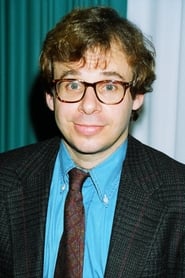
Seymour Krelborn
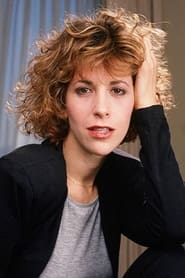
Audrey

Audrey II

Orin Scrivello

Mr. Mushnik
Main Cast & Characters
Seymour Krelborn
Played by Rick Moranis
A meek florist's assistant who discovers a carnivorous plant that promises him fame and success at a terrible price.
Audrey
Played by Ellen Greene
A kind-hearted, downtrodden florist who dreams of escape from her abusive relationship and a better life.
Audrey II
Played by Levi Stubbs
A mysterious alien plant with a seductive voice that manipulates Seymour into committing murder for sustenance.
Orin Scrivello
Played by Steve Martin
A sadistic nitrous oxide-addicted dentist who enjoys inflicting pain and abuses his girlfriend Audrey.
Mr. Mushnik
Played by Vincent Gardenia
The penny-pinching owner of the struggling flower shop who sees Seymour's plant as his ticket to success.
Structural Analysis
The Status Quo at 1 minutes (1% through the runtime) establishes Seymour works as a lowly florist assistant on Skid Row, living in poverty and obscurity. The shop is failing, and Mushnik is ready to close. Seymour is invisible, yearning for something more but trapped in his miserable existence.. Notably, this early placement immediately immerses viewers in the story world.
The inciting incident occurs at 12 minutes when Seymour displays the strange plant (Audrey II) in the shop window, and customers immediately flood in. The plant becomes an overnight sensation, transforming the failing shop into a success and making Seymour suddenly relevant.. At 13% through the film, this Disruption is delayed, allowing extended setup of the story world. This beat shifts the emotional landscape, launching the protagonist into the central conflict.
The First Threshold at 24 minutes marks the transition into Act II, occurring at 25% of the runtime. This illustrates the protagonist's commitment to Seymour actively chooses to kill Orin to feed the plant. Though partially accidental (Orin's mask gets stuck), Seymour makes the conscious decision not to save him, watching him die. He crosses into murder and dismembers the body to feed Audrey II., moving from reaction to action.
At 47 minutes, the Midpoint arrives at 50% of the runtime—precisely centered, creating perfect narrative symmetry. Structural examination shows that this crucial beat Audrey II reveals it can talk and demands Seymour "Feed me!" The plant is no longer a passive benefactor but an active, manipulative force. The stakes raise dramatically - Seymour realizes he's made a deal with something evil, and it owns him now., fundamentally raising what's at risk. The emotional intensity shifts, dividing the narrative into clear before-and-after phases.
The Collapse moment at 70 minutes (75% through) represents the emotional nadir. Here, Audrey II attacks and fatally wounds Audrey (the woman Seymour loves). Mushnik is also consumed by the plant. Everything Seymour cares about is destroyed. The whiff of death is literal - the people he loves most are dying or dead because of his choices., illustrates the protagonist at their lowest point. This beat's placement in the final quarter sets up the climactic reversal.
The Second Threshold at 75 minutes initiates the final act resolution at 80% of the runtime. Seymour realizes the plant's true plan for world domination and decides he must destroy it. He enters the plant with explosives and a gun, determined to end what he started. He finally chooses moral action over fame and self-preservation., demonstrating the transformation achieved throughout the journey.
Emotional Journey
Little Shop of Horrors's emotional architecture traces a deliberate progression across 15 carefully calibrated beats.
Narrative Framework
This structural analysis employs structural analysis methodology used to understand storytelling architecture. By mapping Little Shop of Horrors against these established plot points, we can identify how Frank Oz utilizes or subverts traditional narrative conventions. The plot point approach reveals not only adherence to structural principles but also creative choices that distinguish Little Shop of Horrors within the horror genre.
Frank Oz's Structural Approach
Among the 11 Frank Oz films analyzed on Arcplot, the average structural score is 7.2, reflecting strong command of classical structure. Little Shop of Horrors takes a more unconventional approach compared to the director's typical style. For comparative analysis, explore the complete Frank Oz filmography.
Comparative Analysis
Additional horror films include Thinner, A Nightmare on Elm Street and Mary Reilly. For more Frank Oz analyses, see The Dark Crystal, The Indian in the Cupboard and Dirty Rotten Scoundrels.
Plot Points by Act
Act I
SetupStatus Quo
Seymour works as a lowly florist assistant on Skid Row, living in poverty and obscurity. The shop is failing, and Mushnik is ready to close. Seymour is invisible, yearning for something more but trapped in his miserable existence.
Theme
Mushnik declares "You gotta have a gimmick" - stating the film's theme about shortcuts to success and the price of fame. The question posed: what are you willing to sacrifice to escape poverty and obscurity?
Worldbuilding
Skid Row is established as a desperate place where people are trapped. Seymour loves Audrey from afar, Audrey is stuck with abusive dentist Orin, and Mushnik's flower shop is dying. The strange plant Seymour found is introduced but hasn't yet changed anything.
Disruption
Seymour displays the strange plant (Audrey II) in the shop window, and customers immediately flood in. The plant becomes an overnight sensation, transforming the failing shop into a success and making Seymour suddenly relevant.
Resistance
Seymour discovers Audrey II drinks blood and begins feeding it, first his own finger, then considering what this means. The plant grows, fame increases, but Seymour debates the moral implications. Audrey confesses her dreams to Seymour, deepening his motivation.
Act II
ConfrontationFirst Threshold
Seymour actively chooses to kill Orin to feed the plant. Though partially accidental (Orin's mask gets stuck), Seymour makes the conscious decision not to save him, watching him die. He crosses into murder and dismembers the body to feed Audrey II.
Mirror World
Audrey and Seymour's relationship blossoms as they sing "Suddenly Seymour." She represents genuine love and simple happiness - the thematic alternative to fame and success. She accepts him for who he really is, not for the plant.
Premise
The promise of the premise: Seymour enjoys his newfound fame. Media appearances, botanical society recognition, commercial opportunities pour in. The plant grows massive. Seymour and Audrey fall in love. Everything Seymour wanted seems within reach.
Midpoint
Audrey II reveals it can talk and demands Seymour "Feed me!" The plant is no longer a passive benefactor but an active, manipulative force. The stakes raise dramatically - Seymour realizes he's made a deal with something evil, and it owns him now.
Opposition
Audrey II's demands intensify, requiring more bodies. Seymour's guilt grows as the plant manipulates him, promising wealth and fame while threatening to expose his crime. Patrick Martin offers a commercial deal. The plant grows enormous, increasingly dominating Seymour's life.
Collapse
Audrey II attacks and fatally wounds Audrey (the woman Seymour loves). Mushnik is also consumed by the plant. Everything Seymour cares about is destroyed. The whiff of death is literal - the people he loves most are dying or dead because of his choices.
Crisis
Dying Audrey begs Seymour to feed her to the plant so she can be with him always. Seymour is emotionally devastated, having lost everything. He faces the complete moral bankruptcy of his Faustian bargain - success cost him his soul and the only real love he ever had.
Act III
ResolutionSecond Threshold
Seymour realizes the plant's true plan for world domination and decides he must destroy it. He enters the plant with explosives and a gun, determined to end what he started. He finally chooses moral action over fame and self-preservation.
Synthesis
Seymour confronts Audrey II, attempting to destroy it. The plant fights back, revealing pods ready to spread across the world. In the original ending, Seymour fails and is consumed. In the theatrical ending, he succeeds in killing the plant and escapes with Audrey.
Transformation
Seymour and Audrey live in suburban happiness, having escaped Skid Row through honest means (not shortcuts). They have the simple life Audrey dreamed of. A tiny Audrey II sprout appears in their garden, suggesting the corruption can return, but they've transformed from who they were.