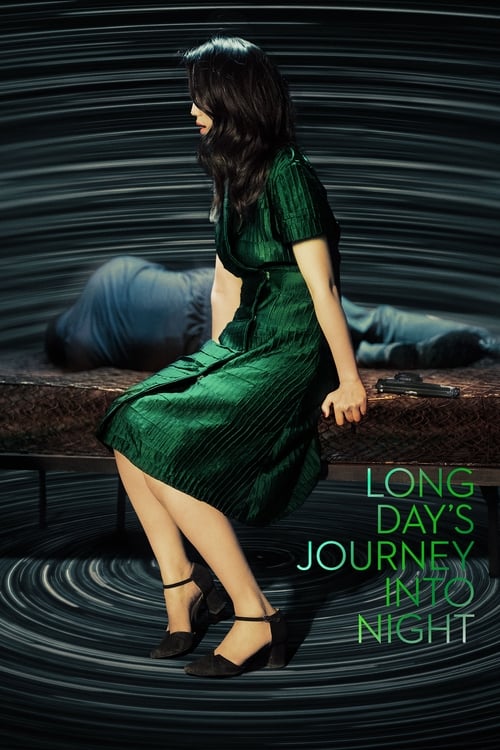
Long Day's Journey into Night
Luo Hongwu returns to Kaili, the hometown from which he fled many years ago. He begins the search for the woman he loved and whom he has never been able to forget.
Despite its limited budget of $13.0M, Long Day's Journey into Night became a solid performer, earning $42.1M worldwide—a 224% return. The film's bold vision attracted moviegoers, showing that strong storytelling can transcend budget limitations.
15 wins & 43 nominations


Plot Structure
Story beats plotted across runtime


Narrative Arc
Emotional journey through the story's key moments
Story Circle
Blueprint 15-beat structure
Arcplot Score Breakdown
Weighted: Precision (70%) + Arc (15%) + Theme (15%)
Long Day's Journey into Night (2018) reveals meticulously timed narrative design, characteristic of Bi Gan's storytelling approach. This structural analysis examines how the film's 15-point plot structure maps to proven narrative frameworks across 2 hours and 18 minutes. With an Arcplot score of 6.6, the film balances conventional beats with creative variation.
Characters
Cast & narrative archetypes

Luo Hongwu
Wan Qiwen
Zuo Hongyuan
Wildcat
Main Cast & Characters
Luo Hongwu
Played by Huang Jue
A melancholic man who returns to his hometown Kaili to search for his lost love Wan Qiwen, haunted by memories and dreams of their past.
Wan Qiwen
Played by Tang Wei
A mysterious woman from Luo's past who appears in different guises and memories, embodying desire, loss, and the elusive nature of memory itself.
Zuo Hongyuan
Played by Lee Hong-Chi
Luo's former friend and criminal associate, now deceased, whose death and connection to Wan Qiwen haunts the protagonist.
Wildcat
Played by Chen Yongzhong
A criminal figure from Luo's past who is connected to the underground world and the mystery surrounding Wan Qiwen.
Structural Analysis
The Status Quo at 2 minutes (1% through the runtime) establishes Luo Hongwu returns to his hometown of Kaili, isolated and haunted, establishing his melancholic disconnection from the world.. The analysis reveals that this early placement immediately immerses viewers in the story world.
The inciting incident occurs at 17 minutes when Luo discovers a photograph and receives information suggesting Wan Qiwen may still be alive, disrupting his resigned acceptance of loss.. At 13% through the film, this Disruption is delayed, allowing extended setup of the story world. This beat shifts the emotional landscape, launching the protagonist into the central conflict.
The First Threshold at 35 minutes marks the transition into Act II, occurring at 25% of the runtime. This demonstrates the protagonist's commitment to Luo commits to finding Wan Qiwen, accepting a journey deeper into memory and obsession, crossing from passive mourning to active pursuit., moving from reaction to action.
At 69 minutes, the Midpoint arrives at 50% of the runtime—precisely centered, creating perfect narrative symmetry. Of particular interest, this crucial beat Luo enters the movie theater and puts on 3D glasses, marking the film's radical structural shift: the transition from fragmented narrative to continuous dream., fundamentally raising what's at risk. The emotional intensity shifts, dividing the narrative into clear before-and-after phases.
The Collapse moment at 104 minutes (75% through) represents the emotional nadir. Here, Within the dream, the moment of recognition and loss: Luo encounters the woman who is and isn't Wan Qiwen, realizing the impossibility of recovering what's gone., indicates the protagonist at their lowest point. This beat's placement in the final quarter sets up the climactic reversal.
The Second Threshold at 110 minutes initiates the final act resolution at 80% of the runtime. Luo accepts the nature of dreams and memory: they offer connection but not possession, presence but not permanence, synthesizing longing with acceptance., demonstrating the transformation achieved throughout the journey.
Emotional Journey
Long Day's Journey into Night's emotional architecture traces a deliberate progression across 15 carefully calibrated beats.
Narrative Framework
This structural analysis employs proven narrative structure principles that track dramatic progression. By mapping Long Day's Journey into Night against these established plot points, we can identify how Bi Gan utilizes or subverts traditional narrative conventions. The plot point approach reveals not only adherence to structural principles but also creative choices that distinguish Long Day's Journey into Night within the drama genre.
Comparative Analysis
Additional drama films include After Thomas, South Pacific and Dirty Dancing: Havana Nights.
Plot Points by Act
Act I
SetupStatus Quo
Luo Hongwu returns to his hometown of Kaili, isolated and haunted, establishing his melancholic disconnection from the world.
Theme
A character mentions that memories and dreams blend together, stating the film's exploration of time, memory, and the impossibility of recovering the past.
Worldbuilding
Fragmented exposition reveals Luo's past: his relationship with Wan Qiwen, his friend Wildcat's death, his father's passing, and the noir-tinged criminal underworld of his youth.
Disruption
Luo discovers a photograph and receives information suggesting Wan Qiwen may still be alive, disrupting his resigned acceptance of loss.
Resistance
Luo investigates fragmented clues across Kaili, encountering various figures from his past, debating whether to pursue the ghost of his lost love or let the past remain buried.
Act II
ConfrontationFirst Threshold
Luo commits to finding Wan Qiwen, accepting a journey deeper into memory and obsession, crossing from passive mourning to active pursuit.
Mirror World
Introduction of the young woman who resembles Wan Qiwen, embodying the film's theme of doubling, repetition, and the impossibility of recapturing lost time.
Premise
The promise of the premise: a fragmented, dreamlike investigation through memory and physical space, blurring reality and recollection in Bi Gan's signature poetic style.
Midpoint
Luo enters the movie theater and puts on 3D glasses, marking the film's radical structural shift: the transition from fragmented narrative to continuous dream.
Opposition
The single-take dream sequence: Luo descends through an oneiric village, encountering doubles and echoes, as time and identity dissolve, opposing linear narrative logic itself.
Collapse
Within the dream, the moment of recognition and loss: Luo encounters the woman who is and isn't Wan Qiwen, realizing the impossibility of recovering what's gone.
Crisis
The dream continues but darkens emotionally as Luo processes the futility of his search, surrounded by the architecture of memory that cannot be inhabited.
Act III
ResolutionSecond Threshold
Luo accepts the nature of dreams and memory: they offer connection but not possession, presence but not permanence, synthesizing longing with acceptance.
Synthesis
The dream reaches its conclusion through spinning, flight, and dissolution, resolving not through plot but through the acceptance of transience and the beauty of ephemeral connection.
Transformation
Luo awakens (implied) or the dream ends, transformed not by reunion but by the journey itself, having surrendered to time's irreversibility.