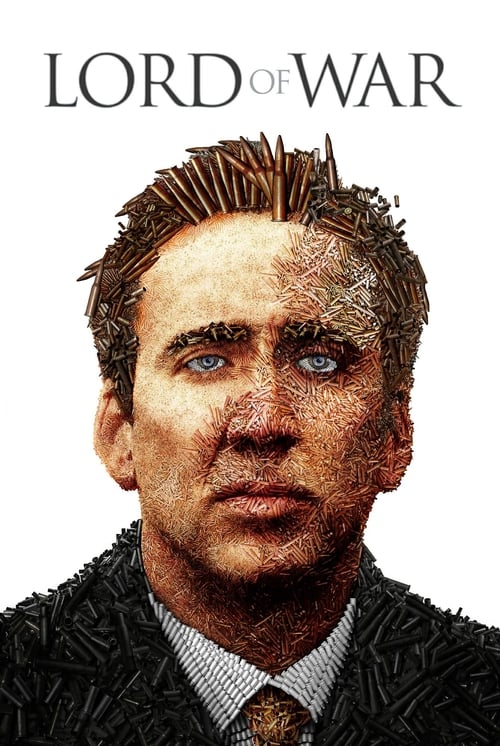
Lord of War
Yuri Orlov is a globetrotting arms dealer and, through some of the deadliest war zones, he struggles to stay one step ahead of a relentless Interpol agent, his business rivals and even some of his customers who include many of the world's most notorious dictators. Finally, he must also face his own conscience.
Working with a mid-range budget of $50.0M, the film achieved a modest success with $72.6M in global revenue (+45% profit margin).
2 wins & 3 nominations


Plot Structure
Story beats plotted across runtime


Narrative Arc
Emotional journey through the story's key moments
Story Circle
Blueprint 15-beat structure
Arcplot Score Breakdown
Weighted: Precision (70%) + Arc (15%) + Theme (15%)
Lord of War (2005) demonstrates precise plot construction, characteristic of Andrew Niccol's storytelling approach. This structural analysis examines how the film's 15-point plot structure maps to proven narrative frameworks across 2 hours and 2 minutes. With an Arcplot score of 6.3, the film takes an unconventional approach to traditional narrative frameworks.
Characters
Cast & narrative archetypes

Yuri Orlov
Jack Valentine
Ava Fontaine
Vitaly Orlov
Simeon Weisz
Andre Baptiste Sr.
Main Cast & Characters
Yuri Orlov
Played by Nicolas Cage
An ambitious arms dealer who rises from immigrant roots to become one of the world's most successful illegal weapons traffickers, narrating his morally complex journey.
Jack Valentine
Played by Ethan Hawke
A dedicated Interpol agent obsessed with bringing down Yuri Orlov, representing the moral opposition to the arms trade.
Ava Fontaine
Played by Bridget Moynahan
A model and Yuri's wife who remains willfully ignorant of her husband's true business for years before confronting the truth.
Vitaly Orlov
Played by Jared Leto
Yuri's younger brother and business partner who struggles with the moral weight of their arms dealing and develops a cocaine addiction.
Simeon Weisz
Played by Ian Holm
A ruthless rival arms dealer competing with Yuri for control of lucrative markets.
Andre Baptiste Sr.
Played by Eamonn Walker
A brutal African warlord and dictator who becomes one of Yuri's most dangerous clients.
Structural Analysis
The Status Quo at 1 minutes (1% through the runtime) establishes Opening montage: "Life of a Bullet" - following a bullet from factory to killing a child soldier. Yuri narrates: "There are over 550 million firearms in worldwide circulation. That's one firearm for every twelve people on the planet. The only question is: How do we arm the other eleven?".. Notably, this early placement immediately immerses viewers in the story world.
The inciting incident occurs at 15 minutes when Yuri makes his first arms deal, selling Uzi submachine guns to local gangsters from a truck. The successful sale proves he can do this and provides capital. He commits to becoming an arms dealer.. At 13% through the film, this Disruption is delayed, allowing extended setup of the story world. This beat shifts the emotional landscape, launching the protagonist into the central conflict.
The First Threshold at 31 minutes marks the transition into Act II, occurring at 25% of the runtime. This illustrates the protagonist's commitment to Fall of Soviet Union, 1991. Yuri travels to Ukraine and discovers massive opportunity: his uncle is a former Soviet general with access to vast weapons stockpiles. Yuri chooses to go big, entering the major leagues of international arms dealing., moving from reaction to action.
At 62 minutes, the Midpoint arrives at 50% of the runtime—precisely centered, creating perfect narrative symmetry. Notably, this crucial beat Liberia deal with Andre Baptiste Sr., a brutal dictator. Vitaly witnesses Baptiste's atrocities firsthand - boy soldiers, casual murder. False victory (huge profitable deal) is actually a false defeat (moral point of no return). Vitaly has breakdown, becomes addicted to cocaine., fundamentally raising what's at risk. The emotional intensity shifts, dividing the narrative into clear before-and-after phases.
The Collapse moment at 92 minutes (76% through) represents the emotional nadir. Here, Vitaly is killed attempting to destroy a shipment of weapons to stop Yuri's deal. Yuri's brother - the only person who truly knew him and represented his conscience - is dead. Literal death, whiff of death. Yuri's humanity dies with him., indicates the protagonist at their lowest point. This beat's placement in the final quarter sets up the climactic reversal.
The Second Threshold at 98 minutes initiates the final act resolution at 81% of the runtime. Yuri realizes he cannot and will not change. Despite everything lost, he chooses to continue. He accepts his nature: "I would tell you to go to hell, but I think you're already there." Synthesis of his true self - he is what he does., demonstrating the transformation achieved throughout the journey.
Emotional Journey
Lord of War's emotional architecture traces a deliberate progression across 15 carefully calibrated beats.
Narrative Framework
This structural analysis employs proven narrative structure principles that track dramatic progression. By mapping Lord of War against these established plot points, we can identify how Andrew Niccol utilizes or subverts traditional narrative conventions. The plot point approach reveals not only adherence to structural principles but also creative choices that distinguish Lord of War within the crime genre.
Andrew Niccol's Structural Approach
Among the 5 Andrew Niccol films analyzed on Arcplot, the average structural score is 6.5, demonstrating varied approaches to story architecture. Lord of War takes a more unconventional approach compared to the director's typical style. For comparative analysis, explore the complete Andrew Niccol filmography.
Comparative Analysis
Additional crime films include The Bad Guys, Rustom and The Whole Ten Yards. For more Andrew Niccol analyses, see In Time, Gattaca and The Host.
Plot Points by Act
Act I
SetupStatus Quo
Opening montage: "Life of a Bullet" - following a bullet from factory to killing a child soldier. Yuri narrates: "There are over 550 million firearms in worldwide circulation. That's one firearm for every twelve people on the planet. The only question is: How do we arm the other eleven?"
Theme
Yuri's uncle tells young Yuri and Vitaly a story about a farmer who prospers by being the only one selling weapons to both sides of a conflict. Theme stated: profit through moral compromise and selling to both sides.
Worldbuilding
1980s Little Odessa, Brooklyn. Yuri and brother Vitaly work in family restaurant. Yuri witnesses mob hit, realizes weapon trade potential. Establishes Yuri's ambition, immigrant background, desire to escape ordinary life, and his romance with model Ava Fontaine.
Disruption
Yuri makes his first arms deal, selling Uzi submachine guns to local gangsters from a truck. The successful sale proves he can do this and provides capital. He commits to becoming an arms dealer.
Resistance
Yuri recruits brother Vitaly as partner. They learn the trade, make connections, take risks. Yuri pursues Ava Fontaine romantically. Montage of growing business through 1980s. First encounter with Interpol Agent Jack Valentine who becomes nemesis.
Act II
ConfrontationFirst Threshold
Fall of Soviet Union, 1991. Yuri travels to Ukraine and discovers massive opportunity: his uncle is a former Soviet general with access to vast weapons stockpiles. Yuri chooses to go big, entering the major leagues of international arms dealing.
Mirror World
Yuri marries Ava Fontaine, the model of his dreams. She represents the legitimate, beautiful life he wants to appear to have - a relationship built on lies about his profession. She believes he's a legitimate transport businessman.
Premise
The fun and games of international arms dealing. Yuri becomes massively successful, selling to warlords worldwide. Elaborate schemes to transport weapons, bribing officials, close calls with Agent Valentine. Living double life with Ava and son. Vitaly struggles with guilt but Yuri dismisses concerns.
Midpoint
Liberia deal with Andre Baptiste Sr., a brutal dictator. Vitaly witnesses Baptiste's atrocities firsthand - boy soldiers, casual murder. False victory (huge profitable deal) is actually a false defeat (moral point of no return). Vitaly has breakdown, becomes addicted to cocaine.
Opposition
Agent Valentine intensifies pursuit. Vitaly's addiction worsens, he becomes liability. Ava grows suspicious. Yuri makes increasingly dangerous deals to maintain lifestyle and stay ahead. Marriage deteriorating. Valentine gets closer, setting traps. Pressure from all sides mounting.
Collapse
Vitaly is killed attempting to destroy a shipment of weapons to stop Yuri's deal. Yuri's brother - the only person who truly knew him and represented his conscience - is dead. Literal death, whiff of death. Yuri's humanity dies with him.
Crisis
Yuri processes Vitaly's death. Ava discovers the truth about his profession and leaves him, taking their son. Yuri is alone, stripped of family and the illusion of normalcy. Dark night contemplating what he's become.
Act III
ResolutionSecond Threshold
Yuri realizes he cannot and will not change. Despite everything lost, he chooses to continue. He accepts his nature: "I would tell you to go to hell, but I think you're already there." Synthesis of his true self - he is what he does.
Synthesis
Yuri is finally caught by Agent Valentine with irrefutable evidence. But Yuri reveals the truth: he works for the US government and other permanent Security Council members who are the real arms dealers. He's released. Valentine's idealism is crushed.
Transformation
Yuri walks free and returns to business. Final narration: "While private gunrunners continue to thrive, the world's biggest arms suppliers are the U.S., U.K., Russia, France, and China - the five permanent members of the U.N. Security Council." Negative transformation complete - the system is unchanged.