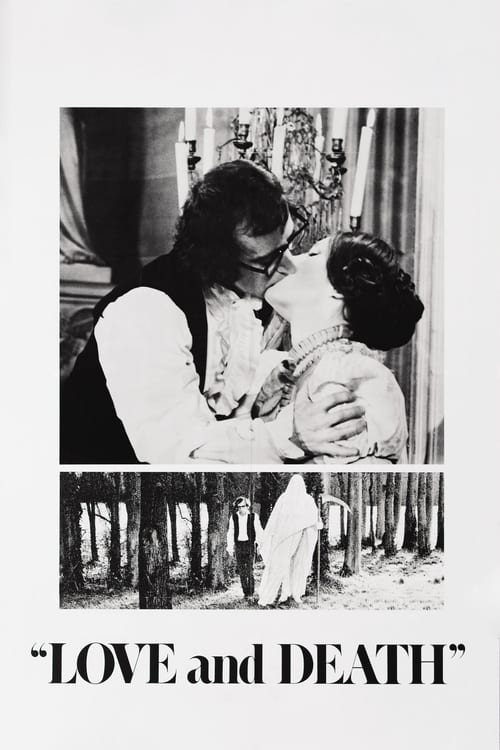
Love and Death
In czarist Russia, a neurotic soldier and his distant cousin formulate a plot to assassinate Napoleon.
Despite its small-scale budget of $3.0M, Love and Death became a box office phenomenon, earning $20.2M worldwide—a remarkable 572% return. The film's fresh perspective engaged audiences, confirming that strong storytelling can transcend budget limitations.
1 win & 1 nomination


Plot Structure
Story beats plotted across runtime


Narrative Arc
Emotional journey through the story's key moments
Story Circle
Blueprint 15-beat structure
Arcplot Score Breakdown
Weighted: Precision (70%) + Arc (15%) + Theme (15%)
Love and Death (1975) exhibits meticulously timed narrative architecture, characteristic of Woody Allen's storytelling approach. This structural analysis examines how the film's 15-point plot structure maps to proven narrative frameworks across 1 hour and 25 minutes. With an Arcplot score of 7.5, the film showcases strong structural fundamentals.
Characters
Cast & narrative archetypes

Boris Grushenko
Sonja
Napoleon Bonaparte
Main Cast & Characters
Boris Grushenko
Played by Woody Allen
A cowardly intellectual Russian peasant who gets reluctantly dragged into war and a murder plot during the Napoleonic era. He philosophizes about death, God, and the absurdity of existence while trying to avoid danger.
Sonja
Played by Diane Keaton
Boris's passionate, intellectual cousin who engages in philosophical debates about love, morality, and wheat. She marries for security but maintains a complex romantic relationship with Boris.
Napoleon Bonaparte
Played by James Tolkan
The French Emperor whose invasion of Russia sets the story in motion. He becomes the target of Boris and Sonja's assassination plot.
Structural Analysis
The Status Quo at 1 minutes (1% through the runtime) establishes Boris Grushenko awaits execution, narrating his life story in flashback. We see the cowardly intellectual trapped in the body of a Russian peasant, establishing his neurotic, philosophical nature and fear of death.. Notably, this early placement immediately immerses viewers in the story world.
The inciting incident occurs at 10 minutes when Napoleon invades Russia, and Boris is conscripted into the army against his will. The cowardly intellectual must now become a soldier, disrupting his comfortable life of philosophical musings and unrequited love for Sonja.. At 12% through the film, this Disruption aligns precisely with traditional story structure. This beat shifts the emotional landscape, launching the protagonist into the central conflict.
The First Threshold at 21 minutes marks the transition into Act II, occurring at 24% of the runtime. This reveals the protagonist's commitment to Boris accidentally becomes a war hero when his cannon misfires and destroys a French command post. He receives a medal and newfound status, choosing to embrace his unlikely heroism rather than continue hiding., moving from reaction to action.
At 43 minutes, the Midpoint arrives at 50% of the runtime—precisely centered, creating perfect narrative symmetry. Structural examination shows that this crucial beat Napoleon's continued conquests reach a crisis point. Sonja proposes that they assassinate Napoleon to save Russia—a false victory setup. Boris initially resists but is drawn into the plot, shifting from passive philosopher to active participant in history., fundamentally raising what's at risk. The emotional intensity shifts, dividing the narrative into clear before-and-after phases.
The Collapse moment at 64 minutes (76% through) represents the emotional nadir. Here, Boris is captured after the assassination attempt fails—they killed a lookalike. He is sentenced to death. Sonja escapes, but Boris faces execution. The whiff of death becomes literal as Boris confronts his lifelong fear made real., illustrates the protagonist at their lowest point. This beat's placement in the final quarter sets up the climactic reversal.
The Second Threshold at 68 minutes initiates the final act resolution at 80% of the runtime. Boris accepts his fate with philosophical resignation. He realizes that whether life has meaning or not, he lived authentically—loving Sonja, questioning existence, and finally acting on principle. His synthesis combines intellectual acceptance with emotional peace., demonstrating the transformation achieved throughout the journey.
Emotional Journey
Love and Death's emotional architecture traces a deliberate progression across 15 carefully calibrated beats.
Narrative Framework
This structural analysis employs a 15-point narrative structure framework that maps key story moments. By mapping Love and Death against these established plot points, we can identify how Woody Allen utilizes or subverts traditional narrative conventions. The plot point approach reveals not only adherence to structural principles but also creative choices that distinguish Love and Death within the comedy genre.
Woody Allen's Structural Approach
Among the 42 Woody Allen films analyzed on Arcplot, the average structural score is 7.0, demonstrating varied approaches to story architecture. Love and Death represents one of the director's most structurally precise works. For comparative analysis, explore the complete Woody Allen filmography.
Comparative Analysis
Additional comedy films include The Bad Guys, Ella Enchanted and The Evening Star. For more Woody Allen analyses, see Everyone Says I Love You, Celebrity and Interiors.
Plot Points by Act
Act I
SetupStatus Quo
Boris Grushenko awaits execution, narrating his life story in flashback. We see the cowardly intellectual trapped in the body of a Russian peasant, establishing his neurotic, philosophical nature and fear of death.
Theme
Young Boris discusses death and God with his father, who dismisses philosophical inquiry. The theme is stated: the absurdity of seeking meaning in a universe that offers none, and the futility of love and death as ultimate concerns.
Worldbuilding
Boris's childhood in 19th century Russia is established. We meet his brutish brothers, his philosophical nature, and most importantly, his beautiful cousin Sonja whom he loves desperately. The world of Russian aristocracy, military honor, and arranged marriages is satirized.
Disruption
Napoleon invades Russia, and Boris is conscripted into the army against his will. The cowardly intellectual must now become a soldier, disrupting his comfortable life of philosophical musings and unrequited love for Sonja.
Resistance
Boris resists his fate as a soldier, trying desperately to avoid combat. He debates existential questions, attempts to desert, and bumbles through military training. Sonja, meanwhile, marries a herring merchant, deepening Boris's despair.
Act II
ConfrontationFirst Threshold
Boris accidentally becomes a war hero when his cannon misfires and destroys a French command post. He receives a medal and newfound status, choosing to embrace his unlikely heroism rather than continue hiding.
Mirror World
Boris reunites with Sonja after the war, now a widow. Their relationship deepens as they engage in extended philosophical debates about God, love, and morality. Sonja represents Boris's thematic counterpoint—equally intellectual but more decisive.
Premise
Boris and Sonja marry after she agrees on a whim, expecting Boris to die in a duel. He survives through luck. Their marriage is a comic exploration of love, sex, infidelity, and philosophy. Boris finally has what he wanted but remains neurotic and unfulfilled.
Midpoint
Napoleon's continued conquests reach a crisis point. Sonja proposes that they assassinate Napoleon to save Russia—a false victory setup. Boris initially resists but is drawn into the plot, shifting from passive philosopher to active participant in history.
Opposition
Boris and Sonja travel to assassinate Napoleon. Their plan faces mounting complications: moral debates, bungled attempts to get close to Napoleon, Boris's cowardice, and increasing danger. The assassination attempt becomes an absurdist farce of philosophical indecision.
Collapse
Boris is captured after the assassination attempt fails—they killed a lookalike. He is sentenced to death. Sonja escapes, but Boris faces execution. The whiff of death becomes literal as Boris confronts his lifelong fear made real.
Crisis
In prison awaiting execution, Boris has visions and debates with God, Death, and his own conscience. He processes his failed life, his love for Sonja, and the meaninglessness he always feared. An angel promises a pardon that will never come.
Act III
ResolutionSecond Threshold
Boris accepts his fate with philosophical resignation. He realizes that whether life has meaning or not, he lived authentically—loving Sonja, questioning existence, and finally acting on principle. His synthesis combines intellectual acceptance with emotional peace.
Synthesis
Boris is executed. His ghost appears to Sonja, offering final philosophical observations about death. She asks if there's an afterlife; he gives an ambiguous answer. The finale parodies Russian literature's grand death scenes while maintaining genuine pathos.
Transformation
Boris dances with Death (the Grim Reaper in white robes) across a beautiful landscape, directly parodying Bergman's The Seventh Seal. The neurotic who feared death has embraced it, transforming from fearful philosopher to peaceful acceptance. Life is absurd, but so is death.