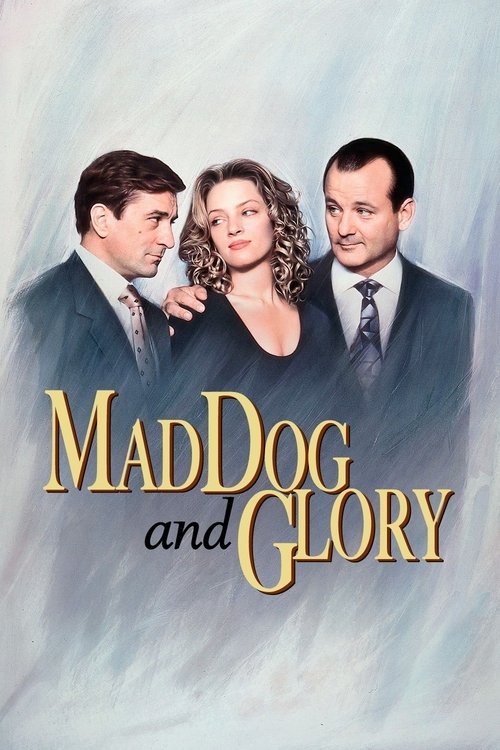
Mad Dog and Glory
Wayne Dobie is a shy cop whose low-key demeanor has earned him the affectionate nickname "Mad Dog." After Mad Dog saves the life of Frank Milo, a crime boss and aspiring stand-up comedian, he's offered the company of an attractive young waitress named Glory for a week. At first both are uneasy about the arrangement, but they eventually fall in love. However, the situation becomes complicated when Milo demands Glory back.
The film underperformed commercially against its mid-range budget of $19.0M, earning $11.1M globally (-42% loss). While initial box office returns were modest, the film has gained appreciation for its distinctive approach within the comedy genre.


Plot Structure
Story beats plotted across runtime


Narrative Arc
Emotional journey through the story's key moments
Story Circle
Blueprint 15-beat structure
Arcplot Score Breakdown
Weighted: Precision (70%) + Arc (15%) + Theme (15%)
Mad Dog and Glory (1993) showcases meticulously timed dramatic framework, characteristic of John McNaughton's storytelling approach. This structural analysis examines how the film's 15-point plot structure maps to proven narrative frameworks across 1 hour and 36 minutes. With an Arcplot score of 6.8, the film balances conventional beats with creative variation.
Characters
Cast & narrative archetypes

Wayne "Mad Dog" Dobie
Glory
Frank Milo
Mike
Harold
Main Cast & Characters
Wayne "Mad Dog" Dobie
Played by Robert DeOro
A timid Chicago police photographer who saves a mob boss's life and receives an unusual "gift" in return.
Glory
Played by Uma Thurman
A beautiful young woman given to Wayne for one week as payment for saving Frank's life, who develops genuine feelings for him.
Frank Milo
Played by Bill Murray
A charismatic mob boss and aspiring stand-up comedian who runs a crime empire while pursuing his dream of comedy.
Mike
Played by David Caruso
Wayne's streetwise partner on the police force who tries to toughen him up and help him navigate the dangerous situation.
Harold
Played by Mike Starr
Frank Milo's loyal and intimidating enforcer who handles the dirty work and keeps Glory under control.
Structural Analysis
The Status Quo at 1 minutes (1% through the runtime) establishes Wayne "Mad Dog" Dobie, a meek crime scene photographer for the Chicago PD, documents a murder scene with clinical detachment, establishing his passive, isolated existence.. Significantly, this early placement immediately immerses viewers in the story world.
The inciting incident occurs at 13 minutes when Wayne witnesses a convenience store robbery and instinctively saves mobster Frank Milo's life, inadvertently putting himself in debt to a dangerous criminal.. At 13% through the film, this Disruption is delayed, allowing extended setup of the story world. This beat shifts the emotional landscape, launching the protagonist into the central conflict.
The First Threshold at 24 minutes marks the transition into Act II, occurring at 25% of the runtime. This illustrates the protagonist's commitment to Wayne accepts Glory into his apartment for the week, crossing into a new world where he must engage with desire, masculinity, and human connection instead of hiding behind his camera., moving from reaction to action.
At 48 minutes, the Midpoint arrives at 50% of the runtime—precisely centered, creating perfect narrative symmetry. The analysis reveals that this crucial beat The week ends and Glory must return to Frank. Wayne realizes he's fallen in love but is powerless - she belongs to a gangster, and he's too afraid to fight for her. False defeat., fundamentally raising what's at risk. The emotional intensity shifts, dividing the narrative into clear before-and-after phases.
The Collapse moment at 72 minutes (75% through) represents the emotional nadir. Here, Harold humiliates Wayne in public, beating him while he fails to fight back. Wayne's sense of self dies - he cannot live as a coward anymore but doesn't know how to be brave., reveals the protagonist at their lowest point. This beat's placement in the final quarter sets up the climactic reversal.
The Second Threshold at 77 minutes initiates the final act resolution at 80% of the runtime. Wayne chooses courage. He confronts Frank directly, willing to die if necessary. He synthesizes what Glory taught him about living authentically with his own moral clarity about right and wrong., demonstrating the transformation achieved throughout the journey.
Emotional Journey
Mad Dog and Glory's emotional architecture traces a deliberate progression across 15 carefully calibrated beats.
Narrative Framework
This structural analysis employs proven narrative structure principles that track dramatic progression. By mapping Mad Dog and Glory against these established plot points, we can identify how John McNaughton utilizes or subverts traditional narrative conventions. The plot point approach reveals not only adherence to structural principles but also creative choices that distinguish Mad Dog and Glory within the comedy genre.
John McNaughton's Structural Approach
Among the 2 John McNaughton films analyzed on Arcplot, the average structural score is 6.9, demonstrating varied approaches to story architecture. Mad Dog and Glory takes a more unconventional approach compared to the director's typical style. For comparative analysis, explore the complete John McNaughton filmography.
Comparative Analysis
Additional comedy films include The Bad Guys, Ella Enchanted and The Evening Star. For more John McNaughton analyses, see Wild Things.
Plot Points by Act
Act I
SetupStatus Quo
Wayne "Mad Dog" Dobie, a meek crime scene photographer for the Chicago PD, documents a murder scene with clinical detachment, establishing his passive, isolated existence.
Theme
Frank Milo comments on the nature of courage and what it means to be a hero, foreshadowing Wayne's journey from passive observer to active participant in his own life.
Worldbuilding
Wayne's lonely routine is established: photographing crime scenes, being overlooked by colleagues, and retreating to his solitary apartment. He's invisible in his own life.
Disruption
Wayne witnesses a convenience store robbery and instinctively saves mobster Frank Milo's life, inadvertently putting himself in debt to a dangerous criminal.
Resistance
Frank insists on repaying the debt. Wayne resists the connection to the criminal world, but Frank is persistent, offering friendship and eventually "sending" Glory as a gift for one week.
Act II
ConfrontationFirst Threshold
Wayne accepts Glory into his apartment for the week, crossing into a new world where he must engage with desire, masculinity, and human connection instead of hiding behind his camera.
Mirror World
Glory and Wayne begin to genuinely connect beyond the transactional arrangement. She represents the emotional intimacy and authentic living that Wayne has avoided.
Premise
Wayne and Glory's relationship deepens over the week. Wayne experiences life outside his shell - photography dates, conversations, vulnerability. The promise: can this timid man find courage through love?
Midpoint
The week ends and Glory must return to Frank. Wayne realizes he's fallen in love but is powerless - she belongs to a gangster, and he's too afraid to fight for her. False defeat.
Opposition
Frank tightens his grip, becoming more threatening. Wayne's attempts to see Glory are blocked. His coworkers mock him. Frank's lieutenant Harold physically intimidates Wayne, exposing his cowardice.
Collapse
Harold humiliates Wayne in public, beating him while he fails to fight back. Wayne's sense of self dies - he cannot live as a coward anymore but doesn't know how to be brave.
Crisis
Wayne sits with his failure and shame. He must decide: retreat into his safe, lonely existence or risk everything for Glory and his own dignity. The dark night of reckoning.
Act III
ResolutionSecond Threshold
Wayne chooses courage. He confronts Frank directly, willing to die if necessary. He synthesizes what Glory taught him about living authentically with his own moral clarity about right and wrong.
Synthesis
Wayne faces down Frank and Harold, standing his ground despite the danger. The confrontation forces Frank to recognize Wayne's transformation. Wayne claims his life and his right to love Glory.
Transformation
Wayne and Glory together, free from Frank's control. Wayne is no longer hiding behind his camera or his fear - he's present, alive, and capable of both love and courage. The meek photographer has become the hero.