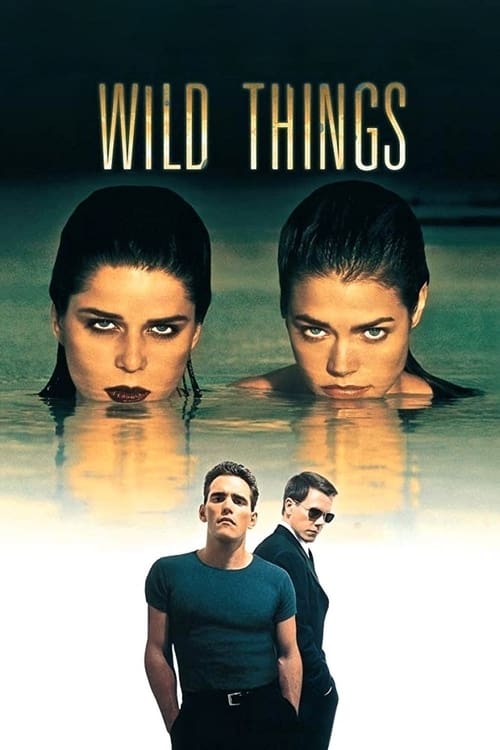
Wild Things
When teen-socialite Kelly Van Ryan and troubled bad girl Suzie Toller accuse guidance counselor Sam Lombardo of rape, he's suspended by the school, rejected by the town, and fighting to get his life back. One cop suspects conspiracy, but nothing is what it seems...
Despite a moderate budget of $20.0M, Wild Things became a box office success, earning $67.2M worldwide—a 236% return.
2 wins & 4 nominations


Plot Structure
Story beats plotted across runtime


Narrative Arc
Emotional journey through the story's key moments
Story Circle
Blueprint 15-beat structure
Arcplot Score Breakdown
Weighted: Precision (70%) + Arc (15%) + Theme (15%)
Wild Things (1998) exhibits deliberately positioned narrative architecture, characteristic of John McNaughton's storytelling approach. This structural analysis examines how the film's 15-point plot structure maps to proven narrative frameworks across 1 hour and 48 minutes. With an Arcplot score of 7.1, the film balances conventional beats with creative variation.
Structural Analysis
The Status Quo at 1 minutes (1% through the runtime) establishes Sam Lombardo, successful guidance counselor in affluent Blue Bay, Florida, maintains his respectable position washing his Jeep and preparing for another day at work. The sunny coastal setting establishes the surface glamour hiding darker truths beneath.. The analysis reveals that this early placement immediately immerses viewers in the story world.
The inciting incident occurs at 13 minutes when Kelly Van Ryan accuses Sam Lombardo of rape, destroying his reputation overnight. What appears to be a privileged student's accusation against her teacher shatters Sam's comfortable existence and sets the central conflict in motion.. At 12% through the film, this Disruption aligns precisely with traditional story structure. This beat shifts the emotional landscape, launching the protagonist into the central conflict.
The First Threshold at 27 minutes marks the transition into Act II, occurring at 25% of the runtime. This indicates the protagonist's commitment to The trial begins. Sam makes the active choice to fight the charges in court rather than settle, entering the legal battlefield that will define Act 2. This decision commits him to a path where everything will be revealed., moving from reaction to action.
At 54 minutes, the Midpoint arrives at 50% of the runtime—precisely centered, creating perfect narrative symmetry. Significantly, this crucial beat False victory: Sam wins the case and is declared innocent. He then sues the Van Ryans for $8.5 million in a civil suit and wins a massive settlement. Everything seems to have worked out perfectly for him, but the stakes are actually raising as Duquette begins investigating., fundamentally raising what's at risk. The emotional intensity shifts, dividing the narrative into clear before-and-after phases.
The Collapse moment at 80 minutes (74% through) represents the emotional nadir. Here, Kelly's death. Sam appears devastated as his co-conspirator and lover is murdered. The whiff of death is literal - Kelly is shot and killed, seemingly ending the partnership and leaving Sam as the prime suspect in multiple murders., illustrates the protagonist at their lowest point. This beat's placement in the final quarter sets up the climactic reversal.
The Second Threshold at 87 minutes initiates the final act resolution at 80% of the runtime. Sam is arrested and charged with murder. In what appears to be the final revelation, Duquette believes he has solved the case. However, this triggers the film's sequence of final twists that will reveal the actual truth., demonstrating the transformation achieved throughout the journey.
Emotional Journey
Wild Things's emotional architecture traces a deliberate progression across 15 carefully calibrated beats.
Narrative Framework
This structural analysis employs proven narrative structure principles that track dramatic progression. By mapping Wild Things against these established plot points, we can identify how John McNaughton utilizes or subverts traditional narrative conventions. The plot point approach reveals not only adherence to structural principles but also creative choices that distinguish Wild Things within the mystery genre.
John McNaughton's Structural Approach
Among the 2 John McNaughton films analyzed on Arcplot, the average structural score is 6.9, demonstrating varied approaches to story architecture. Wild Things represents one of the director's most structurally precise works. For comparative analysis, explore the complete John McNaughton filmography.
Comparative Analysis
Additional mystery films include Lone Star, The Wicker Man and A Soldier's Story. For more John McNaughton analyses, see Mad Dog and Glory.
Plot Points by Act
Act I
SetupStatus Quo
Sam Lombardo, successful guidance counselor in affluent Blue Bay, Florida, maintains his respectable position washing his Jeep and preparing for another day at work. The sunny coastal setting establishes the surface glamour hiding darker truths beneath.
Theme
Detective Ray Duquette remarks that "things aren't always what they seem" in Blue Bay, establishing the film's central theme of deception, hidden motives, and the unreliability of surface appearances.
Worldbuilding
Introduction of the key players: wealthy student Kelly Van Ryan, "swamp trash" Suzie Toller, Sandra Van Ryan (Kelly's powerful mother), and the contrast between Blue Bay's wealthy elite and working-class residents. Sam's position straddling both worlds is established.
Disruption
Kelly Van Ryan accuses Sam Lombardo of rape, destroying his reputation overnight. What appears to be a privileged student's accusation against her teacher shatters Sam's comfortable existence and sets the central conflict in motion.
Resistance
Sam protests his innocence while the community turns against him. He loses his job and faces criminal charges. Sam hires lawyer Ken Bowden, who debates whether to take the case. Suzie Toller comes forward with her own rape accusation, strengthening the case against Sam.
Act II
ConfrontationFirst Threshold
The trial begins. Sam makes the active choice to fight the charges in court rather than settle, entering the legal battlefield that will define Act 2. This decision commits him to a path where everything will be revealed.
Mirror World
Detective Ray Duquette becomes increasingly involved in the case, representing the law and investigation that will eventually mirror the deception plot. His obsessive pursuit of the truth parallels the film's thematic exploration of what's real versus fabricated.
Premise
The courtroom drama unfolds with Ken Bowden destroying the accusers' credibility. The "promise of the premise" delivers the neo-noir intrigue and erotic thriller elements the audience expects. Sam appears to be an innocent man wrongly accused.
Midpoint
False victory: Sam wins the case and is declared innocent. He then sues the Van Ryans for $8.5 million in a civil suit and wins a massive settlement. Everything seems to have worked out perfectly for him, but the stakes are actually raising as Duquette begins investigating.
Opposition
The first major twist reveals Sam, Kelly, and Suzie conspired together to frame Sam and extort money from the Van Ryans. Detective Duquette closes in on the truth. Tensions rise among the conspirators. Suzie is murdered, and then Kelly is killed, leaving Sam apparently alone with the money.
Collapse
Kelly's death. Sam appears devastated as his co-conspirator and lover is murdered. The whiff of death is literal - Kelly is shot and killed, seemingly ending the partnership and leaving Sam as the prime suspect in multiple murders.
Crisis
Sam processes the situation and tries to appear innocent while under intense scrutiny. Duquette pursues him relentlessly. The investigation tightens around Sam as the sole surviving conspirator with means, motive, and opportunity.
Act III
ResolutionSecond Threshold
Sam is arrested and charged with murder. In what appears to be the final revelation, Duquette believes he has solved the case. However, this triggers the film's sequence of final twists that will reveal the actual truth.
Synthesis
The finale reveals the true conspiracy through flashback sequences during the end credits. Sam and Suzie planned everything from the start, killing Kelly and using her to get the money. Suzie faked her death. They eliminate all loose ends including Duquette and escape together to a tropical paradise with the money.
Transformation
Sam and Suzie, the "swamp trash" girl and the guidance counselor, lounge on a tropical beach having successfully executed their elaborate con. The closing image mirrors the opening's sunny coastal setting, but now reveals the corruption beneath - the seeming victims were the true predators all along.