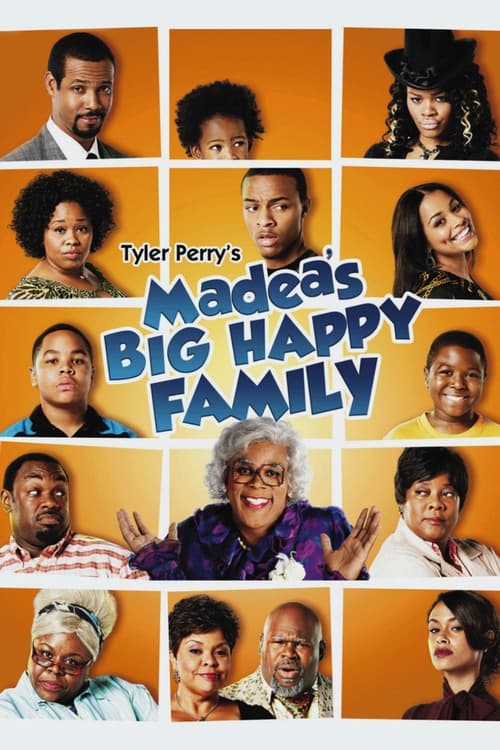
Madea's Big Happy Family
When Shirley, Madea's niece, receives distressing news about her health, the only thing she wants is her family gathered around her. However, Shirley's three adult children are too preoccupied with their own troubled lives to pay attention to their mother. It is up to Madea, with the help of rowdy Aunt Bam, to bring the clan together and help Shirley deal with her crisis.
Despite a respectable budget of $25.0M, Madea's Big Happy Family became a commercial success, earning $54.2M worldwide—a 117% return.
1 win & 1 nomination


Plot Structure
Story beats plotted across runtime


Narrative Arc
Emotional journey through the story's key moments
Story Circle
Blueprint 15-beat structure
Arcplot Score Breakdown
Weighted: Precision (70%) + Arc (15%) + Theme (15%)
Madea's Big Happy Family (2011) exhibits carefully calibrated story structure, characteristic of Tyler Perry's storytelling approach. This structural analysis examines how the film's 15-point plot structure maps to proven narrative frameworks across 1 hour and 46 minutes. With an Arcplot score of 7.7, the film showcases strong structural fundamentals.
Structural Analysis
The Status Quo at 1 minutes (1% through the runtime) establishes Shirley receives devastating news from her doctor that her cancer has progressed and she has only weeks to live. Establishes her as the family matriarch trying to hold everyone together despite her illness.. Notably, this early placement immediately immerses viewers in the story world.
The inciting incident occurs at 12 minutes when Shirley asks her aunt Madea to help gather the family for an important announcement. She cannot get her children to come together on her own, forcing her to call in reinforcement.. At 12% through the film, this Disruption aligns precisely with traditional story structure. This beat shifts the emotional landscape, launching the protagonist into the central conflict.
The First Threshold at 26 minutes marks the transition into Act II, occurring at 25% of the runtime. This illustrates the protagonist's commitment to The family finally gathers and Shirley reveals she is dying. The children are forced to confront reality and enter a new world where their petty problems must take a backseat to their mother's final wishes., moving from reaction to action.
At 52 minutes, the Midpoint arrives at 50% of the runtime—precisely centered, creating perfect narrative symmetry. Structural examination shows that this crucial beat A major family confrontation erupts where all the secrets and resentments explode. False defeat: the family seems more broken than ever, with members walking out and refusing to reconcile., fundamentally raising what's at risk. The emotional intensity shifts, dividing the narrative into clear before-and-after phases.
The Collapse moment at 78 minutes (74% through) represents the emotional nadir. Here, Shirley collapses and is rushed to the hospital. The "whiff of death" becomes literal as the family faces the imminent loss of their mother. Their dysfunction has prevented them from cherishing their remaining time with her., demonstrates the protagonist at their lowest point. This beat's placement in the final quarter sets up the climactic reversal.
The Second Threshold at 85 minutes initiates the final act resolution at 80% of the runtime. The family members each make the decision to change. They realize their mother's final gift is bringing them together, and they choose to honor her by healing their relationships and supporting each other., demonstrating the transformation achieved throughout the journey.
Emotional Journey
Madea's Big Happy Family's emotional architecture traces a deliberate progression across 15 carefully calibrated beats.
Narrative Framework
This structural analysis employs a 15-point narrative structure framework that maps key story moments. By mapping Madea's Big Happy Family against these established plot points, we can identify how Tyler Perry utilizes or subverts traditional narrative conventions. The plot point approach reveals not only adherence to structural principles but also creative choices that distinguish Madea's Big Happy Family within the comedy genre.
Tyler Perry's Structural Approach
Among the 18 Tyler Perry films analyzed on Arcplot, the average structural score is 7.1, reflecting strong command of classical structure. Madea's Big Happy Family represents one of the director's most structurally precise works. For comparative analysis, explore the complete Tyler Perry filmography.
Comparative Analysis
Additional comedy films include The Bad Guys, Ella Enchanted and The Evening Star. For more Tyler Perry analyses, see For Colored Girls, A Madea Christmas and Nobody's Fool.
Plot Points by Act
Act I
SetupStatus Quo
Shirley receives devastating news from her doctor that her cancer has progressed and she has only weeks to live. Establishes her as the family matriarch trying to hold everyone together despite her illness.
Theme
Dr. Evans tells Shirley that family is everything and she needs to get her affairs in order. The theme: family must come together and heal their dysfunction before it's too late.
Worldbuilding
Introduction to Shirley's dysfunctional family: Tammy (volatile marriage with Harold), Kimberly (controlling relationship with Calvin), Byron (immature with Renee and baby mama drama with Sabrina). Each sibling is wrapped up in their own problems and refuses to communicate.
Disruption
Shirley asks her aunt Madea to help gather the family for an important announcement. She cannot get her children to come together on her own, forcing her to call in reinforcement.
Resistance
Madea forcefully brings the dysfunctional family together through her no-nonsense methods. Each family member resists, caught up in their own drama. Madea observes the chaos and prepares to intervene with tough love.
Act II
ConfrontationFirst Threshold
The family finally gathers and Shirley reveals she is dying. The children are forced to confront reality and enter a new world where their petty problems must take a backseat to their mother's final wishes.
Mirror World
Madea and Aunt Bam provide comic relief while also serving as the voice of wisdom. They represent what the family could be: honest, direct, and supportive despite their rough edges. They embody the film's theme through their unconventional but genuine care.
Premise
Each family member struggles with their personal issues while trying to process their mother's impending death. Tammy deals with Harold's infidelity, Kimberly struggles with Calvin's control, Byron juggles his relationships. Madea intervenes repeatedly with her brand of tough love.
Midpoint
A major family confrontation erupts where all the secrets and resentments explode. False defeat: the family seems more broken than ever, with members walking out and refusing to reconcile.
Opposition
Each family member hits rock bottom in their personal relationships. Harold's affair is fully exposed, Calvin's abuse escalates, Sabrina's manipulation of Byron intensifies. The family remains fractured as Shirley's health visibly deteriorates.
Collapse
Shirley collapses and is rushed to the hospital. The "whiff of death" becomes literal as the family faces the imminent loss of their mother. Their dysfunction has prevented them from cherishing their remaining time with her.
Crisis
At the hospital, each family member processes their grief and guilt. They realize they've wasted precious time fighting instead of loving. Madea delivers hard truths about family, forgiveness, and priorities.
Act III
ResolutionSecond Threshold
The family members each make the decision to change. They realize their mother's final gift is bringing them together, and they choose to honor her by healing their relationships and supporting each other.
Synthesis
Each sibling takes steps to fix their lives: Tammy leaves Harold, Kimberly escapes Calvin's control, Byron commits to Renee and steps up as a father. The family comes together to support Shirley in her final days, united and healed.
Transformation
The family gathers at Shirley's bedside, finally united in love and support. They have transformed from a fractured, dysfunctional group into a true family, giving Shirley peace. Her death brings life to their relationships.