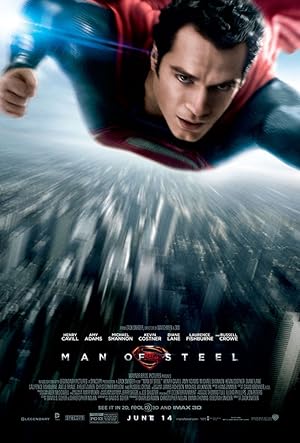
Man of Steel
A young boy learns that he has extraordinary powers and is not of this Earth. As a young man, he journeys to discover where he came from and what he was sent here to do. But the hero in him must now emerge if he is to save the world from annihilation and become the symbol of hope for all mankind.
Despite a major studio investment of $225.0M, Man of Steel became a box office success, earning $668.0M worldwide—a 197% return. This commercial performance validated the ambitious narrative scope, showing that audiences embrace unique voice even at blockbuster scale.
Nominated for 1 BAFTA Award7 wins & 46 nominations


Plot Structure
Story beats plotted across runtime


Narrative Arc
Emotional journey through the story's key moments
Story Circle
Blueprint 15-beat structure
Arcplot Score Breakdown
Weighted: Precision (70%) + Arc (15%) + Theme (15%)
Man of Steel (2013) exhibits strategically placed narrative design, characteristic of Zack Snyder's storytelling approach. This structural analysis examines how the film's 15-point plot structure maps to proven narrative frameworks across 2 hours and 23 minutes. With an Arcplot score of 6.3, the film takes an unconventional approach to traditional narrative frameworks.
Characters
Cast & narrative archetypes

Clark Kent / Kal-El / Superman
General Zod
Lois Lane
Jonathan Kent
Martha Kent
Jor-El
Faora-Ul
Colonel Nathan Hardy
Main Cast & Characters
Clark Kent / Kal-El / Superman
Played by Henry Cavill
A Kryptonian raised on Earth who struggles to find his place between two worlds while discovering his extraordinary powers and destiny.
General Zod
Played by Michael Shannon
Kryptonian military leader exiled to the Phantom Zone who seeks to rebuild Krypton on Earth at any cost.
Lois Lane
Played by Amy Adams
Pulitzer Prize-winning investigative journalist for the Daily Planet who becomes the first to discover Superman's identity.
Jonathan Kent
Played by Kevin Costner
Clark's adoptive father who instills moral values and caution about revealing his powers to protect him.
Martha Kent
Played by Diane Lane
Clark's adoptive mother who provides unwavering love and support throughout his journey of self-discovery.
Jor-El
Played by Russell Crowe
Superman's biological father and Krypton's leading scientist who sends his son to Earth to save him and preserve hope.
Faora-Ul
Played by Antje Traue
Zod's ruthless second-in-command and fierce warrior who takes pleasure in combat and destruction.
Colonel Nathan Hardy
Played by Christopher Meloni
U.S. Air Force officer who initially distrusts Superman but ultimately works with him to stop Zod's invasion.
Structural Analysis
The Status Quo at 1 minutes (1% through the runtime) establishes Krypton is dying. Jor-El witnesses his planet's civilization in its final moments, establishing a world on the brink of extinction.. Of particular interest, this early placement immediately immerses viewers in the story world.
The inciting incident occurs at 19 minutes when Adult Clark saves oil rig workers but must reveal his powers publicly. A helicopter films the aftermath, threatening his anonymity and forcing the question of whether he can remain hidden.. At 13% through the film, this Disruption is delayed, allowing extended setup of the story world. This beat shifts the emotional landscape, launching the protagonist into the central conflict.
The First Threshold at 36 minutes marks the transition into Act II, occurring at 25% of the runtime. This demonstrates the protagonist's commitment to Clark activates the command key and meets Jor-El's consciousness. He chooses to learn the truth about Krypton and his purpose, donning the Superman suit for the first time. He actively embraces his alien heritage., moving from reaction to action.
At 72 minutes, the Midpoint arrives at 50% of the runtime—precisely centered, creating perfect narrative symmetry. Significantly, this crucial beat Zod reveals his plan to terraform Earth into a new Krypton, killing all humans. False defeat: Superman surrenders to save humanity, but Zod betrays that trust. The stakes become extinction-level, and Clark is powerless aboard Zod's ship., fundamentally raising what's at risk. The emotional intensity shifts, dividing the narrative into clear before-and-after phases.
The Collapse moment at 107 minutes (75% through) represents the emotional nadir. Here, Zod loses everything—his ship, his people, his purpose of preserving Krypton—and vows to destroy the humans Clark loves. The "whiff of death": Krypton dies for the second time, and Zod becomes pure vengeance with nothing left to lose., demonstrates the protagonist at their lowest point. This beat's placement in the final quarter sets up the climactic reversal.
The Second Threshold at 114 minutes initiates the final act resolution at 80% of the runtime. Zod threatens a human family with heat vision, forcing Clark to make an impossible choice. Clark realizes he must kill Zod to save humanity—synthesizing both worlds by choosing Earth as his home, even at the cost of the last Kryptonian., demonstrating the transformation achieved throughout the journey.
Emotional Journey
Man of Steel's emotional architecture traces a deliberate progression across 15 carefully calibrated beats.
Narrative Framework
This structural analysis employs a 15-point narrative structure framework that maps key story moments. By mapping Man of Steel against these established plot points, we can identify how Zack Snyder utilizes or subverts traditional narrative conventions. The plot point approach reveals not only adherence to structural principles but also creative choices that distinguish Man of Steel within the action genre.
Zack Snyder's Structural Approach
Among the 12 Zack Snyder films analyzed on Arcplot, the average structural score is 7.0, demonstrating varied approaches to story architecture. Man of Steel takes a more unconventional approach compared to the director's typical style. For comparative analysis, explore the complete Zack Snyder filmography.
Comparative Analysis
Additional action films include The Bad Guys, Puss in Boots and Venom: The Last Dance. For more Zack Snyder analyses, see Dawn of the Dead, Justice League and Army of the Dead.
Plot Points by Act
Act I
SetupStatus Quo
Krypton is dying. Jor-El witnesses his planet's civilization in its final moments, establishing a world on the brink of extinction.
Theme
Jor-El tells Lara that their son Kal-El will be "a god to them" but she responds that he will be "an outcast, a freak." The theme: finding one's place between two worlds, choosing who you will become.
Worldbuilding
Dual setup of Krypton's destruction and young Clark Kent discovering his powers on Earth. We see Jor-El's sacrifice, baby Kal-El's escape, and Clark as an outcast child struggling to control his abilities and fit in.
Disruption
Adult Clark saves oil rig workers but must reveal his powers publicly. A helicopter films the aftermath, threatening his anonymity and forcing the question of whether he can remain hidden.
Resistance
Clark searches for answers about his origins. Flashbacks show Jonathan Kent guiding him to hide his powers, warning "the world isn't ready." Clark discovers the Kryptonian scout ship and meets Lois Lane. He debates whether to reveal himself.
Act II
ConfrontationFirst Threshold
Clark activates the command key and meets Jor-El's consciousness. He chooses to learn the truth about Krypton and his purpose, donning the Superman suit for the first time. He actively embraces his alien heritage.
Mirror World
Lois Lane becomes the thematic mirror—the human who sees Clark as both alien and hero. She chooses not to publish his story, protecting his secret and showing him humanity's capacity for trust.
Premise
The promise of Superman delivered: Clark learns to fly, Zod arrives demanding Kal-El's surrender, Clark turns himself in to the military, and reveals his dual identity. The world meets Superman and debates whether to trust him.
Midpoint
Zod reveals his plan to terraform Earth into a new Krypton, killing all humans. False defeat: Superman surrenders to save humanity, but Zod betrays that trust. The stakes become extinction-level, and Clark is powerless aboard Zod's ship.
Opposition
Zod gains strength as Superman is weakened. Zod extracts the Codex location from Clark's cells, launches the World Engine to terraform Earth, and attacks simultaneously in Metropolis and the Indian Ocean. Humanity and Superman fight back but are outmatched.
Collapse
Zod loses everything—his ship, his people, his purpose of preserving Krypton—and vows to destroy the humans Clark loves. The "whiff of death": Krypton dies for the second time, and Zod becomes pure vengeance with nothing left to lose.
Crisis
Zod masters his powers and brutally attacks Superman through Metropolis. Clark is beaten down physically and emotionally, facing an opponent equally strong but with military training and nothing to lose. The cost of heroism becomes devastatingly clear.
Act III
ResolutionSecond Threshold
Zod threatens a human family with heat vision, forcing Clark to make an impossible choice. Clark realizes he must kill Zod to save humanity—synthesizing both worlds by choosing Earth as his home, even at the cost of the last Kryptonian.
Synthesis
Superman kills Zod and mourns, then rebuilds. He establishes terms with the military, destroys the surveillance drone, and takes the Clark Kent identity at the Daily Planet. He integrates both identities—Kryptonian hero and human journalist.
Transformation
Clark puts on glasses and joins the Daily Planet bullpen, fully embodying his dual identity. Unlike the outcast child who hid in fear, he now confidently inhabits both worlds—no longer choosing between them, but living as both.