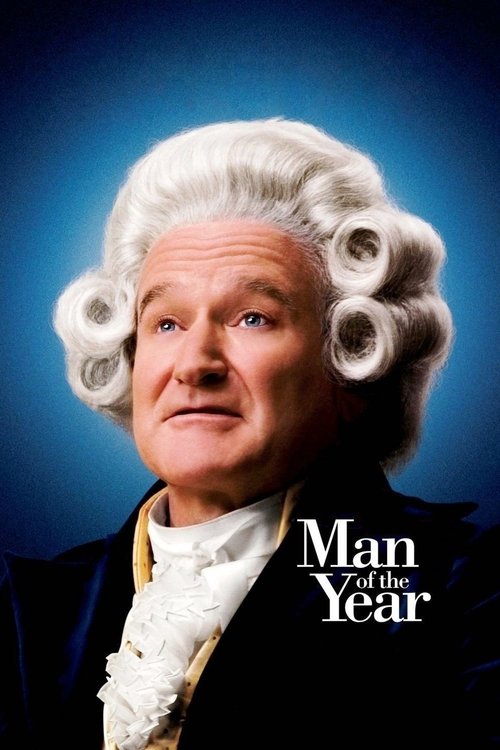
Man of the Year
The irreverent host of a political satire talk show decides to run for president and expose corruption in Washington. His stunt goes further than he expects when he actually wins the election, but a software engineer suspects that a computer glitch is responsible for his surprising victory.
Despite a respectable budget of $20.0M, Man of the Year became a box office success, earning $42.5M worldwide—a 113% return.


Plot Structure
Story beats plotted across runtime


Narrative Arc
Emotional journey through the story's key moments
Story Circle
Blueprint 15-beat structure
Arcplot Score Breakdown
Weighted: Precision (70%) + Arc (15%) + Theme (15%)
Man of the Year (2006) showcases meticulously timed plot construction, characteristic of Barry Levinson's storytelling approach. This structural analysis examines how the film's 15-point plot structure maps to proven narrative frameworks across 1 hour and 55 minutes. With an Arcplot score of 7.1, the film balances conventional beats with creative variation.
Characters
Cast & narrative archetypes

Tom Dobbs
Eleanor Green
Jack Menken
Eddie Langston
Stewart
Alan Sterns
Main Cast & Characters
Tom Dobbs
Played by Robin Williams
A late-night political satirist and comedian who runs for President as an independent candidate and unexpectedly wins due to a voting software glitch.
Eleanor Green
Played by Laura Linney
A computer programmer at Delacroy voting systems who discovers the software glitch that elected Tom Dobbs and risks everything to expose the truth.
Jack Menken
Played by Christopher Walken
Tom Dobbs' loyal manager and best friend who helps navigate his unconventional presidential campaign.
Eddie Langston
Played by Lewis Black
Tom Dobbs' head writer and creative partner who provides comic material and strategic advice during the campaign.
Stewart
Played by Jeff Goldblum
The ruthless CEO of Delacroy voting systems who attempts to cover up the software malfunction to protect his company.
Alan Sterns
Played by David Alpay
Stewart's corporate lawyer and enforcer who intimidates Eleanor and helps orchestrate the cover-up.
Structural Analysis
The Status Quo at 1 minutes (1% through the runtime) establishes Tom Dobbs performs his satirical political comedy show to a live audience, established as a beloved comedian who skewers politicians but remains outside the political system.. Of particular interest, this early placement immediately immerses viewers in the story world.
The inciting incident occurs at 15 minutes when During his show, an audience member challenges Tom to run for President himself instead of just criticizing. The idea gains traction with the audience and becomes a viral movement.. At 13% through the film, this Disruption is delayed, allowing extended setup of the story world. This beat shifts the emotional landscape, launching the protagonist into the central conflict.
The First Threshold at 28 minutes marks the transition into Act II, occurring at 24% of the runtime. This shows the protagonist's commitment to Tom officially declares his candidacy for President of the United States as an independent candidate, crossing from the world of comedy into the world of politics., moving from reaction to action.
At 58 minutes, the Midpoint arrives at 50% of the runtime—precisely centered, creating perfect narrative symmetry. The analysis reveals that this crucial beat Tom Dobbs wins the Presidential election in a stunning upset. False victory - he believes he won legitimately through his message, but the victory is actually due to the software glitch Eleanor discovered., fundamentally raising what's at risk. The emotional intensity shifts, dividing the narrative into clear before-and-after phases.
The Collapse moment at 85 minutes (74% through) represents the emotional nadir. Here, Eleanor is drugged and discredited by Delacroy, made to appear unstable. Tom learns the definitive truth that he did not legitimately win the election. His victory and entire presidency are built on a lie., indicates the protagonist at their lowest point. This beat's placement in the final quarter sets up the climactic reversal.
The Second Threshold at 93 minutes initiates the final act resolution at 81% of the runtime. Tom decides he must tell the truth publicly, combining his comedian's platform with genuine moral courage. He chooses integrity over power, synthesizing his satirical voice with authentic action., demonstrating the transformation achieved throughout the journey.
Emotional Journey
Man of the Year's emotional architecture traces a deliberate progression across 15 carefully calibrated beats.
Narrative Framework
This structural analysis employs systematic plot point analysis that identifies crucial turning points. By mapping Man of the Year against these established plot points, we can identify how Barry Levinson utilizes or subverts traditional narrative conventions. The plot point approach reveals not only adherence to structural principles but also creative choices that distinguish Man of the Year within the comedy genre.
Barry Levinson's Structural Approach
Among the 14 Barry Levinson films analyzed on Arcplot, the average structural score is 7.0, reflecting strong command of classical structure. Man of the Year represents one of the director's most structurally precise works. For comparative analysis, explore the complete Barry Levinson filmography.
Comparative Analysis
Additional comedy films include The Bad Guys, Ella Enchanted and The Evening Star. For more Barry Levinson analyses, see Envy, Wag the Dog and Diner.
Plot Points by Act
Act I
SetupStatus Quo
Tom Dobbs performs his satirical political comedy show to a live audience, established as a beloved comedian who skewers politicians but remains outside the political system.
Theme
A member of Tom's team or audience member suggests that truth and entertainment have become inseparable in politics - foreshadowing the central tension between authenticity and performance.
Worldbuilding
Establishment of Tom's world as a successful comedian with his manager Jack Menken and team. Introduction of Eleanor Green working at Delacroy voting systems. The political landscape and Tom's cynical but insightful commentary on the system.
Disruption
During his show, an audience member challenges Tom to run for President himself instead of just criticizing. The idea gains traction with the audience and becomes a viral movement.
Resistance
Tom debates whether to actually run. Jack Menken is skeptical but supportive. They discuss the impossibility and absurdity of the campaign, but public pressure mounts. Tom wrestles with taking the leap from comedian to candidate.
Act II
ConfrontationFirst Threshold
Tom officially declares his candidacy for President of the United States as an independent candidate, crossing from the world of comedy into the world of politics.
Mirror World
Eleanor Green discovers a critical software glitch in the Delacroy voting system that could alter election results. She represents the conscience and truth that will challenge Tom's journey.
Premise
Tom campaigns across America, bringing his comedic truth-telling to debates and rallies. His unconventional approach resonates with voters. The fun of watching a comedian dismantle political discourse while Eleanor investigates the voting system problems.
Midpoint
Tom Dobbs wins the Presidential election in a stunning upset. False victory - he believes he won legitimately through his message, but the victory is actually due to the software glitch Eleanor discovered.
Opposition
Eleanor attempts to expose the truth but faces threats from Delacroy executives. Tom prepares for presidency, unaware of the fraud. Eleanor makes contact with Tom's team. Corporate forces close in on Eleanor, threatening her credibility and safety. Tom begins to suspect something is wrong.
Collapse
Eleanor is drugged and discredited by Delacroy, made to appear unstable. Tom learns the definitive truth that he did not legitimately win the election. His victory and entire presidency are built on a lie.
Crisis
Tom faces his dark night - he has the power and position he thought he wanted, but it's fraudulent. He must choose between maintaining the lie and living his truth. Eleanor recovers but remains in danger.
Act III
ResolutionSecond Threshold
Tom decides he must tell the truth publicly, combining his comedian's platform with genuine moral courage. He chooses integrity over power, synthesizing his satirical voice with authentic action.
Synthesis
Tom goes on national television and reveals the truth about the election fraud, conceding the presidency. He works to protect Eleanor and expose Delacroy. The system is confronted with its flaws. Resolution of both the political and personal storylines.
Transformation
Tom returns to his comedy show, but transformed - no longer just a cynic outside the system, but someone who entered it, faced its corruption, and chose truth over power. He has become the authentic voice he always claimed to be.