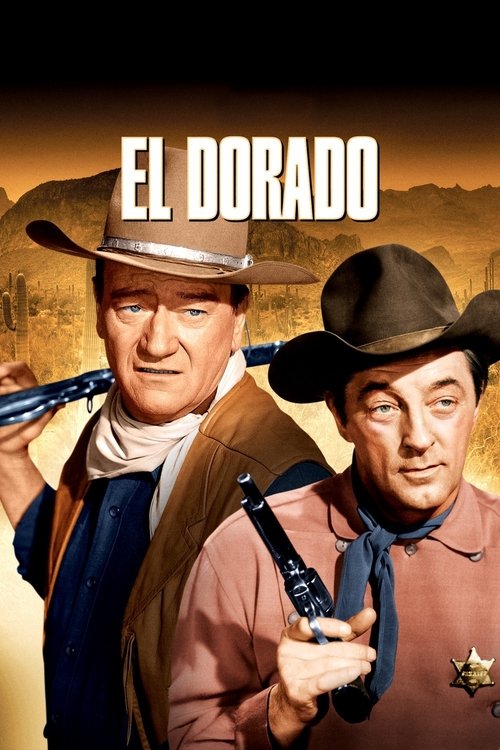
El Dorado
Cole Thornton, a gunfighter for hire, joins forces with an old friend, Sheriff J.P. Harrah. Together with a fighter and a gambler, they help a rancher and his family fight a rival rancher that is trying to steal their water.
Working with a small-scale budget of $4.7M, the film achieved a modest success with $6.0M in global revenue (+29% profit margin).


Plot Structure
Story beats plotted across runtime


Narrative Arc
Emotional journey through the story's key moments
Story Circle
Blueprint 15-beat structure
Arcplot Score Breakdown
Weighted: Precision (70%) + Arc (15%) + Theme (15%)
El Dorado (1966) showcases precise plot construction, characteristic of Howard Hawks's storytelling approach. This structural analysis examines how the film's 15-point plot structure maps to proven narrative frameworks across 2 hours and 6 minutes. With an Arcplot score of 6.7, the film balances conventional beats with creative variation.
Characters
Cast & narrative archetypes

Cole Thornton
J.P. Harrah
Mississippi
Maudie
Joey MacDonald
Bart Jason
Nelse McLeod
Main Cast & Characters
Cole Thornton
Played by John Wayne
A wandering gunfighter who helps his old friend defend a rancher's family from a ruthless land baron.
J.P. Harrah
Played by Robert Mitchum
The alcoholic sheriff of El Dorado who must sober up to fight alongside his old friend Cole.
Mississippi
Played by James Caan
A young gambler and poet who becomes Cole's unlikely partner after seeking revenge for his friend's death.
Maudie
Played by Charlene Holt
A saloon owner and J.P. Harrah's romantic interest who tries to help him overcome his drinking problem.
Joey MacDonald
Played by Michele Carey
The strong-willed daughter of a rancher who accidentally shoots Cole, creating lasting guilt and connection.
Bart Jason
Played by Edward Asner
The ruthless land baron who hires gunfighters to drive the MacDonald family off their water rights.
Nelse McLeod
Played by Christopher George
A hired gun working for Bart Jason and leader of the gunfighters intimidating the ranchers.
Structural Analysis
The Status Quo at 1 minutes (1% through the runtime) establishes Cole Thorton rides into the territory as a confident, professional hired gun, representing his status as a skilled but morally ambiguous gunfighter willing to work for the highest bidder.. Structural examination shows that this early placement immediately immerses viewers in the story world.
The inciting incident occurs at 16 minutes when Cole accidentally shoots Luke MacDonald, a young man from the family he refused to fight against. This tragic mistake forces Cole to confront the consequences of his profession and shatters his professional detachment.. At 13% through the film, this Disruption is delayed, allowing extended setup of the story world. This beat shifts the emotional landscape, launching the protagonist into the central conflict.
The First Threshold at 33 minutes marks the transition into Act II, occurring at 26% of the runtime. This indicates the protagonist's commitment to Cole makes the active choice to return to El Dorado to help his friend J.P., despite the painful memories. He crosses back into the territory, committed to helping rather than profiting, marking his transformation from hired gun to loyal friend., moving from reaction to action.
At 64 minutes, the Midpoint arrives at 50% of the runtime—precisely centered, creating perfect narrative symmetry. Of particular interest, this crucial beat Cole's old injury flares up, causing his gun arm to go numb at critical moments. The bullet lodged near his spine—a consequence of his past life—now threatens to make him useless in the fight. The stakes raise as his physical ability fails him., fundamentally raising what's at risk. The emotional intensity shifts, dividing the narrative into clear before-and-after phases.
The Collapse moment at 95 minutes (75% through) represents the emotional nadir. Here, The situation reaches its lowest point as Bart Jason's men nearly succeed in their takeover. J.P. Faces the possibility of losing everything, and Cole realizes his gun skills may never return. The old ways—violence and individual heroism—seem to have failed completely., demonstrates the protagonist at their lowest point. This beat's placement in the final quarter sets up the climactic reversal.
The Second Threshold at 101 minutes initiates the final act resolution at 80% of the runtime. The team synthesizes a new approach: they'll use strategy, teamwork, and improvisation rather than traditional gunfighting skills. Cole accepts he must fight differently, J.P. Commits to staying sober, and Mississippi embraces his unorthodox methods. United by loyalty rather than ability., demonstrating the transformation achieved throughout the journey.
Emotional Journey
El Dorado's emotional architecture traces a deliberate progression across 15 carefully calibrated beats.
Narrative Framework
This structural analysis employs a 15-point narrative structure framework that maps key story moments. By mapping El Dorado against these established plot points, we can identify how Howard Hawks utilizes or subverts traditional narrative conventions. The plot point approach reveals not only adherence to structural principles but also creative choices that distinguish El Dorado within the western genre.
Howard Hawks's Structural Approach
Among the 7 Howard Hawks films analyzed on Arcplot, the average structural score is 7.0, reflecting strong command of classical structure. El Dorado takes a more unconventional approach compared to the director's typical style. For comparative analysis, explore the complete Howard Hawks filmography.
Comparative Analysis
Additional western films include All the Pretty Horses, Shenandoah and Lone Star. For more Howard Hawks analyses, see Man's Favorite Sport?, Bringing Up Baby and Rio Bravo.
Plot Points by Act
Act I
SetupStatus Quo
Cole Thorton rides into the territory as a confident, professional hired gun, representing his status as a skilled but morally ambiguous gunfighter willing to work for the highest bidder.
Theme
Sheriff J.P. Harrah warns Cole about the nature of hired gun work and choosing sides: "A man ought to do what he thinks is right." This establishes the film's central theme about moral choice and loyalty versus money.
Worldbuilding
Establishment of the range war conflict between Bart Jason and the MacDonald family. Cole meets his old friend Sheriff J.P. Harrah and learns about the land dispute. The stakes, relationships, and moral landscape of El Dorado are laid out.
Disruption
Cole accidentally shoots Luke MacDonald, a young man from the family he refused to fight against. This tragic mistake forces Cole to confront the consequences of his profession and shatters his professional detachment.
Resistance
Cole leaves the territory in shame but cannot escape the guilt. Months pass. He receives a letter that his friend J.P. Harrah is in trouble, having become a drunk after losing the woman he loved. Cole debates whether to return and get involved.
Act II
ConfrontationFirst Threshold
Cole makes the active choice to return to El Dorado to help his friend J.P., despite the painful memories. He crosses back into the territory, committed to helping rather than profiting, marking his transformation from hired gun to loyal friend.
Mirror World
Cole forms a partnership with Mississippi (James Caan), a young man who carries a book rather than a gun, and reconnects with J.P. This new "family" of flawed allies represents redemption through loyalty and friendship rather than professional skill.
Premise
Cole and his makeshift team work to sober up J.P. and defend the MacDonalds against Bart Jason's hired guns. The "fun and games" of watching a drunk sheriff, an aging gunfighter with a bullet near his spine, and a bookish non-gunfighter take on professional killers.
Midpoint
Cole's old injury flares up, causing his gun arm to go numb at critical moments. The bullet lodged near his spine—a consequence of his past life—now threatens to make him useless in the fight. The stakes raise as his physical ability fails him.
Opposition
Bart Jason's forces intensify their attacks. Cole's disability worsens, forcing him to rely on his friends. J.P. struggles to stay sober. Mississippi must find courage despite his fear. The ragtag team faces increasingly deadly opposition while dealing with their own limitations.
Collapse
The situation reaches its lowest point as Bart Jason's men nearly succeed in their takeover. J.P. faces the possibility of losing everything, and Cole realizes his gun skills may never return. The old ways—violence and individual heroism—seem to have failed completely.
Crisis
In the darkness after their worst defeat, the team must process their limitations and find new resolve. They face the question of whether broken men can still do what's right, even if they can't do it the way they used to.
Act III
ResolutionSecond Threshold
The team synthesizes a new approach: they'll use strategy, teamwork, and improvisation rather than traditional gunfighting skills. Cole accepts he must fight differently, J.P. commits to staying sober, and Mississippi embraces his unorthodox methods. United by loyalty rather than ability.
Synthesis
The final confrontation with Bart Jason and his hired guns. The team executes their plan using cunning and cooperation. Cole fights despite his disability, J.P. stays steady despite his demons, and Mississippi finds his courage. They defeat Jason through loyalty and teamwork rather than superior gunfighting.
Transformation
Cole rides out of El Dorado not as a hired gun but as a man who chose friendship and honor over profit. The closing image mirrors the opening, but now he leaves with purpose and redemption rather than arriving with mercenary intent.